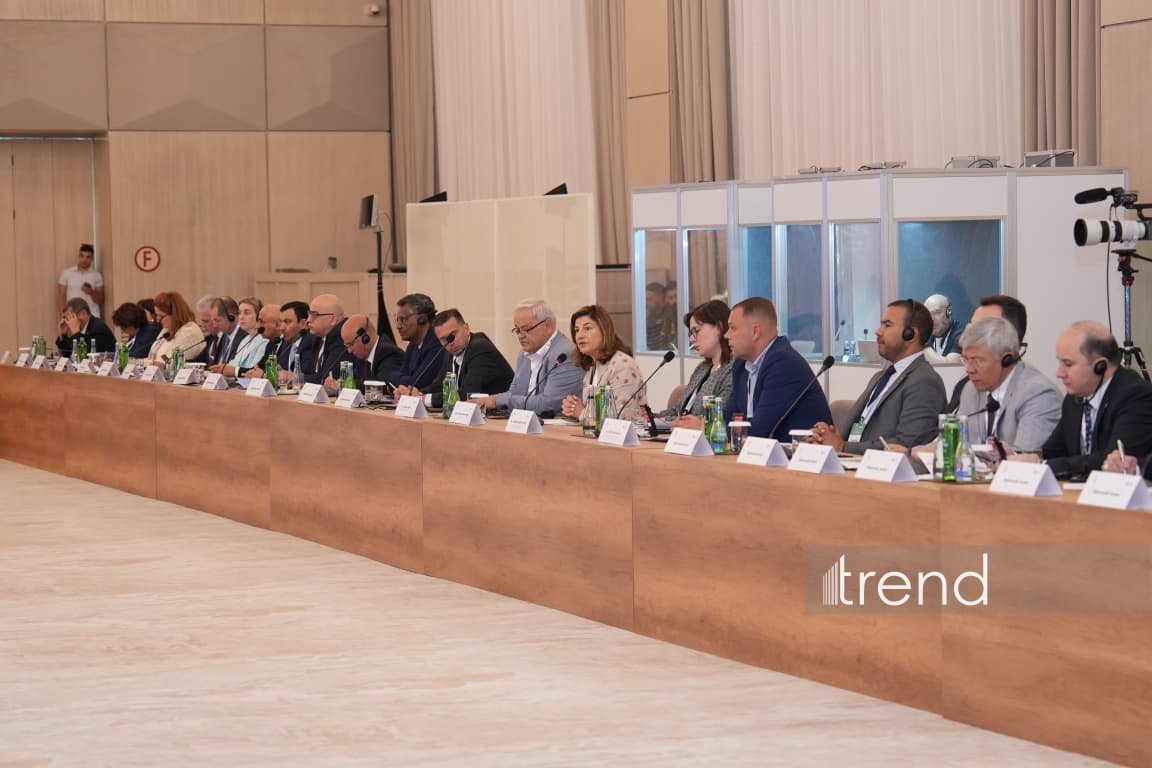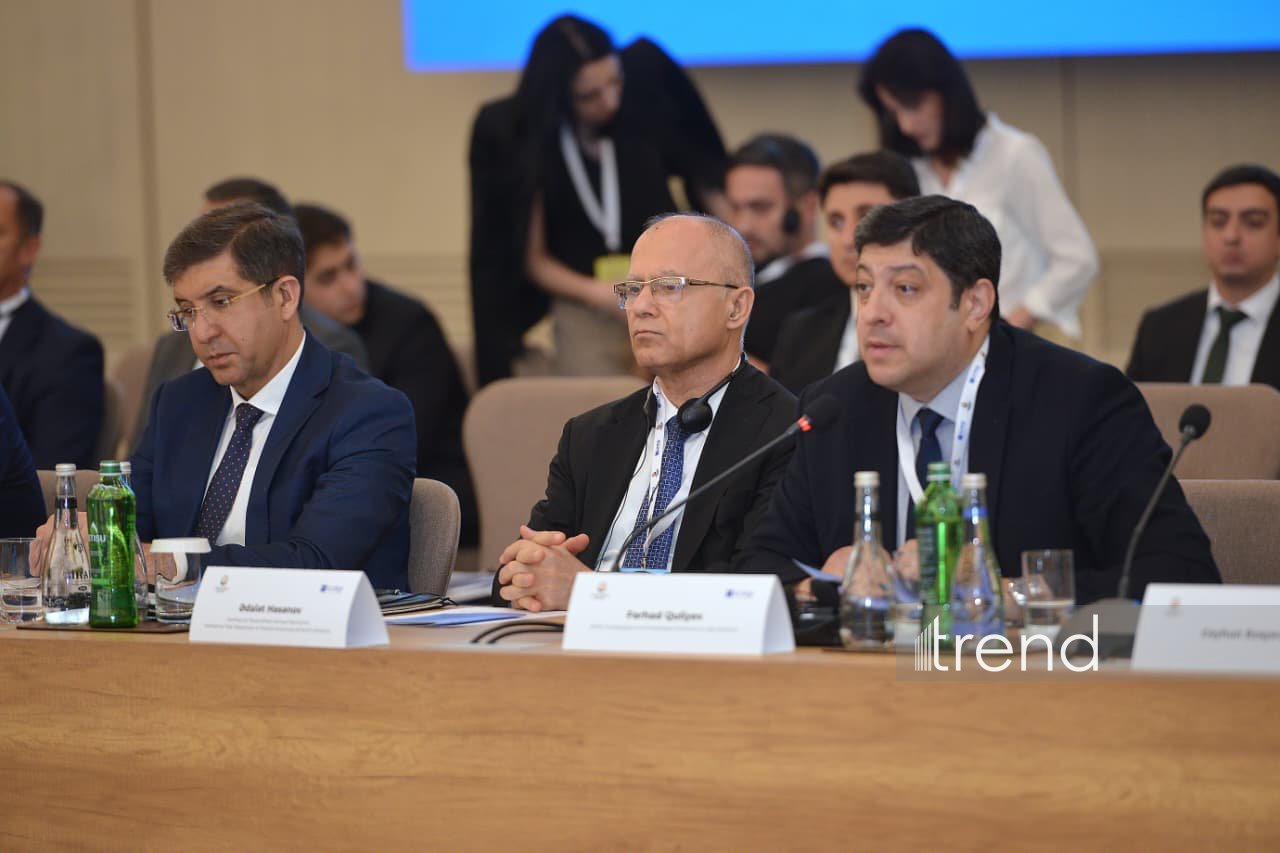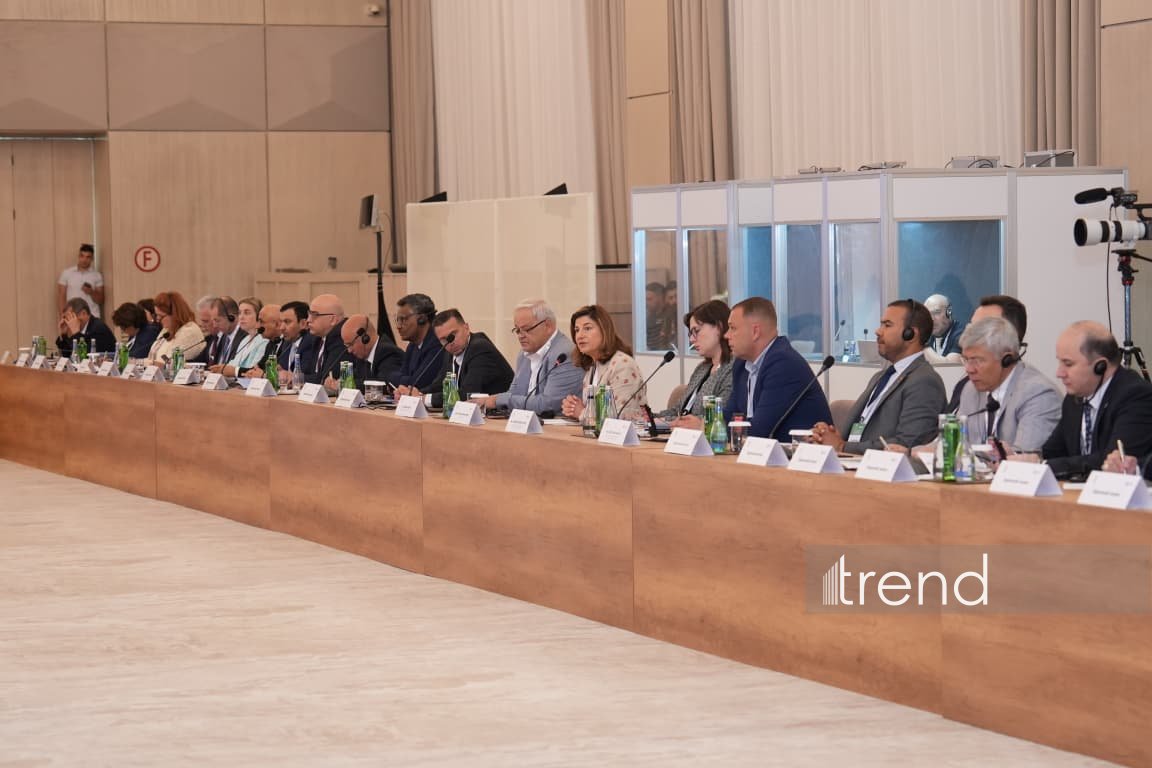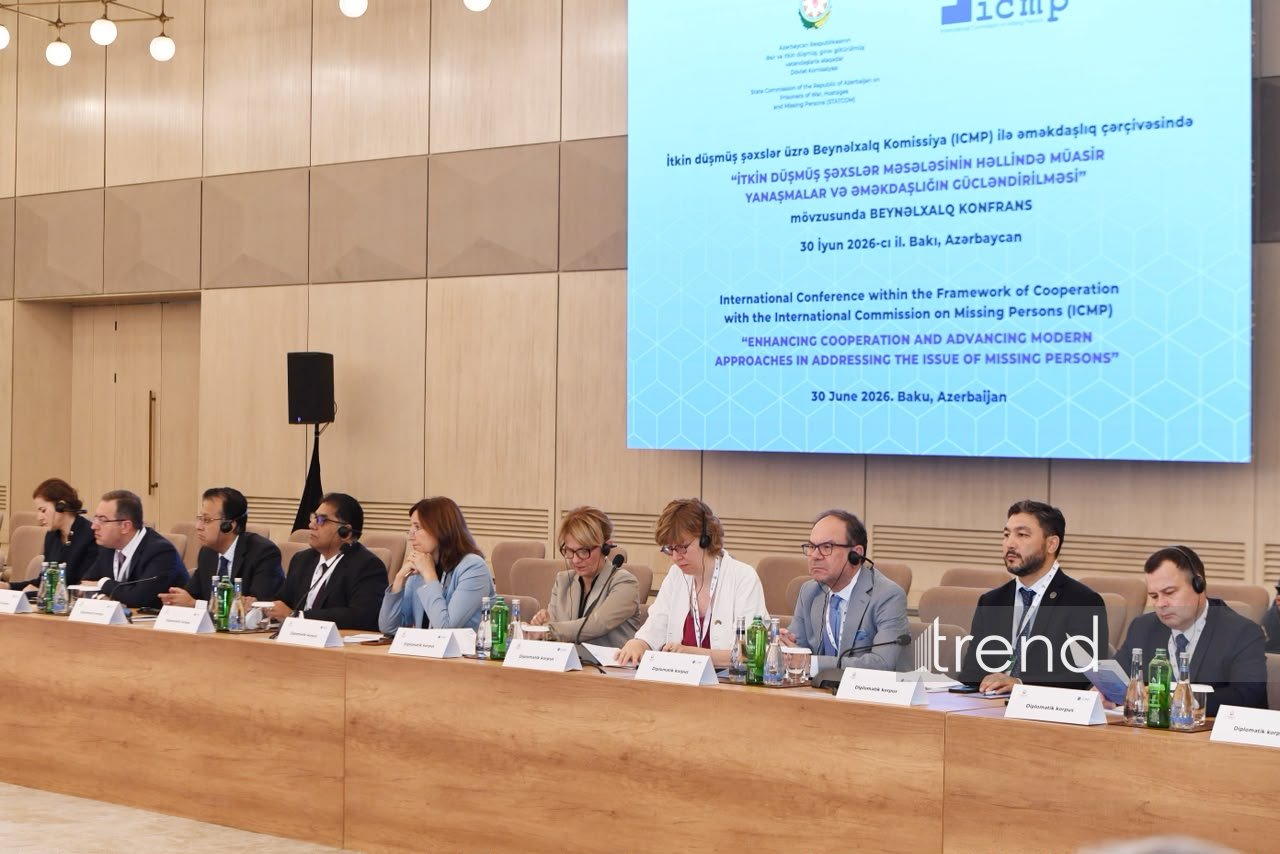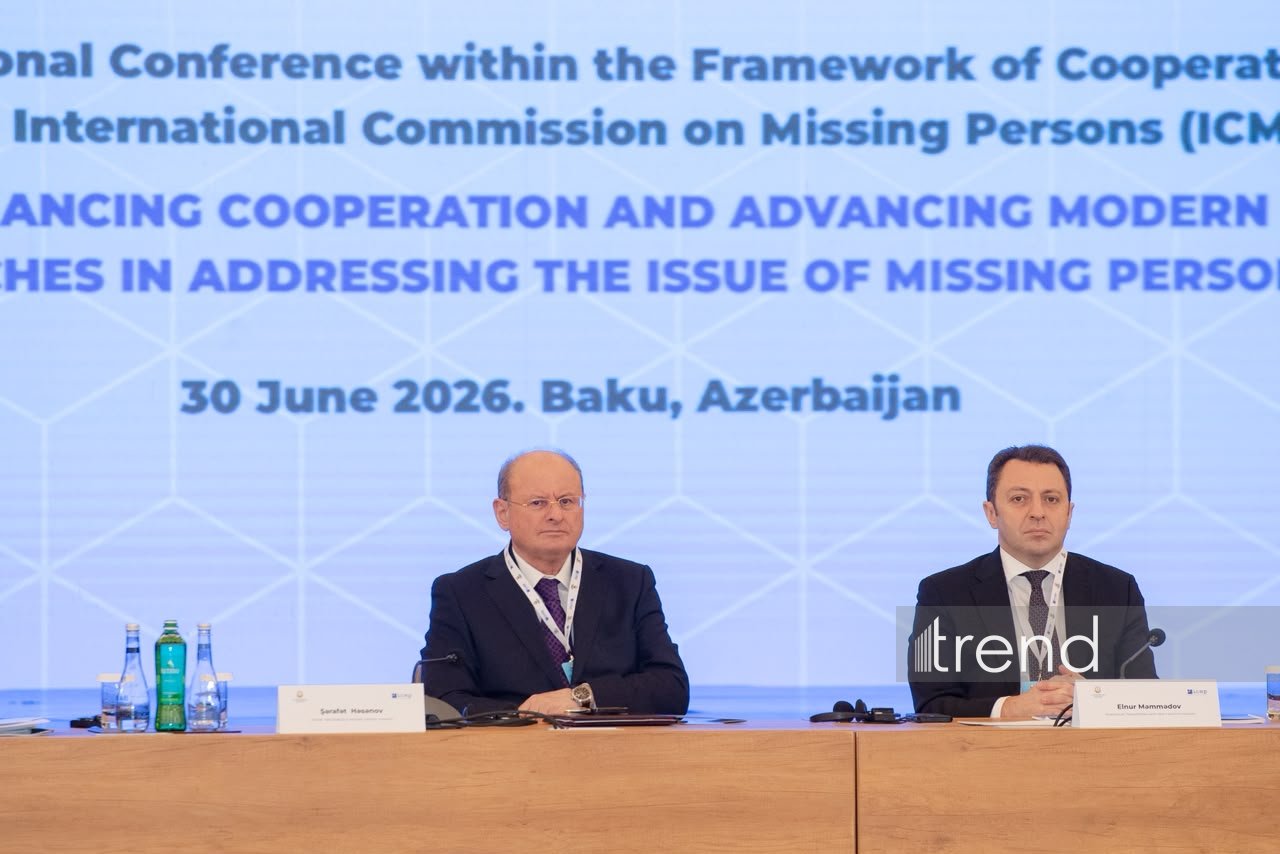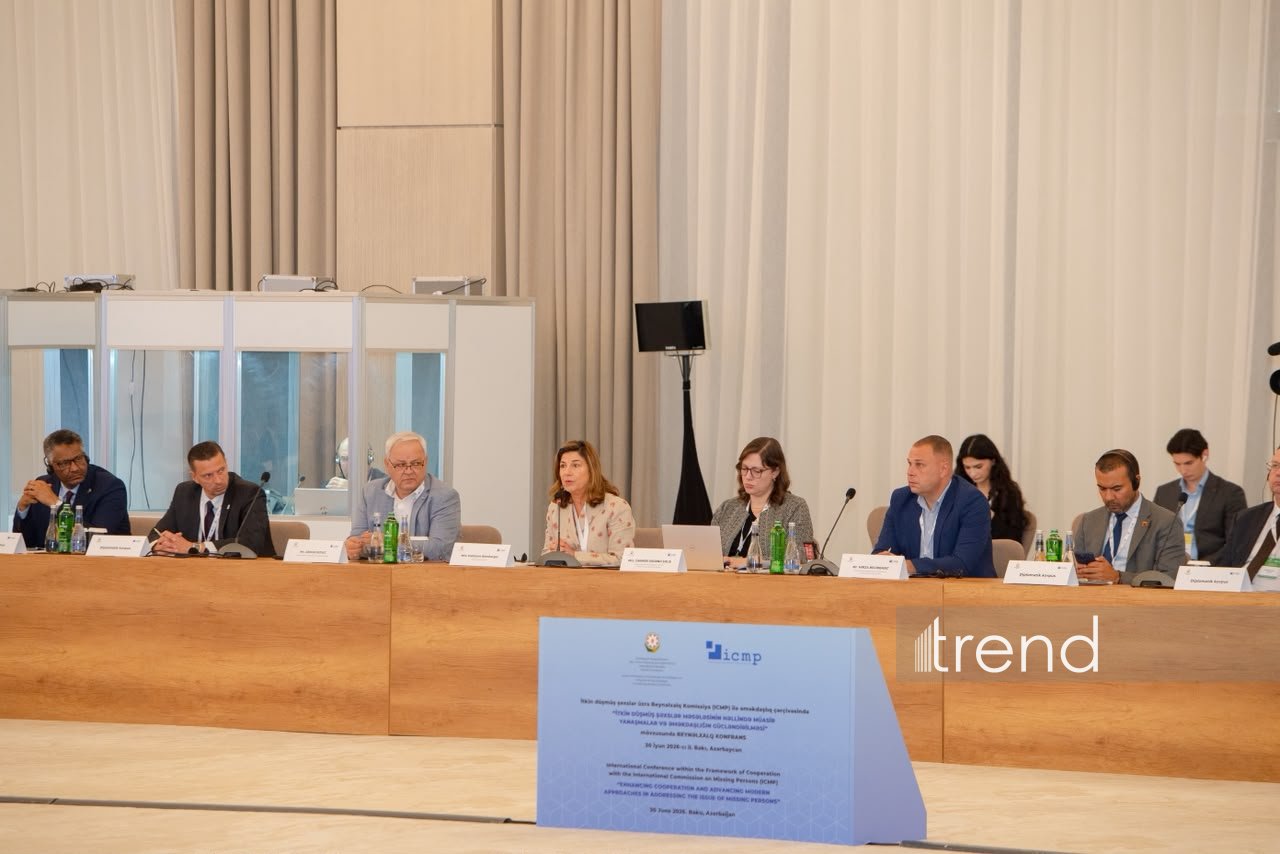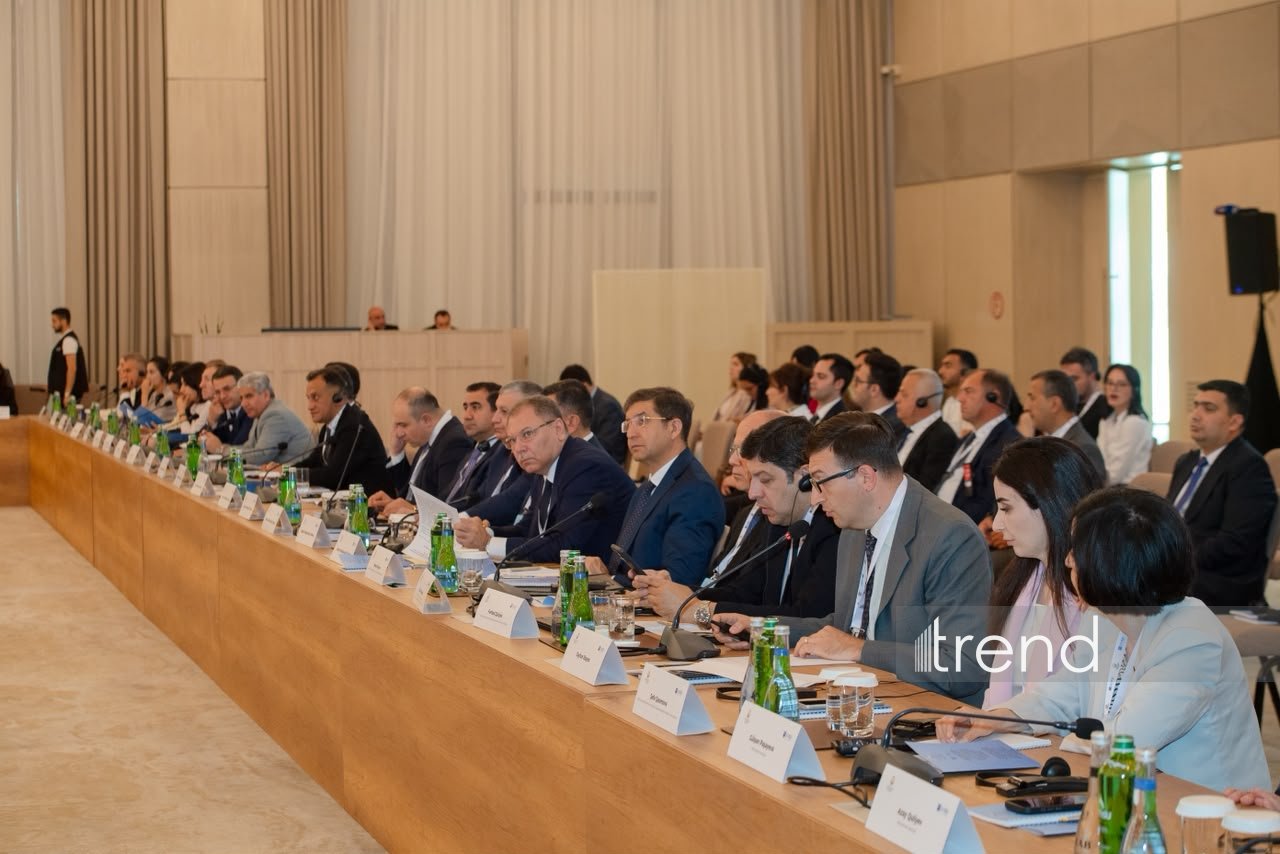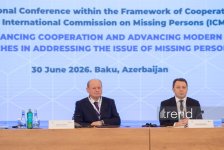

BAKU, Azerbaijan, June 30. An international conference on "Modern approaches to resolving the issue of missing persons and strengthening cooperation" has been held in cooperation with the International Commission on Missing Persons (ICMP), Trend's correspondent reports from the event.
Speaking at the conference, Deputy Head of the State Security Service, Secretary of the State Commission, Sharafat Hasanov, said that currently 4,010 people are registered as missing as a result of Armenia's military aggression. He noted that as a result of search and exhumation work carried out in the liberated territories, 32 mass graves were discovered, 327 people were identified using genetic methods, and cooperation with ICMP is continuing in this direction.
Deputy Foreign Minister Elnur Mammadov emphasized that the issue of missing persons is one of the main conditions for ensuring lasting peace, and noted that Azerbaijan remains committed to humanitarian principles and has handed over the remains of more than 2,000 Armenian servicemen to the other side since 2020. He also noted that the Baku Dialogue has become an important platform for international humanitarian cooperation.
ICMP Director General Kathryne Bomberger welcomed the development of relations between Azerbaijan and Armenia and the progress made towards peace. She emphasized that coordination between state agencies, improvement of legislation, and protection of the rights of families of missing persons are the main factors in solving the problem.
Head of the Main Military Medical Directorate of the State Security Service, Rufat Aliyev, said that the Genetic Research Center has so far carried out genetic identification of 327 missing persons. According to him, the capabilities of the laboratory, which operates in accordance with international standards, and cooperation with ICMP increase the efficiency of the identification process.
Director of the Forensic Medical Expertise and Pathological Anatomy Unit of the Ministry of Health, Adalat Hasanov, pointed out that the forensic medical examination of the human remains found in the liberated territories was carried out in accordance with international standards, the establishment of the Department of Forensic Anthropology is planned in the near future, and the remains of several more missing persons will be handed over to their families in the coming days.
He noted that during the examination of the remains of 454 people, bone and tooth samples were taken and sent to the Genetic Research Center of the State Security Service for identification based on DNA.
The conference discussed the search for missing persons, genetic identification, forensic examination, international legal norms, and work done in the direction of strengthening interstate cooperation, as well as underscored the importance of expanding the relevant exchange of experience.