


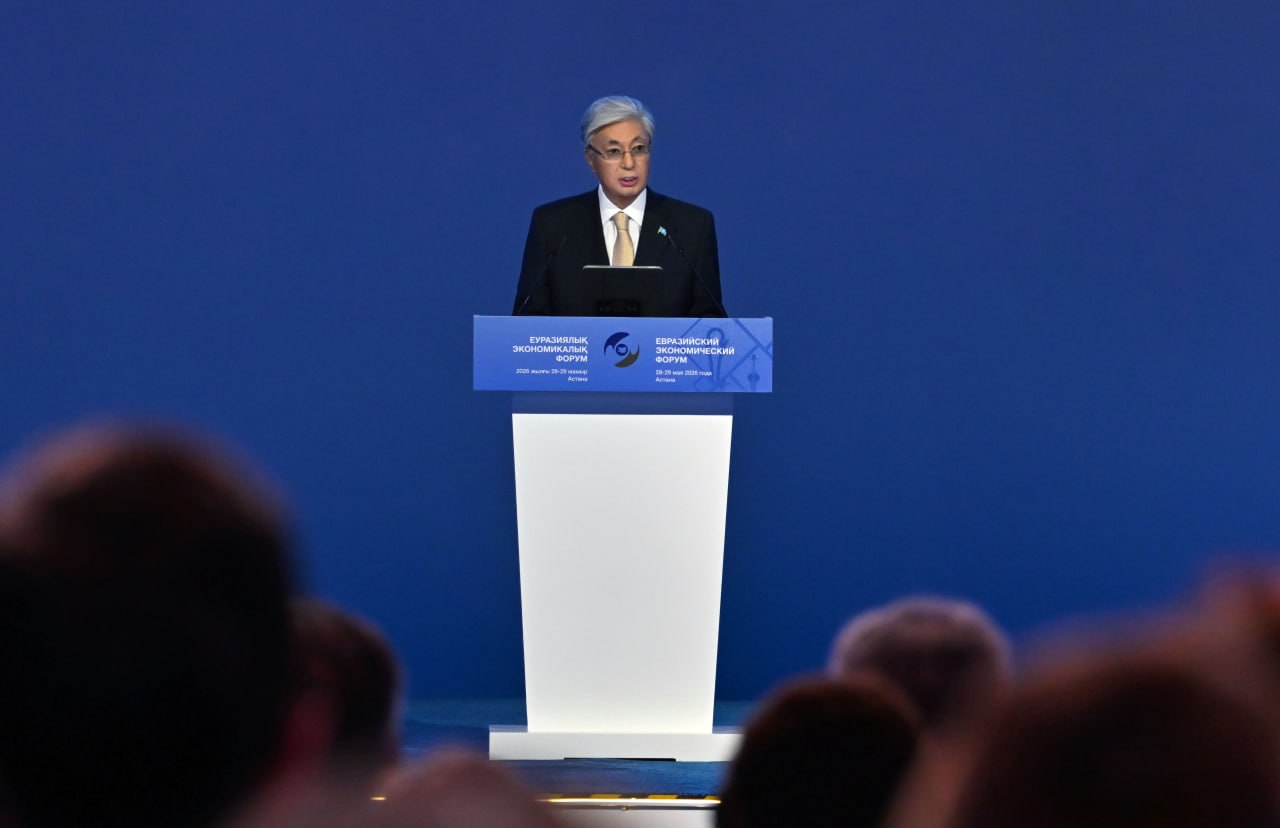

ASTANA, Kazakhstan, May 28. Kazakhstan has proposed the practical introduction of artificial intelligence technologies to ensure the four freedoms within the Eurasian Economic Union, said the President of Kazakhstan, Kassym-Jomart Tokayev, at the plenary session of the Eurasian Economic Forum, Trend reports.
According to him, the initiative is aimed at strengthening the competitiveness of the union's member states against the backdrop of the global transformation of the world economy and the rapid digital transition.
"In the year of its presidency in the bodies of the Eurasian Economic Union, Kazakhstan proposed the practical use of artificial intelligence technologies in order to ensure the so-called 'four freedoms' within the union to strengthen competitiveness, primarily the competitiveness of its member states," Tokayev said.
The President noted that the development of artificial intelligence is becoming a fundamental factor in the global economy. According to him, Goldman Sachs estimates that the use of AI could provide a 7 trillion dollar increase in global GDP over the next decade, while the International Monetary Fund predicts the transformation of up to 40% of jobs in the global labor market.
Tokayev informed that 2026 has been declared the Year of Artificial Intelligence and Digital Development in Kazakhstan, and to strengthen the institutional framework, the Ministry of Artificial Intelligence and Digital Development has been established, along with the Council for AI Development featuring international experts and business representatives.
"The creation of a Data Center Valley has been declared a priority task. This large-scale project is becoming a point of attraction for global capital and world technology giants," the head of state emphasized.
He recalled that Kazakhstan was the first in the region to launch two supercomputers based on NVIDIA technologies, and two new-generation schools—TUMO and Tomorrow School—as well as laboratories of leading international companies, have already been opened on the platform of the international center Alem.AI.
According to the president, Kazakhstan intends to actively introduce AI into the education system.
"Two weeks ago, I signed a decree on measures to introduce artificial intelligence into the secondary education system of Kazakhstan. Our goal is to strengthen the competencies of teachers with an emphasis on personalized learning, infrastructure development, and educational standards," he noted.
Tokayev paid special attention to the digitalization of trade and logistics in the EAEU. In his opinion, the integration of national digital systems will accelerate customs procedures, ensure document processing in real-time, identify bottlenecks, and forecast cargo flows.
"Mutual recognition of digital signatures will help radically reduce business costs and increase trade volumes across the Eurasian Union space," the president stated.
He also emphasized the need to implement intelligent solutions in industry and the agro-industrial complex to strengthen food security and industrial cooperation.
According to Tokayev, new technologies should not become a source of a digital divide between the EAEU states, but an instrument of economic interconnectedness and cooperation synergy.



