


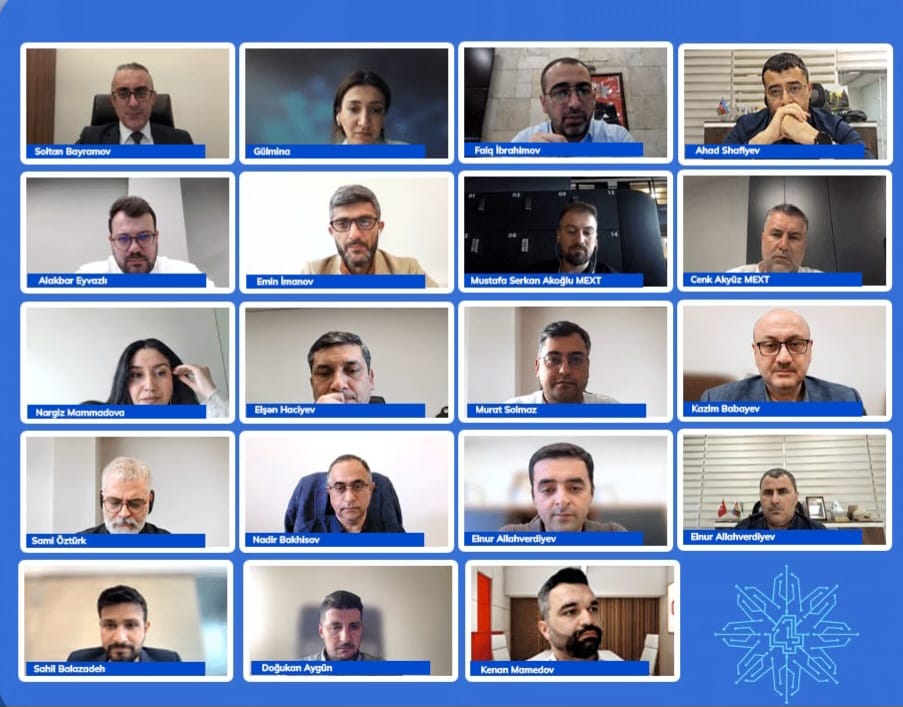

BAKU, Azerbaijan, June 1. Meetings concerning the implementation phase of digital roadmaps with the management of enterprises participating in the "Support Program for Digital Economy Development" - implemented by the Center for Analysis and Coordination of the Fourth Industrial Revolution (4SIM) under the Ministry of Economy - have concluded, Trend reports via 4SIM.
During the meetings, representatives from 4SIM and partner organizations addressed questions regarding the execution phase, exchanged views on the implementation of prioritized projects, timelines, the deployment of digital solutions, and the phased execution of transformation processes. At the same time, it was noted that expert support would continue to be provided to the enterprises throughout the implementation stage.
Currently, 15 local enterprises representing various sectors such as metallurgy, food industry, heavy industry, construction, and retail are participating in this phase of the program, which is carried out within the framework of the "Strategy for the Development of the Digital Economy in the Republic of Azerbaijan for 2026-2029." Under the program, technological and green diagnostics were conducted at the enterprises, their readiness levels for digital transformation were assessed based on international methodologies, and customized digital transformation roadmaps were developed for each company. As a result of the assessment, more than 400 potential use-cases were identified across the enterprises, of which nearly 80 were prioritized with feasibility studies and moved to the execution phase.
The developed roadmaps outline the digitalization of manufacturing and planning processes, integration of Enterprise Resource Planning (ERP) manufacturing systems, real-time production monitoring, digital quality management, warehouse and supply chain optimization, predictive maintenance, energy management, and the implementation of digital performance management systems. Concurrently, artificial intelligence (AI)-based solutions—such as demand forecasting, visual quality inspection, production anomaly detection, AI-assisted decision-making dashboards, and process optimization applications—serve as the core transformation directions of the program.
Projects such as an AI-based production assistant, AI-driven welding quality control, process automation, smart maintenance systems, and energy optimization solutions have already been prioritized across various enterprises within the framework of the program.
As one of the key initiatives of the strategy, the program aims to involve a total of 65 enterprises in Industry 4.0 transformation processes by 2030.



