


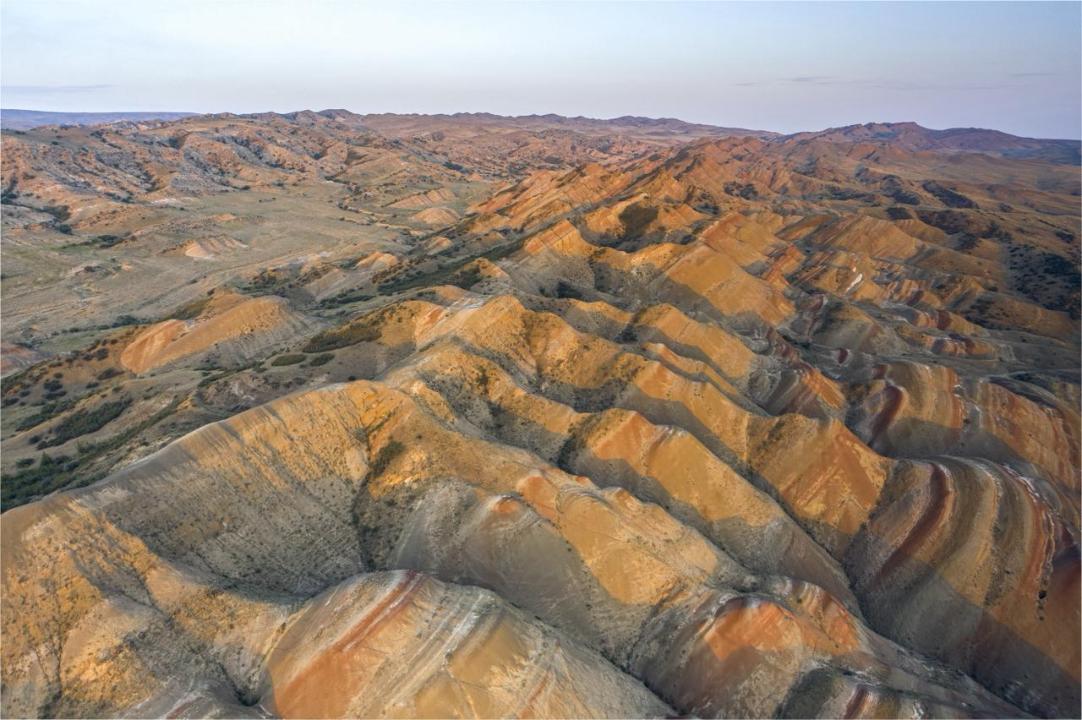

BAKU, Azerbaijan, June 15. Kazakhstan is actively developing its critical raw materials sector and strengthening cooperation with major international partners amid growing global demand for rare earth and strategic metals. In essence, a global competition is underway for access to these resources, given their essential role in future technologies, energy systems, and industrial development.
The 16th International Mining and Metallurgy Congress, Astana Mining & Metallurgy (AMM-2026), was held in Astana. Ahead of the forum, the C5+1 Dialogue on critical minerals took place, co-chaired by Kazakhstan’s Minister of Industry and Construction, Yersayin Nagaspayev, and U.S. Special Envoy for South and Central Asia, Sergio Gor. The organization of such events indicates that the issue of critical minerals is increasingly integrated into Astana’s foreign policy agenda.
According to the Ministry of Industry and Construction, Kazakhstan possesses more than 9,500 deposits, over 100 of which contain rare and rare-earth metals. As of early 2026, the country’s reserves of key resources include gold, oil, gas, coal, and iron in significant volumes. In April 2025, a major rare earth metals deposit was also discovered in the Karaganda region with estimated resources of up to 20 million tons. This underscores the country’s substantial resource base, while also highlighting the challenges associated with its full-scale development and utilization.
Interest in Kazakhstan is increasing from the United States and the European Union, both of which seek to reduce their dependence on China for supplies of critical materials. As a result, major international companies, including Rio Tinto, Barrick Gold, Cove Capital, First Quantum, and Ivanhoe, are expanding their presence in the country. These firms are not only gaining access to raw materials but are also introducing advanced operational standards to the sector. Kazakhstan has also stated that it is capable of supplying 20 out of 60 critical minerals identified by the U.S. Geological Survey (USGS). In March 2025, Kazakhstan and the EU signed a 3 million euro agreement in the field of critical raw materials. At the same time, the country is gradually seeking to shift from the export of raw materials toward domestic processing.
However, a significant portion of resources remains untapped due to limited technologies for complex extraction. Additional challenges include insufficient infrastructure investment, environmental risks, and energy constraints, particularly for processing industries. An important development was the revision of the Subsoil and Subsoil Use Code signed in December 2025 by President Kassym-Jomart Tokayev, aimed at simplifying regulatory procedures for investors and encouraging geological exploration projects.
Logistics also remains a key factor. Due to restrictions on northern transport routes via Russia, alternative corridors are gaining importance, particularly the Trans-Caspian International Transport Route (Middle Corridor). In February 2026, the World Bank approved an $846 million guarantee to mobilize $1.41 billion in financing for the development of railway infrastructure along this route in Kazakhstan. The TRIPP corridor (Trump Route for International Peace and Prosperity), passing through Armenia and Azerbaijan and supported by the United States, is also expected to play an important role in ensuring supply stability.
The development of these transport routes is significant for exports of rare earth metals and uranium, as well as for strengthening Kazakhstan’s position in negotiations with external partners.
Overall, Kazakhstan is developing its critical minerals sector, and its raw material resources are gradually becoming an important factor for both the economy and foreign policy. However, resources alone are not enough to achieve sustainable results. New technologies, developed infrastructure, reliable transport routes, and significant investments are required to launch extraction and processing. Attracting such investment is one of the key priorities of Astana’s policy. If all this is successfully implemented, the country will be able to earn not only from raw material exports but also from processing and finished products.
This is especially important at a time when the world is transitioning to green energy, and countries are trying to reduce dependence on oil and other traditional resources. Against this backdrop, Kazakhstan needs to develop processing and not limit itself to raw material extraction. In this case, the country will be able to generate higher income not only from resource exports but also from higher value-added products — finished materials and components for new industries.



