


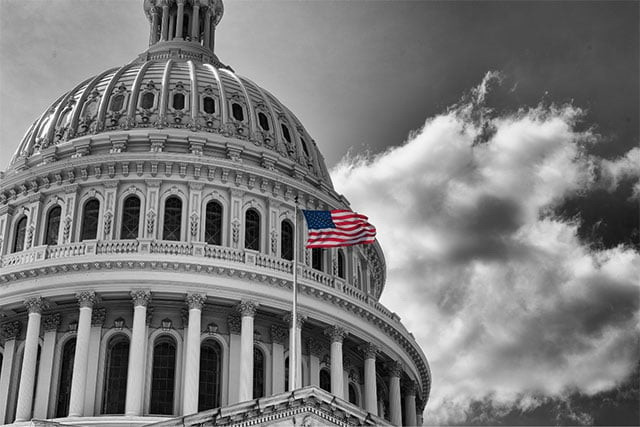

Once conceived as a tool of lobby-driven pressure on Azerbaijan, Section 907 of the Freedom Support Act has long since outlived its purpose. What began as a Cold War–era gesture toward Armenia has become a legislative relic—one that no longer fits either the regional security landscape or America’s own strategic interests. Against the backdrop of Washington’s geopolitical realignment and a shifting balance of power in the South Caucasus, dismantling Section 907 is no longer a political gesture but an overdue act of foreign-policy modernization.
How a Lobby Clause Became a Policy Fossil
Adopted in October 1992, Section 907 was the only U.S. law ever aimed squarely at a single post-Soviet state—Azerbaijan. It prohibited any government assistance to Baku until the U.S. president could certify that Azerbaijan had ended both its “blockade” of Armenia and all “offensive uses of force against Armenia and Nagorno-Karabakh.” In other words, Washington’s legal code codified Armenia as a victim and Azerbaijan as an aggressor—a framing born not of geopolitical analysis but of a well-organized Armenian lobby operating in early-1990s Washington.
For nearly a decade, the amendment barred Azerbaijan from all forms of direct U.S. government aid. The only assistance it received came through humanitarian or NGO channels, while Armenia enjoyed the full flow of American support.
Everything changed after 9/11. In 2001, Congress authorized the president to suspend Section 907 each year through a waiver. Every administration since—from George W. Bush to Donald Trump and back again—has signed that waiver annually, citing counterterrorism cooperation, regional security, and the absence of any threat to peace between Baku and Yerevan. On paper, the ban remained. In practice, it was neutralized.
A Rule Without a Reality
By the late 2020s, the premises of Section 907 had collapsed. Azerbaijan had regained control of its territories, the Karabakh conflict had faded from the political map, and Western analysts increasingly described the amendment as “anachronistic.” Still, in 2023–2024, Armenian lobbying groups launched a campaign to tighten it, introducing the “Armenian Protection Act” (H.R. 7288) to bar the president from issuing waivers for fiscal years 2024 and 2025. That proposal would have rolled U.S. policy back to the hard-line logic of 1992.
The White House pushed in the opposite direction. In August 2025, President Donald Trump again extended the annual waiver, explicitly citing the needs of counterterrorism, border security, and alliance readiness. Four months later, on December 10, 2025, Rep. Anna Paulina Luna filed H.R. 6534—a bill to repeal the restrictions imposed by Section 907 altogether. The text has yet to be released, but its purpose is unmistakable: to erase the last vestige of a long-expired policy.
When Policy Turns to Static
The logic driving this shift is simple. The amendment’s original justification—punishing Azerbaijan for “offensive actions” against Armenia—has no footing in today’s security environment. Instead, the clause has become a source of friction, complicating U.S. engagement in a region that’s increasingly vital to global connectivity and energy security.
Azerbaijan today is not the isolated belligerent imagined in 1992; it is a keystone of the Middle Corridor linking Europe, the Caspian, and Central Asia—a critical energy supplier to Europe and a buffer in the containment of Iran. In this setting, Section 907 isn’t just obsolete; it’s a regulatory defect that weakens the U.S. strategic position.
The White House’s steady use of the waiver underscores that reality. Each annual suspension is an implicit acknowledgment that the law no longer aligns with U.S. interests. What Washington has been practicing for two decades—governing around its own outdated statute—is, in effect, a long, slow process of legislative euthanasia.
Normative Shedding: America’s Strategic Housecleaning
Trump’s foreign-policy recalibration—from the moral theatrics of “values interventionism” to a hard-edged model of geopolitical management—has accelerated this process. In that framework, eliminating Section 907 isn’t a favor to Azerbaijan; it’s a functional necessity for the United States. Great powers, after all, shed obsolete norms to keep their foreign-policy machinery synchronized with the real world.
Inside Congress, the conditions for repeal are ripening. The House Foreign Affairs Committee now works through the lens of high-level strategic recalibration—prioritizing national security, energy autonomy for allies, and the containment of Iran. The subcommittee on the Middle East, North Africa, and Central Asia provides the technical rationale: keeping Section 907 on the books weakens U.S. leverage in the region.
Even the Senate Foreign Relations Committee—long the traditional brake on policy overhauls—has begun to shift. For Republicans, the amendment is bureaucratic noise obstructing energy diplomacy; for many Democrats, a “legacy issue” stripped of political meaning; and for the national-security establishment, a loophole that benefits Russia and Iran more than anyone else.
From Symbol to Liability
In the end, Section 907 has morphed from a symbolic instrument of pressure into a structural liability. Its legal shell remains, but its political content has evaporated. What’s left is a statute without a strategy—an ideological echo from the post-bipolar 1990s haunting a very different century.
Washington’s demolition of Section 907 will not mark an act of generosity toward Azerbaijan, but the completion of a broader process: the U.S. shedding the dead skin of its own outdated norms to realign power, policy, and pragmatism in a world defined by corridors, flows, and functional leverage.
The Outer Circuit: How Baku’s Diplomacy Outgrew Washington’s Old Maps
Azerbaijan’s foreign policy today operates in a mode best described as networked multivector projection—an agile, layered diplomacy that connects regional and global players across energy, security, and logistics. Its partnerships stretch from multinational energy consortia to military alliances, but the most potent channel runs through pro-Israeli networks for whom Azerbaijan’s stability is a cornerstone of regional security. In Washington’s political ecosystem, that argument resonates instinctively: no one here needs a briefing to understand that an unstable South Caucasus strengthens Iran.
A Law Without a System
From a policy-analysis standpoint, the verdict is unambiguous: Section 907 no longer has a strategic, functional, or legal foundation. It isn’t wired into today’s geo-economic system, clashes with the operational logic of U.S. foreign policy, and is annually neutralized by presidential waivers. Within the machinery of power, it’s viewed less as law than as a parasitic norm—a leftover clause the system keeps alive out of textual inertia.
The repeal of Section 907, then, isn’t a political gesture or diplomatic concession. It’s an institutional inevitability, dictated by the logic of a world order in which norms unsupported by actual political, economic, or coercive structures are destined for dismantlement.
A Post-Normative Phantom
Section 907 belongs to a category political theorists might call a post-normative remainder—a fragment of legal text that has lost its material foundation yet persists in statute through sheer inertia. It exists somewhere between discourse and law, a “trace” in Derrida’s sense: the presence of something absent. The amendment functions only as an echo of a bygone discursive formation; its legitimizing reality has been dismantled by history itself.
In the language of international-relations theory, it’s a “normative phantom”—a regulatory ghost that no longer shapes behavior but continues to haunt the legal code. Such norms are textual afterimages: legally real, politically dead. Section 907 isn’t a policy; it’s a symptom—a relic preserved by bureaucratic sedimentation from an era that no longer exists.
The Collapse of the Four Pillars
Four structural pillars once sustained Section 907. All have now crumbled.
First, the discourse that cast Azerbaijan as “aggressor” and Armenia as “victim” has dissolved. That binary was never analytical—it was a product of early post-Soviet confusion and lobbying pressure. The semiotic scaffolding that once held it up is gone, leaving the law without meaning.
Second, the material base justifying the rule no longer exists. The conflict it addressed has vanished as an object of international law. In Alexander Wendt’s constructivist terms, the norm can no longer “constitute” identities because the environment that produced them has changed.
Third, the epistemic community that once sustained the amendment has withered. The ethnopolitical lobbies of the 1990s have been displaced by experts in energy, logistics, and security—the new cognitive elite shaping U.S. regional thinking. The “epistemic regime,” as Peter Haas would call it, has collapsed.
Fourth, Section 907 now conflicts with the functional logic of U.S. foreign policy itself. The international system is defined not by ideologies but by flows—of energy, trade, and defense logistics. The U.S. now operates within what could be called a flow-based geopolitics, in which control of transit corridors and connective arcs is paramount. In that configuration, Azerbaijan is no longer an object of moral politics but a structural node in Eurasia’s connective infrastructure. Any legal artifact that restricts engagement with it becomes a strategic parasite.
Together, these dynamics form what might be termed a metastructure of inevitability: a point at which repeal ceases to be a matter of political will and becomes a systemic necessity.
The Semiotics of Dismantling
Yet outdated norms rarely vanish on their own. Legal systems have what theorists call “trace preservation”—an inertia that keeps dead text alive. That’s why Azerbaijani diplomacy operates not as classic lobbying but as institutional semiotics: targeting the congressional nodes that reproduce the text of the norm rather than its function.
The House Foreign Affairs Committee (HFAC) and Senate Foreign Relations Committee (SFRC) are the key nodes. When figures like Michael McCaul or Jim Risch stop seeing Section 907 as part of the foreign-policy landscape and start seeing it as a breach in functional coherence, the norm dies. Diplomacy, in this sense, doesn’t persuade—it rewrites meaning.
The pro-Israel lobby plays a parallel role, serving as a “discursive node of legitimation.” Through it, Section 907 loses its standing as a regional-policy clause and becomes a source of strategic loss. Congressional appropriations are the quiet instrument of legal entropy—funds are simply redirected until the clause ceases to function.
Law as Ghost: From Heidegger to Agamben
Seen through a phenomenological lens, Section 907 resembles what Heidegger might have called a thing that has lost its world—an object detached from its context of being. It persists in text but no longer participates in the world’s structure. It’s a law without worldliness, a presence-outside-function.
Niklas Luhmann would have described it as a structural shadow: a component that once belonged to an autopoietic political system but now exists outside the self-reproducing loop of meaning. The communicative networks—media, lobbies, policymakers—that once kept it alive have disintegrated.
And Giorgio Agamben would push the argument further. Section 907, he would say, exists in a state of suspended action—a legal exception that persists only through its own negation. The annual presidential waivers create precisely such a “zone of exception,” where the law remains on the books but functions through its inoperability. It is a norm that lives only by being undone.
From Identity to Flow
The deeper explanation lies in a shift of normative episteme—from the identity-driven politics of the 1990s to a flow-driven global order. The world that produced Section 907 was territorial, post-imperial, moralistic. The world that replaces it is rhizomatic, transactional, defined by routes and capacities. In Deleuze and Guattari’s vocabulary, Section 907 is an archaic terrification—an attempt to fix territory in a fluid, networked world. In such a system, static norms cannot survive; their logic contradicts the logic of reality itself.
Baku’s Strategic Epilogue
For Azerbaijan, the task is not to argue Section 907 out of existence but to build a world in which it can no longer exist. Modern diplomacy, in this reading, is not persuasion—it’s ontological engineering. By shaping new cognitive maps through security, energy, and logistics expertise, Baku participates in what might be called the regulatory transition to minimal entropy.
The rest is a matter of time. The law’s text will remain on the books until the system forgets how to reproduce it. Then, as all ghosts do, it will simply fade.
The Ontology of Repeal: How Baku Can Finish What History Already Began
Modern states no longer break norms; they erase the ground on which those norms can exist. The strategy isn’t destruction—it’s reconfiguration. For Azerbaijan, that means acting simultaneously on three fronts: the normative body (the law itself), the normative shadow (the discourse sustaining it), and the normative environment (the institutions reproducing it). The House Foreign Affairs Committee (HFAC) is where the legal text can be reshaped; the Senate Foreign Relations Committee (SFRC) is where the discourse can be reframed; and the appropriations committees are where the institutional fabric can be rewritten. When all three fields deform in sync, a law ceases to exist—not just politically, but ontologically.
Section 907 once had a world—a “world of 907,” complete with its discourses, anxieties, and moral binaries. That world has collapsed. A norm lives only inside the ecosystem that produces it, and the ecosystem that produced 907 is gone. The U.S. foreign-policy paradigm has shifted; Eurasia’s epistemic map has changed; the structure of threats and the logic of global flows have been rewritten. The task now is to complete the cycle: to move Section 907 from a legal phantom to normative nonexistence. The goal is not to kill the law, but to let it die of natural causes.
1. The House Foreign Affairs Committee: Operational Pressure Point
HFAC is the gateway through which any repeal bill must pass. Baku’s primary task is to secure preliminary jurisdictional clearance—ensuring the bill isn’t delayed or downgraded.
- Michael McCaul (R–TX) — Chair of HFAC and one of the main
architects of America’s Iran-containment strategy. His worldview
revolves around regional security interoperability—seeing
Azerbaijan as part of a Mediterranean–Caspian security arc.
Pressure point: deliver a concrete security impact assessment showing how keeping Section 907 open benefits Iran and undermines the U.S.-backed Middle Corridor. - Joe Wilson (R–SC) — Head of the MENA/CA subcommittee. Wilson
thinks in the language of logistics-centric diplomacy and
geo-economic competition. To him, Azerbaijan is “critical
infrastructure for America’s Eurasian presence.”
Pressure point: bring him into drafting an expert brief highlighting the vulnerability of Western transit routes if Section 907 remains as a symbolic barrier. - Gregory Meeks (D–NY) — A Democrat moderating his party’s
stance. Historically sympathetic to Armenian causes, he now
operates in a logic of policy trade-offs.
Pressure point: engage New York’s financial and business networks; emphasize EU–Caspian energy cooperation as a tool for reducing Europe’s dependence on Russian gas—a framing that resonates far more with Meeks than any historical narrative.
2. The Senate Foreign Relations Committee: The Barrier and the Breakthrough
SFRC is the heart of the process—the arena where symbolic laws either die or survive. Once a stronghold of Armenian lobbying, it’s now shaped by strategic cost-benefit logic rather than emotional allegiance.
- Jim Risch (R–ID) — The Senate’s principal Republican strategist
on foreign policy, fluent in the geopolitics of corridor
control.
Pressure point: share open-source intelligence analyses showing how the legal ambiguity created by Section 907 strengthens Russian and Iranian leverage in the Caspian zone. - Ted Cruz (R–TX) — The most crucial senator from an
energy-policy standpoint. For him, the debate isn’t about the
Caucasus; it’s about Europe’s energy sovereignty, with
Azerbaijan as a stabilizing pillar.
Pressure point: deliver a Texas-origin energy resilience brief illustrating Azerbaijan’s role as a systemic buffer against Russia’s energy monopoly. - Ben Cardin (D–MD) — A potential brake. Connected to Armenian
networks but driven by a legalist, compliance-based worldview.
Pressure point: targeted communication through think tanks demonstrating that Section 907 violates international-law coherence—it rests on factual assessments that no longer exist. Cardin backs what looks “legally clean”; the task is to show that 907 is legally dirty.
3. Appropriations Committees: The Quiet Kill Switch
A law doesn’t need to be repealed to die—it can be budgeted
out of existence. If the appropriations committees in both
chambers embed language diluting or bypassing Section 907’s
restrictions, the amendment will simply stop functioning.
Pressure point: engage infrastructure and energy
contractors invested in Azerbaijani-linked projects. Their
influence on appropriations typically outweighs that of
humanitarian advocacy groups.
4. The Lobby Ecosystem: Networks Over Narratives
Azerbaijan must use a multi-actor network model—a layered ecosystem extending from think tanks to industry groups.
- Pro-Israel organizations — The single most effective
non-bureaucratic lever in both chambers.
Core argument: Azerbaijan’s stability is an essential buffer against Iran. - Energy consortia — Players who understand that normative
instability equals market instability.
Core argument: Section 907 is a regulatory virus that injects uncertainty into Europe’s supply chain. - Security and defense think tanks — Institutions capable of
providing the analytical backbone.
Core argument: The persistence of Section 907 undercuts U.S. operational flexibility in Eurasia.
5. The Endgame: From Politics to Procedure
The ultimate goal is to depoliticize repeal—to make the end of Section 907 appear not as a diplomatic concession but as a technical normalization procedure. The framing should be bureaucratic, not moral: this is about cleaning up the U.S. legal field to match the world as it actually exists.
In the end, dismantling Section 907 isn’t a campaign; it’s a closure. The world that once sustained the amendment has already folded. All that remains is to formalize its disappearance—an act less of persuasion than of metaphysical housekeeping, where diplomacy simply confirms what reality has already decided.
When Norms Outlive Their World: How Section 907 Became a Relic of a Vanished Era
Congress has no appetite for expensive, emotionally charged fights over statutes no one can justify anymore. The key for Baku is to make Section 907 what it already is in practice: a bureaucratic fossil that obstructs the mechanics of U.S. foreign policy.
Section 907 of the Freedom Support Act is a textbook example of what might be called post-bipolar normative inertia—a legal form that survives long after the material structures that once gave it life have disappeared. In the grammar of international legal theory, it’s a desynchronized regulatory frame: a text divorced from the realities of power, identity, and interest it once expressed. Born in the political discourse of the early 1990s, its interpretive matrix no longer aligns with the geopolitical order of the present.
The Three Dimensions of Decay
To grasp why repeal has become inevitable, Section 907 must be viewed through the metatheory of international regimes, where every norm operates across three dimensions: ontological, epistemic, and functional. All three have collapsed.
Ontologically, the amendment once rested on a conflict narrative that gave it plausibility. That narrative is gone. The South Caucasus has undergone a structural transformation—a shift in the regional security complex, in the language of IR theory. Azerbaijan has restored its territorial integrity, the conflict matrix has been dissolved as a legal subject, and the old “aggressor–victim” binary, artificially sustained by lobbying networks, no longer exists. The law’s ontological ground has caved in.
Epistemically, Section 907 no longer mirrors the knowledge systems that shape U.S. foreign policy. In the 1990s, the region’s discourse was dominated by activist and ethnopolitical groups with privileged access to Washington’s policymaking ecosystem. Today, epistemic authority rests with communities of security, energy, and logistics experts, and with transatlantic think tanks. For them, Section 907 is cognitive noise—a leftover signal from a dead frequency.
Functionally, the amendment no longer facilitates predictability or efficiency; it does the opposite. It imposes annual bureaucratic costs through the presidential waiver process and inserts legal friction into America’s dealings with a country that is now a core node in Eurasia’s geo-economic connectivity. By Ernst Haas’s functionalist logic, such provisions are “dysfunctional regime elements”—norms that must be shed to restore systemic coherence.
A Strategy of Integration, Not Confrontation
To accelerate repeal, Azerbaijan must act not as a petitioner but as a systemic integrator—embedding itself into the multi-level decision-making centers of American governance. Modern theories of polyarchy (Robert Dahl) and polycentric governance (Elinor Ostrom) describe how influence travels not vertically but through networks of institutional nodes. The mission is to engage those nodes that determine the legitimacy trajectory of a norm.
The House Foreign Affairs Committee (HFAC) functions as the institutional filter of primary normative adaptation—the place where foreign-policy initiatives are aligned with strategic priorities. It operates within what sociologists call “cognitive rationality models,” guided by categories like strategic relevance and systemic risk. Arguments, therefore, must be framed in the idiom of security and geo-economics, not history. Dialogue with Chairman Michael McCaul should use the language of “regional deterrence arcs” and “operational interoperability,” illustrating how Section 907 disrupts the structural coherence of U.S. strategy across Eurasia.
The Senate Foreign Relations Committee (SFRC) acts as a meta-normative arbiter, determining whether a given norm can be absorbed into the United States’ long-term strategic narrative. Its leading figures inhabit different rationalities:
- Jim Risch operates from a neorealist, great-power-competition framework.
- Ted Cruz views the issue through energy securitization.
- Ben Cardin thinks in terms of liberal-normative consistency.
In each case, the argument must be elevated to the level of first principles: repeal is not an action but a consequence—of shifting regional structures, of a transformed balance of power, and of a normative logic in which fictive statutes fail the test of strategic rationality.
The appropriations committees in both chambers represent another, quieter vector. These are the technocratic engines of normative neutralization. By embedding language in budget bills that declares the restrictions of Section 907 incompatible with security programs, Congress can effectively nullify the law without repealing it—what comparative lawyers call “legal zeroing through functional insolvency.”
The Network Logic of Persuasion
In parallel, Azerbaijan must activate its lobbying networks—not to pressure but to reshape cognition. The most effective vector is the pro-Israel lobby, whose worldview is rooted not in symbolism or memory but in models of stability and threat management. When repeal is reframed within their analytical vocabulary—as a contribution to regional resilience against Iran—Section 907 begins to look like a strategic liability.
Energy consortia and logistics firms can reinforce that perception, framing the amendment as a source of market uncertainty. Security think tanks can seal the argument with data: a law that restricts cooperation with Azerbaijan undermines U.S. operational flexibility. The key is to synchronize these signals so the policy conversation redefines the amendment as an obstacle rather than a legacy.
From Politics to Self-Regulation
The final stage, at the meta-theoretical level, is to move the issue into a state of normative self-sufficiency—where repeal becomes not a political act but a manifestation of the legal system’s internal logic. In the theory of international norms, this is known as the post-conventional phase: the point at which a system autonomously eliminates dysfunctional elements.
Section 907 has reached that point. Its dismantling is not a product of external pressure but the natural outcome of systemic evolution. When a region’s structure changes, norms that no longer reflect it inevitably dissolve. Azerbaijan’s role is not to fight the norm, but to escort it—to guide it toward the silence of its own obsolescence, through the institutional, cognitive, and lobbying channels that define Washington’s operating reality.



