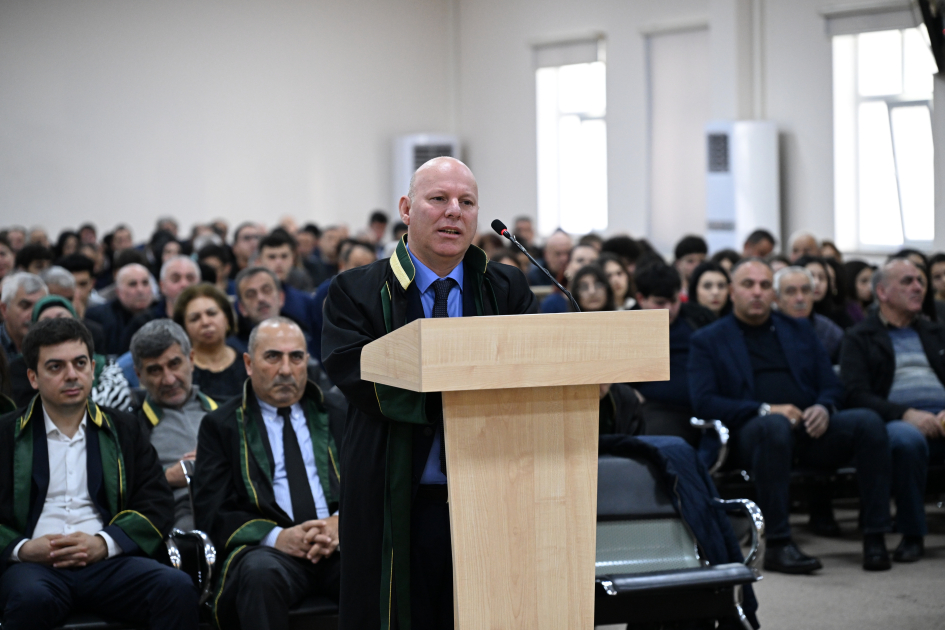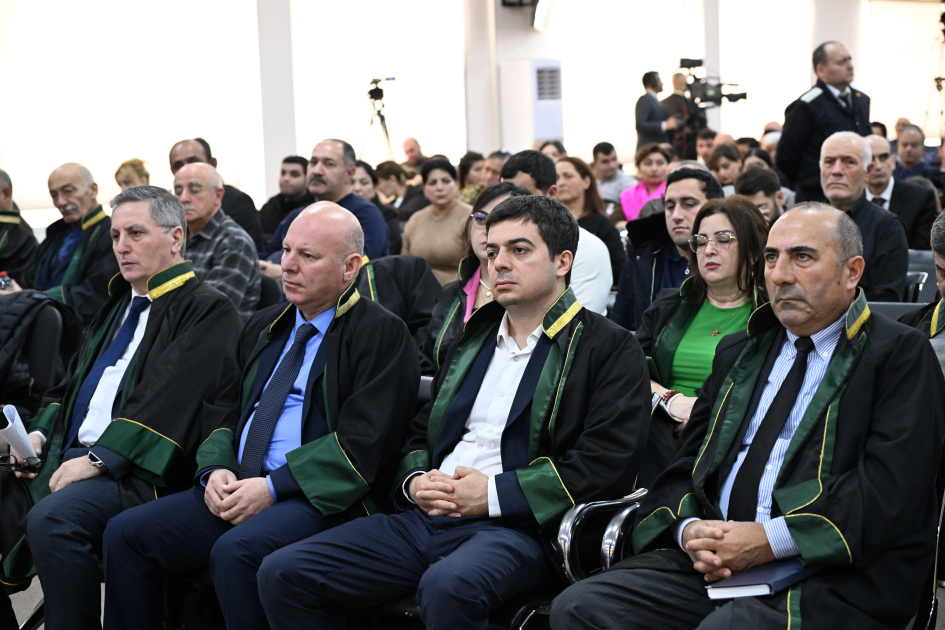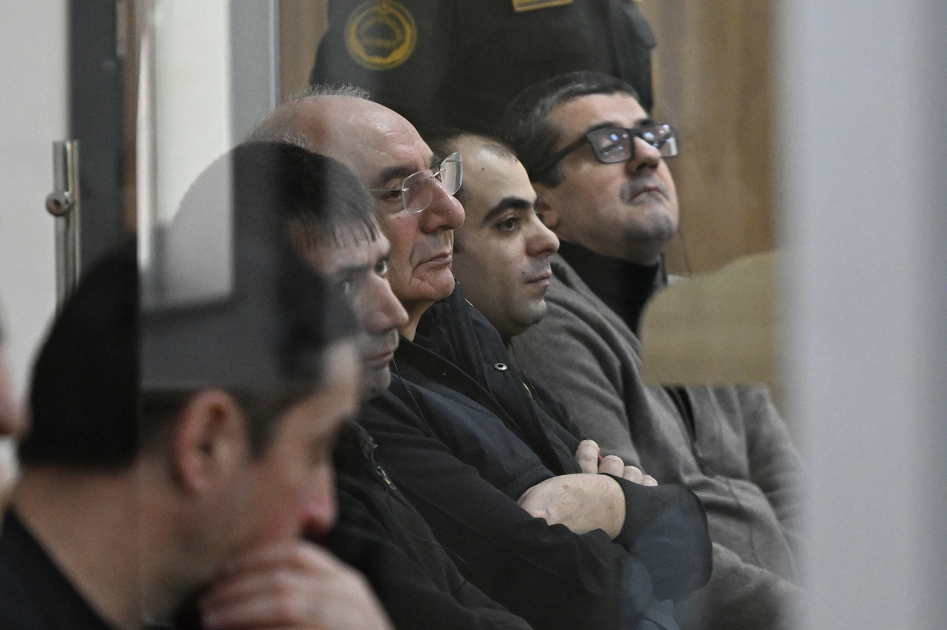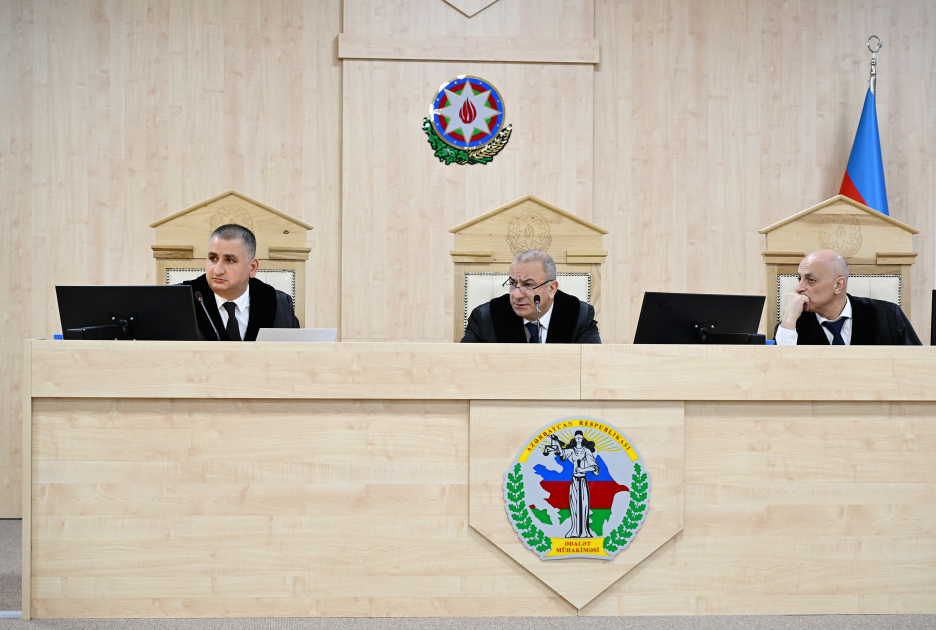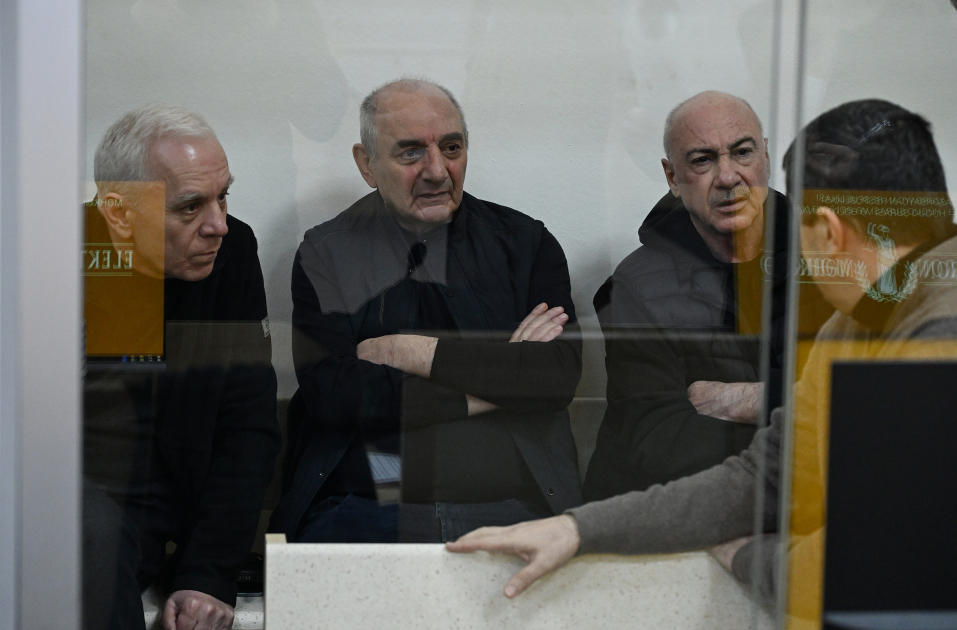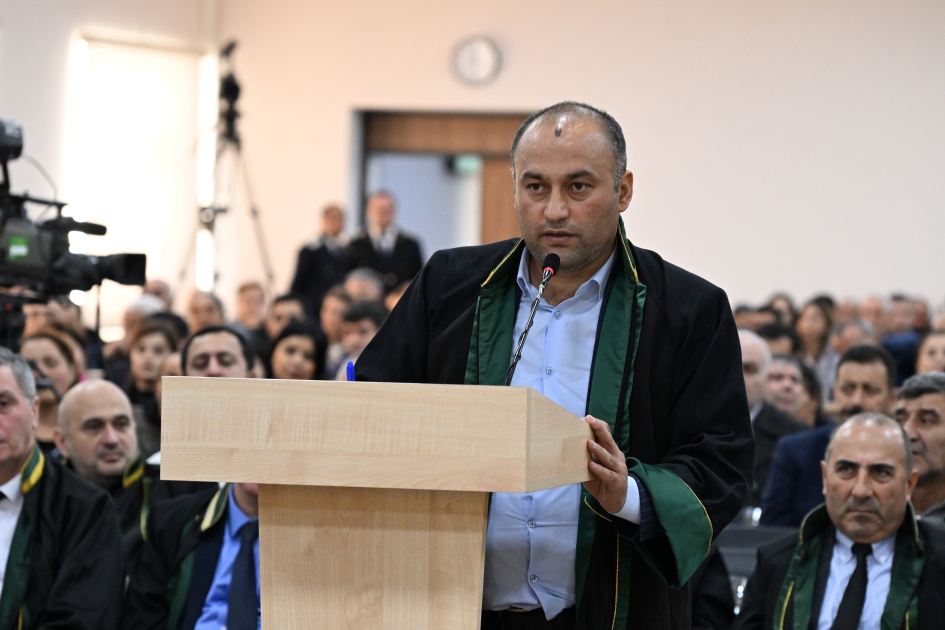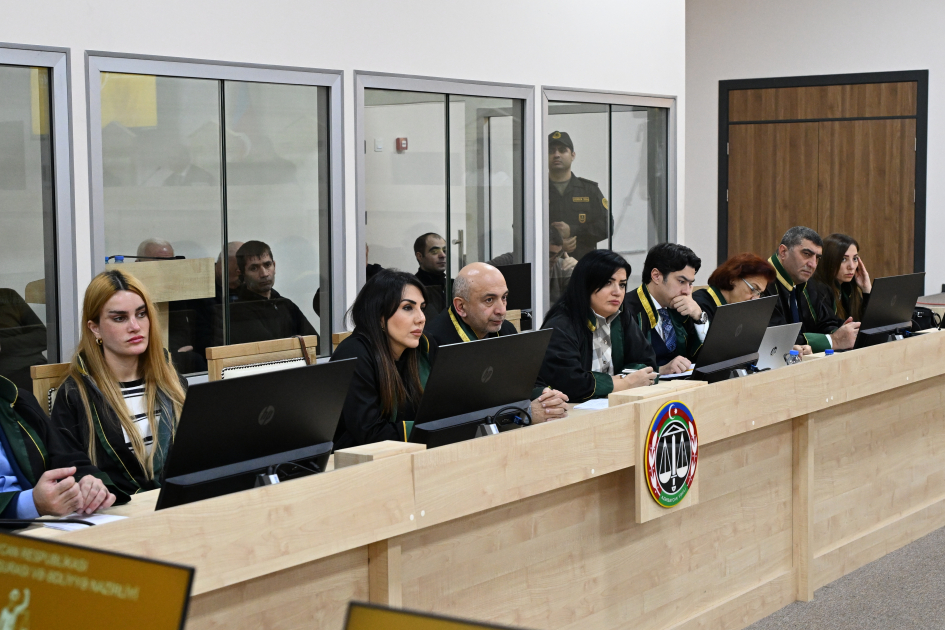

BAKU, Azerbaijan, December 11. The open court hearing in the criminal case against citizens of the Republic of Armenia – Arayik Harutyunyan, Arkadi Gukasian, Bako Sahakyan, Davit Ishkhanyan, David Babayan, Levon Mnatsakanyan, and others – accused of war crimes, crimes against peace, crimes against humanity, including planning and waging an aggressive war, genocide, violations of the laws and customs of war, terrorism, financing of terrorism, illegal seizure of power, unlawful retention of authority, and numerous other offenses committed as a result of Armenia’s military aggression against Azerbaijan – resumed on December 11, Trend reports.
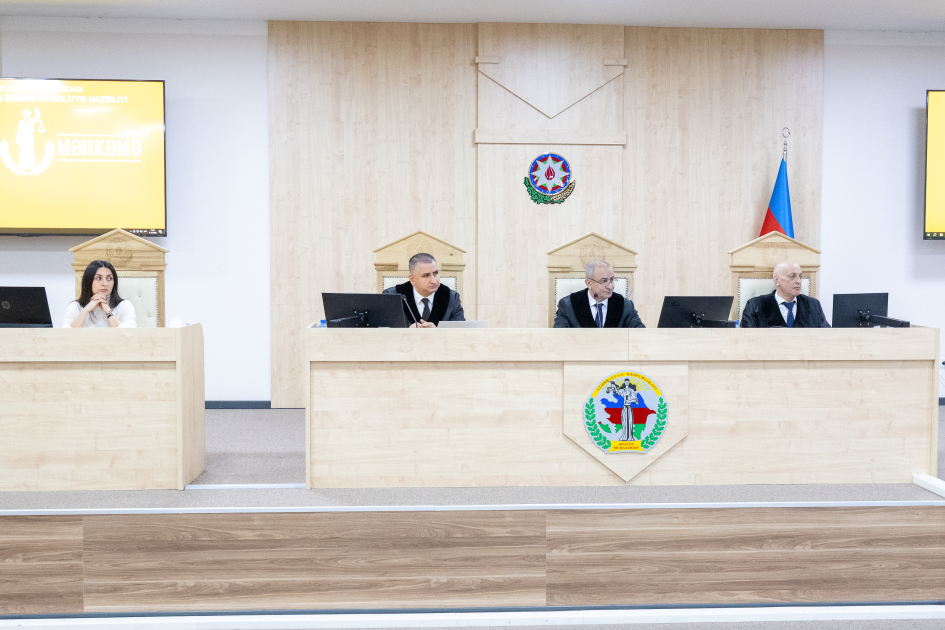
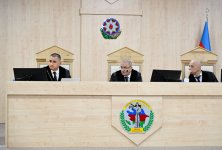
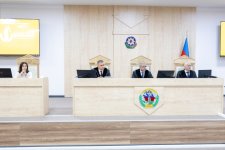
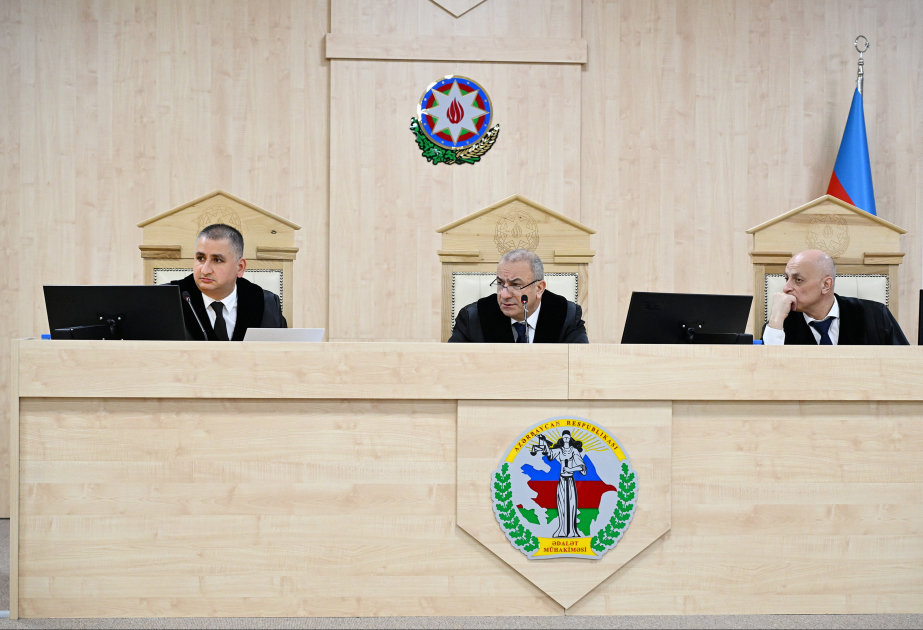
The session was held at the Baku Military Court under the chairmanship of Judge Zeynal Agayev, with judges Camal Ramazanov and Anar Rzayev, and reserve judge Gunel Sadigova.
Each of the accused was provided with interpreters in their preferred language and defense attorneys, ensuring full compliance with procedural rights.
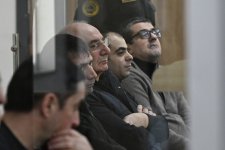
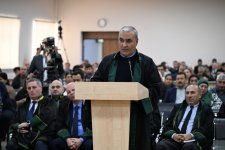
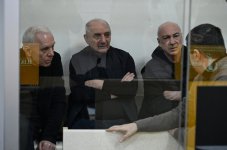
The hearing was attended by the accused, their defense lawyers, some victims, their legal heirs and representatives, as well as prosecutors representing the state prosecution.
Both parties were granted the right to deliver rebuttals during the session.
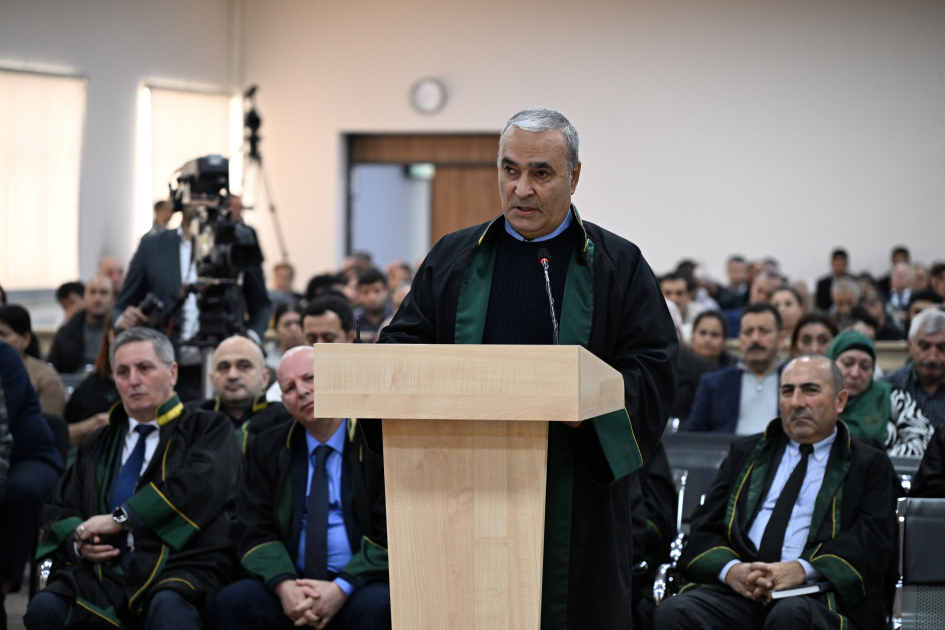
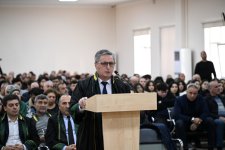
In his statement, Vusal Aliyev, First Deputy Prosecutor General of Azerbaijan, addressed arguments raised by the defense regarding the nature and role of the alleged criminal association.
He recalled that, according to the defense, a criminal organization, based on international practice, is typically formed specifically for the commission of criminal acts. However, he emphasized that evidence presented in court confirms a different reality: several years before the outbreak of the First Karabakh War, armed militant groups began to be systematically organized and supported by the leadership of Armenia.
“It is indeed confirmed by the evidence that these groups were directly backed and armed by Armenia’s leadership. But what followed makes the situation even more significant: the leaders and members of these armed units later assumed key political and military positions within both the self-proclaimed entity in the occupied territories of Azerbaijan and within the state apparatus of Armenia itself. This clearly indicates that these were not random or spontaneous groups, but rather evolved into integral components of the criminal military structure that carried out the occupation of Azerbaijani lands.”
Referring to specific defendants, Mr. Aliyev noted that individuals such as David Manukyan were members of the Shusha Battalion, while Davit Ishkhanyan served as commander of the “28th Martuni” Battalion – formations that represent rebranded, more structured, and militarized versions of earlier illegal armed groups.
The prosecutor stressed that although the fact of Armenia’s occupation of Azerbaijani territories is indisputable and has been proven by extensive evidence, this does not diminish or absolve the responsibility of the current defendants.
“While these widespread crimes were indeed orchestrated and supported by Armenia’s military and political leadership, they were carried out through the active participation of a criminal association – of which the accused were members. Moreover, at various points, some of the currently charged individuals formally held high-ranking military or political positions within the Armenian state. In this context, the Armenian state and the illegal entity functioned as a single, coordinated organism in organizing, executing, and maintaining the occupation,” the prosecutor added.
He continued: “Video materials reviewed during the investigation into Davit Ishkhanyan’s combat activities show that during the assault on Shusha, his assigned task was to prevent reinforcements from the Azerbaijani Army from reaching the city. Even if he did not physically participate in direct attacks, his actions created conditions that enabled the offensive, or prevented its resistance – a hallmark of participation in a criminal organization.”
Similarly, the prosecutor cited: David Manukyan, who participated in the occupation of Kalbajar by blocking roads; Melikset Pashayan, seen manning armed posts in villages of Aghdam; Lyova Mnatsakanyan, who provided artillery support during the occupation of Gubadli, Zangilan, and Aghdam; Madat Babayan, involved in the capture of Aghdara, Kalbajar, Tartar, and the town of Khojaly.
“All of them bear individual criminal responsibility for their roles in the occupation of these territories,” stated the prosecutor.
Vusal Aliyev emphasized that despite being fully aware of the legal implications, the accused willingly performed their assigned functions within the criminal organization – all aimed at achieving its central objective: the illegal annexation of Azerbaijan’s formerly occupied territories to Armenia.
Addressing remarks made by Arkadi Gukasian’s defense lawyer, the prosecutor clarified:
“It is true that Arkadi Gukasian was a journalist. Being a journalist does not automatically make one a criminal, nor was journalism used as a political springboard. However, he is charged because he actively fulfilled specific functions within the criminal association – spreading propaganda and incitement that facilitated the commission of violent crimes by other members. His actions contributed directly to the illegal seizure of power and other criminal acts, hence his liability.”
Finally, regarding claims that certain defendants – such as Davit Allahverdiyan and David Babayan – were too young during the First Karabakh War, the prosecutor clarified:
“While such arguments have been raised, it must be clearly understood that no charges are brought against them in connection with events during that earlier period. The indictment focuses solely on their actions and roles in the criminal organization in later years.”
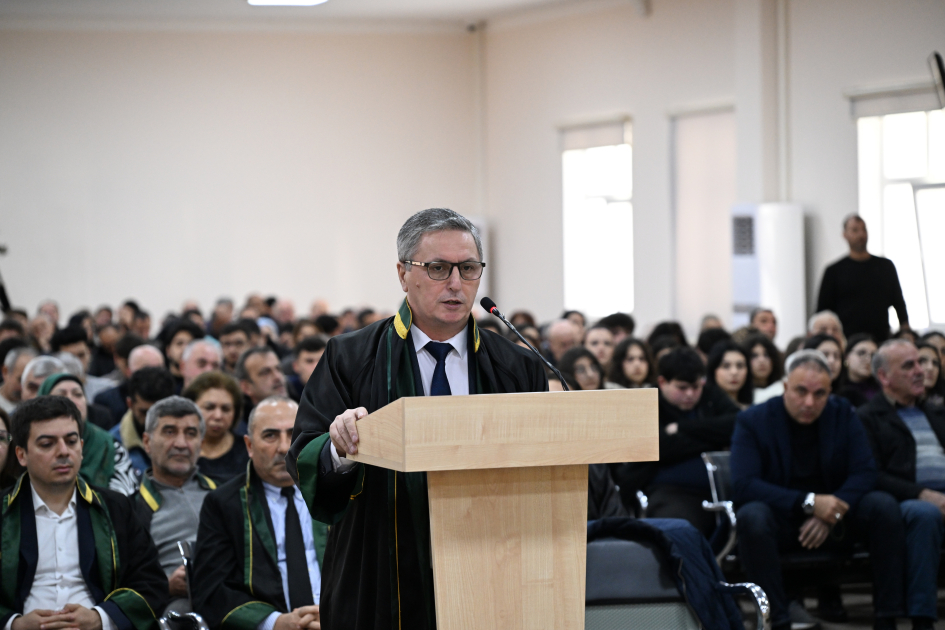
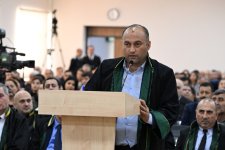
Representative of the victims, Shaig Huseynov, stated in his speech that the vast majority of defense arguments were based on purely formal objections:
“It would suffice to recall one indisputable fact – during the arrest of each and every accused person under this case, either on their person or at their place of residence, various types of weapons and combat equipment were seized as a result of search operations.”
He added that it must also be taken into account that, throughout both preliminary and court investigations, almost all of the accused demonstrated no genuine remorse for their actions.
Considering the prosecution’s position, Mr. Huseynov requested the court to issue an indictment verdict against the accused individuals.
Another victim representative, Aydin Hajiyev, called upon the court to impose fair and proportionate punishment on the defendants:
“By delivering just sentences, the court will, even if only partially, restore the rights of the victims. Their constitutional rights – including the right to life, security, property, housing, and safe living conditions – were directly violated as a result of the actions carried out by Armenian armed forces and the accused individuals.”
Rauf Abdullayev, another representative of the victims, also requested the court to ensure that the accused are held fully accountable and receive appropriate punishment.
Following these statements, the floor was given to the defense for rebuttals.
Vugar Heydarov, defense lawyer for accused Vasili Beglaryan, cited international judicial precedents, emphasizing that when there is a contradiction between a suspect’s testimony during pre-trial investigation and their statements in court, the latter should take precedence:
“The testimony given during preliminary investigation is part of the investigator’s evidence-gathering process. Therefore, statements made during the judicial phase carry greater weight and must be prioritized.”
He requested the court to base its final decision on his client’s testimony provided during the trial when deliberating in the chamber.
Azizaga Gafarov, also representing Vasili Beglaryan, argued that the prosecution had misclassified his client’s level of involvement and failed to correctly qualify the charges.
Pervana Gasimova, defense attorney for Arkadi Gukasian, expressed confidence that the court would uphold the principles of legality and justice. She formally requested the court to acquit her client.
Dmitriy Zinchenco, representing David Manukyan, stated that his client was a military serviceman at the time and merely followed orders. He requested the court to acquit David Manukyan.
Other defense attorneys – Agshin Mammadli (representing Davit Ishkhanyan), Anar Mammadov (representing Arayik Harutyunyan), and Nigar Mirbabayeva (representing Bako Sahakyan) – also presented their counterarguments in response to the prosecution’s rebuttal.
After the conclusion of all rebuttals, the accused were granted their final right to speak.
Presiding Judge Zeynal Agayev reminded those present that no questions may be directed to the accused during their final statements.
During his statement, Levon Balayan denied any guilt and added:
“I did have a weapon, but I never fired at people – shots were fired into the air.”
Madat Babayan claimed he did not kill anyone and stated he only fired into the air.
Garik Martirosyan declared that he did not consider himself guilty.
Melikset Pashayan reiterated his previous testimony: he admitted being in villages of Aghdam but denied participation in combat operations. He added that he served at a checkpoint for three months in 2023.
Davit Allahverdiyan stated he committed no crime and had always acted within the bounds of the law.
Gurgen Stepanyan affirmed that he does not consider himself guilty.
Erik Ghazaryan said he served as a soldier in the Armed Forces of Armenia from 2021 to 2023 and fulfilled his military duties accordingly. He denied the allegations against him and stated he does not regard himself as guilty.
Vasili Beglaryan maintained that he committed no crimes, was not a member of any criminal group, and does not consider himself guilty.
David Manukyan presented counterarguments to the claims made by the prosecution during his final statement.
As the hearing concluded before David Manukyan could complete his final remarks, the court announced a recess, with his statement scheduled to continue at the next session.
The court proceedings will resume on December 19.
Fifteen defendants of Armenian origin are accused in the criminal case concerning numerous crimes committed during the aggressive war waged by the Armenian state - including the aforementioned criminal association - on the territory of Azerbaijan, in violation of domestic and international legal norms. These crimes were committed for the purpose of military aggression against Azerbaijan and were carried out under the direct leadership and participation of the Armenian state, officials of its state institutions, its armed forces, and illegal armed formations, through their written and verbal orders, instructions, and guidelines; material, technical, and personnel support; centralized management; as well as under strict control and under the leadership and direct or indirect participation of Robert Sedraki Kocharyan, Serzh Azati Sargsyan, Vazgen Mikaeli Manukyan, Vazgen Zaveni Sargsyan, Samvel Andraniki Babayan, Vitali Mikaeli Balasanyan, Zori Hayki Balayan, Seyran Musheghi Ohanyan, Arshavir Surenovich Garamyan, Monte Charles Melkonyan, and others.
The following individuals - Arayik Vladimiri Harutyunyan, Arkadi Arshaviri Ghukasyan, Bako Sahaki Sahakyan, Davit Rubeni Ishkhanyan, David Azatini Manukyan, Davit Klimi Babayan, Levon Henrikovich Mnatsakanyan, Vasili Ivani Beglaryan, Erik Roberti Ghazaryan, Davit Nelsoni Allahverdiyan, Gurgen Homeri Stepanyan, Levon Romiki Balayan, Madat Arakelovich Babayan, Garik Grigori Martirosyan, and Melikset Vladimiri Pashayan - are being charged under the following articles of the Criminal Code of the Republic of Azerbaijan: Article 100 (planning, preparing, initiating, and waging a war of aggression); Article 102 (attacking persons or organizations enjoying international protection); Article 103 (genocide); Article 105 (extermination of the population); Article 106 (enslavement); Article 107 (deportation or forced displacement of population); Article 109 (persecution); Article 110 (enforced disappearance of persons); Article 112 (deprivation of liberty contrary to international law); Article 113 (torture); Article 114 (mercenary service); Article 115 (violation of the laws and customs of warfare); Article 116 (violation of international humanitarian law during armed conflict); Article 118 (military robbery); Article 120 (intentional murder); Article 192 (illegal entrepreneurship); Article 214 (terrorism); Article 214-1 (financing terrorism); Article 218 (creation of a criminal organization); Article 228 (illegal acquisition, transfer, sale, storage, transportation, and possession of weapons, ammunition, explosives, and devices); Article 270-1 (acts threatening aviation security); Article 277 (assassination of a state official or public figure); Article 278 (forcible seizure and retention of power, forcible change of the constitutional structure of the state); Article 279 (creation of armed groups not provided for by law); and additional articles.