


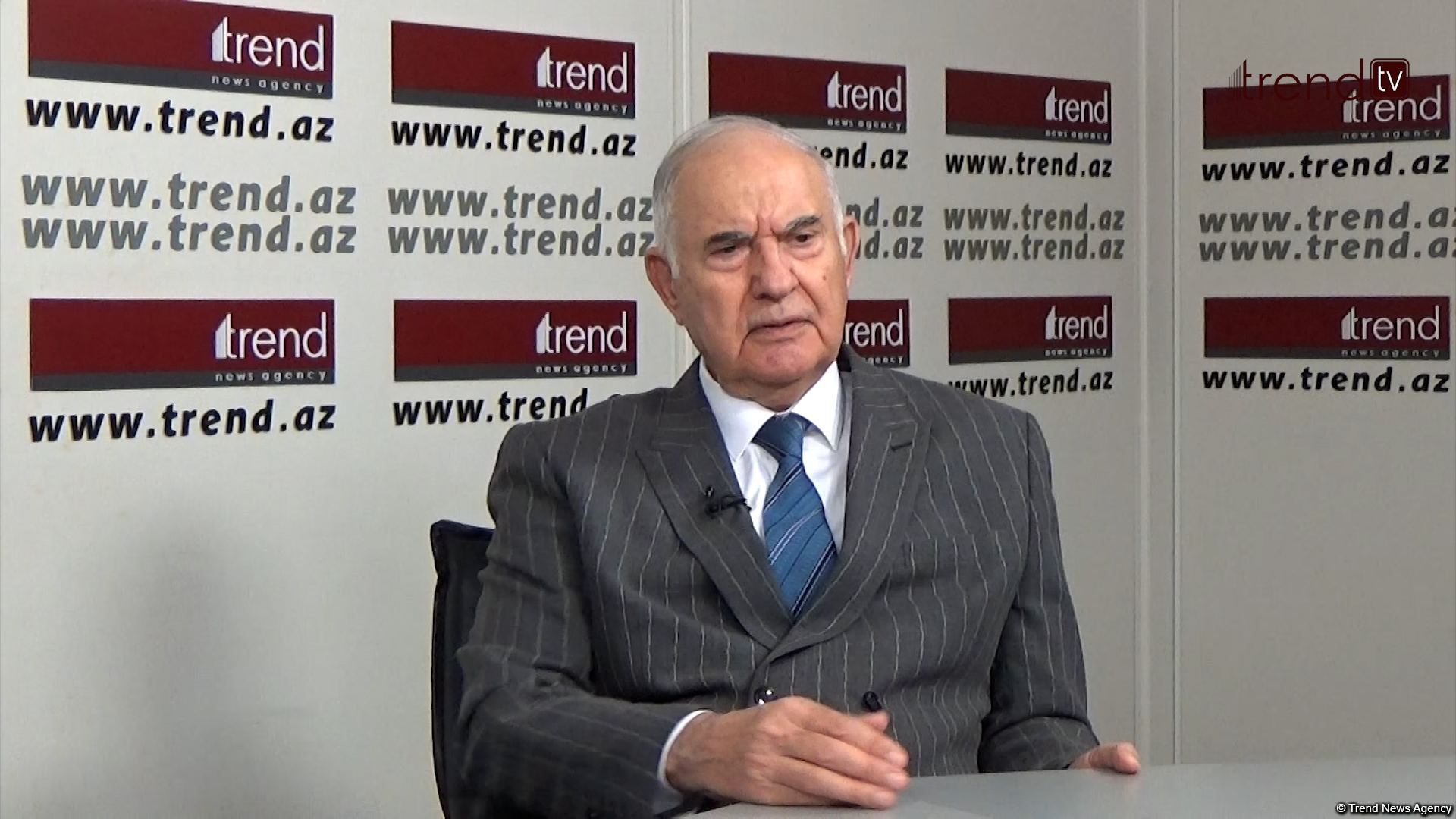

BAKU, Azerbaijan, December 11. The content of the document “Strategic Agenda for the EU-Armenia Partnership,” published after the 6th meeting of the EU-Armenia Partnership Council held in Brussels on December 2, shows that: еhe structure and focus of the document reflect a tendency to legitimize Armenia's claims rather than regional realities, political analyst Azer Garayev told Trend.
A political analyst emphasized that the European Union’s stance in this document reflects a unilateral political approach rather than a neutral mediation role in the region.
He argued, "This not only disrupts the diplomatic balance but also risks undermining the delicate dynamics of the post-conflict period. The EU’s political selectivity could have significant consequences. Specifically, the document’s reference to ‘ethnic Armenians displaced from Karabakh following Azerbaijani military operations’ misrepresents the facts. According to international organizations, including the International Committee of the Red Cross (ICRC), these individuals voluntarily left the region after rejecting the reintegration offers made by Azerbaijan. Labeling them as ‘refugees’ establishes a legal basis for future manipulation. In this respect, the EU’s position aligns more closely with Armenia’s political narrative than with the post-conflict reality."
The analyst also pointed out that while the agenda emphasizes the full implementation of decisions made by the International Court of Justice (ICJ), it predominantly echoes Armenian claims, failing to address Azerbaijan’s legitimate legal demands.
He further noted, "The peace agreement, which was initially drafted in Washington, outlines a framework for resolving these issues directly between the two nations. However, the EU document undermines this balanced legal approach and risks third-party interference in the conflict’s legal resolution. Moreover, portraying individuals convicted by Azerbaijani courts for war crimes and crimes against humanity as ‘prisoners’ is an illogical and overtly political distortion. This narrative not only misrepresents court decisions but also disrespects the rights of the victims, in direct contradiction to both legal principles and international humanitarian law."
The analyst also highlighted that the agenda gives strong political support to Armenia’s regionally isolated “peace intersection” initiative while omitting the Trump Route for International Peace and Prosperity (TRIPP) framework agreed at the Washington summit on August 8, indicating that the EU’s regional transport and communication agenda is driven more by political sympathies than objective economic considerations.
“This demonstrates that the European Union (EU) is shaping the transport and communication agenda in the region, not based on objective economic considerations, but on political biases. This raises serious questions about Armenia’s willingness to fulfill its obligations. Article 7 of the peace agreement explicitly prohibits the deployment of third-party military or observation forces along the Azerbaijan-Armenia border. Yet, the EU document prioritizes enhancing the sustainability and effectiveness of the European Union Monitoring Mission in Armenia (EUMA). EUMA’s role has shifted from mere observation to becoming a political instrument that supports Armenia’s arguments. This creates a new source of regional tension and undermines the peace process,” he said.
Garayev stressed that while the EU-Armenia document rhetorically emphasizes regional stability, in reality, it complicates the peace process by weakening the positive momentum established in the post-conflict period.
“The document is shaped by Armenia’s political expectations rather than the current realities, directly contradicting the spirit of the Washington agreements. Sustainable peace in the South Caucasus can only be achieved on a platform that is balanced, fact-based, and respectful of the sovereign rights of all parties. Azerbaijan has consistently demonstrated its commitment to this process. The responsibility now falls on both the EU and Armenia to correct the distortions in the document and return to a genuine cooperation agenda that propels the region forward rather than holding it back,” the political analyst added.
Stay up-to-date with more news on Trend News Agency's WhatsApp channel



