


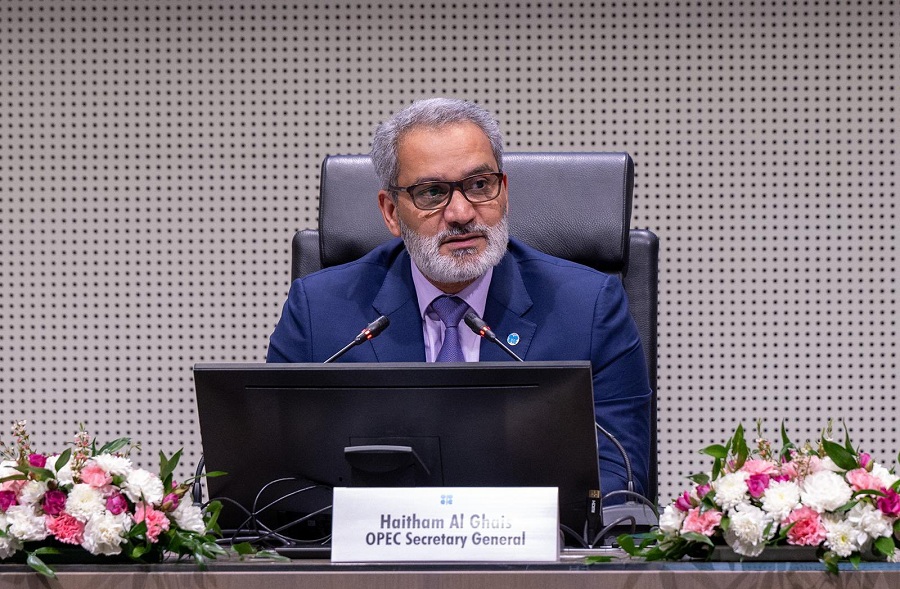

BAKU, Azerbaijan, December 11. The Declaration of Cooperation (DoC) has become a framework to help support oil market stability, said Haitham Al Ghais, OPEC Secretary General, as the DoC turns nine, Trend reports.
“History was made nine years ago and a new journey began, one that has highlighted the necessity, value and importance of multilateral dialogue and engagement at ministerial, technical and research levels. Looking back, it is clear that the DoC has become the framework to help support oil market stability, energy security and global economic growth,” he said.
Al Ghais pointed out that its success over the years is down to the trust and transparency that has developed among all participants.
“Its strength is based on the sum of all its parts. Every country has an important role to play. I have no doubt it will continue to evolve and flourish in the years and decades to come. We look forward to celebrating the 10th Anniversary in 2026,” he added.
It was nine years ago, on December 10, that OPEC Member Countries and Azerbaijan; the Kingdom of Bahrain; Brunei Darussalam; Equatorial Guinea, which later joined OPEC; Kazakhstan; Malaysia; Mexico; the Sultanate of Oman; the Russian Federation; the Republic of Sudan; and the Republic of South Sudan met in Vienna, Austria, to discuss recent global oil market developments and look at possible means to restore a sustainable oil market stability.
The meeting led to the birth of the DoC. This followed extensive rounds of consultations in the previous months of 2016, which included developments such as the ‘Algiers Accord’ on 28 September at the 170th (Extraordinary) Meeting of the OPEC Conference in Algiers and the ‘Vienna Agreement’ on 30 November at the 171st Meeting of the OPEC Conference in Vienna.
The DoC saw the producers present uphold their responsibility for oil market stability in the interest of all oil producing and consuming countries. It demonstrated a commitment to the global community to help restore and sustain oil market stability with positive and broad implications for the world economy. This commitment has continued in the nine years since.



