


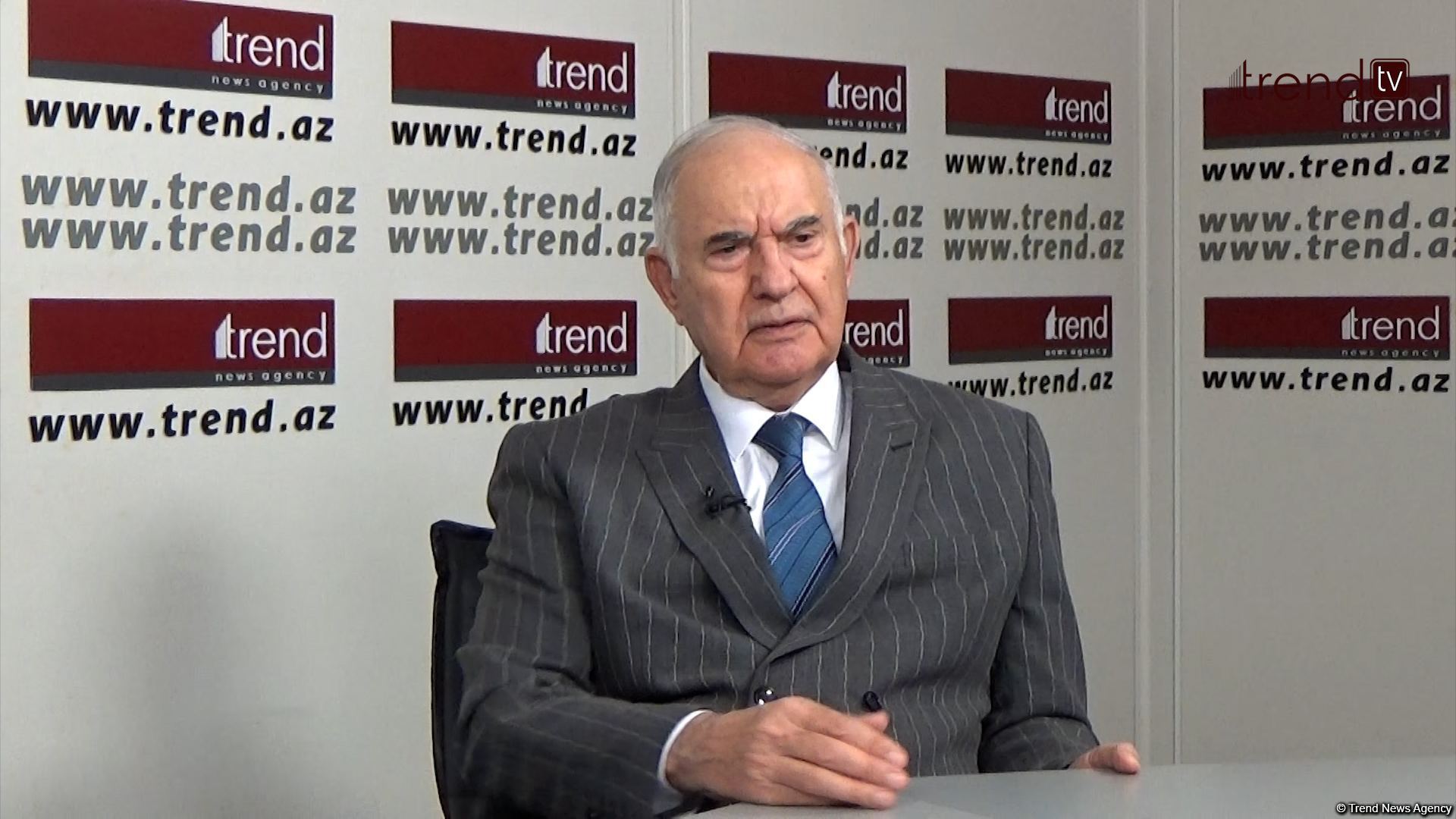

BAKU, Azerbaijan, December 12. Azerbaijan’s law‑enforcement agencies continue to implement consistent and systematic measures aimed at preventing extremism, political analyst Azer Garayev told Trend.
“Terror, translated from Latin, means fear and panic, and acts carried out on this basis are classified as serious and especially serious crimes depending on their nature and degree of public danger. In our country, the provisions regarding the fight against terrorism are reflected in the law of Azerbaijan ‘On combating terrorism’, adopted on June 18, 1999. The law establishes the legal and organizational foundations of the fight against terrorism in Azerbaijan, coordinates the activities of bodies responsible for combating terrorism, and defines their legal duties, as well as those of citizens (the law consists of five chapters and 22 articles, with amendments added on October 5, 2001). The law provides the following definition of terrorism: terrorism is an act or a threat of explosion, arson, or other actions that endanger human life on a mass scale, harm health, destroy (damage) property, or pursue other grave consequences for the purpose of violating public safety, intimidating the population, or influencing decision‑making by public authorities or international organizations,” he said.
According to him, terrorism is divided into two forms: international (transnational) and domestic (national). Based on motives, it is classified into social, nationalist, territorial‑separatist, and religious‑discriminatory forms.
“These types include:
Social terrorism — its subjects are ultra‑left groups (including communist, radical socialist, anarchist, etc.) and ultra‑right groups (neo‑national‑socialist, fascist, etc.);
Nationalist terrorism — arising from ethnopolitical conflicts, carried out by political movements, separate organizations, and groups;
Territorial‑separatist terrorism — whose subjects include well‑known terrorist organizations formed in Karabakh, an ancient territory of Azerbaijan, especially the ‘Nagorno Karabakh Army’ terrorist organization;
Religious‑discriminatory terrorism — extremist groups formed based on religious intolerance, which have become a major topic of global concern today.
Measures to combat terrorism include legal, protective‑regime, operational‑search, and preventive actions, and are carried out for the following purposes:
Ensuring human rights and freedoms, as well as the security of society and the state;
Detecting and preventing terrorism, minimizing possible damage;
Preventing the emergence, financing, and facilitation of terrorism.
The main principles of the law ‘On combating terrorism’ are ensuring legality, the inevitability of punishment for terrorist activities under Azerbaijani legislation, coordination of open and covert operational methods, complex application of legal, political, socio‑economic, and organizational preventive measures, protection of the rights of persons endangered by terrorist activity, centralized management of forces engaged in counterterrorism, and the principle of minimum visibility of operational methods,” Garayev stated.
The political analyst noted that the main international document regulating the global fight against terrorism is the Resolution adopted by the United Nations Security Council (UNSC). In reference to UNSC Resolution 1373 of 2001, the President of the Republic of Azerbaijan approved a national action plan for its implementation on May 11, 2002.
“In the modern world, international terrorism threatens not only individual states but all of humanity. During the era of globalization, new features of terrorism have emerged. Today, the targets of terrorism have changed. Unlike in past decades, terrorist organizations no longer aim solely to disrupt stability through hostage‑taking, assassinations, or hijackings to achieve short‑term goals. Instead, they now pursue broader objectives, seizing power, occupying the territory of sovereign states, and expelling local populations. Azerbaijan is a vivid example of this.
In the early 1990s, taking advantage of the weakness of the then‑government and with the support of foreign patrons, Armenia’s military aggression resulted in the occupation of 20% of Azerbaijan’s territory, displacing nearly one million people. Since 1988, Armenian terrorists have carried out 373 terrorist acts both in the conflict zone and hundreds of kilometers away, killing more than 2,000 civilians, all aimed at occupying Azerbaijani territory through aggressive separatism.
Robert Kocharyan and Serzh Sargsyan, who participated in forming the ‘Nagorno Karabakh Army’ terrorist organization, later seized power in Armenia with foreign backing, turning the resolution of the Karabakh issue into a major international problem. Similar patterns can be observed in the Middle East, where terrorist organizations created under religious discrimination have tried to undermine peace efforts after establishing pseudo‑states,” he said.
Garayev added that terrorist and extremist groups of different ideologies often cooperate with one another.
“Political and religious extremism, aggressive separatism, anti‑globalization movements, and radicalism, both left and right, form links of the same terrorist chain, complementing one another. Combating only one link does not ensure a full fight against terrorism,” he noted.
He stressed that terrorist organizations maintain ties with groups involved in other areas of organized crime.
“Separatist and radical religious regimes have used the occupied regions of independent states, including, during the occupation period, Azerbaijan’s Karabakh region and the uncontrolled 132‑kilometer border with Iran, for drug trafficking, illegal arms and human trafficking, money laundering, and other criminal activities to finance terrorism, particularly the ‘Nagorno Karabakh Army’.
Large‑scale terrorist activity can only be carried out with the direct support of certain states. Modern terrorist organizations have strong hierarchical structures with operational, intelligence, and counterintelligence units and armed groups, all possible due to state support. Many terrorist acts in Azerbaijan were organized specifically by Armenia’s special services. In addition, it is necessary to mention states that provide asylum to terrorists. Such states offer shelter for terrorists to live, train, and plan attacks, granting them political protection. Armenia is a prime example. With Armenia’s facilitation, Armenian refugees from Lebanon and Syria were resettled in Karabakh and used to form the ‘Karabakh Army’.
In the 1970s and 1980s, Armenian terrorists who carried out attacks across the world were rehabilitated in Armenia and integrated into political processes. When these terrorists could no longer act in Azerbaijan, they became active in Armenia itself and perpetrated several high‑profile attacks,” he stated.
Garayev added that alongside Armenian terrorist groups, extremist religious organizations also pose a significant threat to Azerbaijan.
“After gaining independence, ideological and legal uncertainty, Armenia’s and certain pro‑Armenian forces’ aggression, unemployment, and social difficulties created favorable conditions for foreign religious missionaries. The spread of extremism in Azerbaijan began in the early 1990s with the activities of followers of various sects disguised as humanitarian organizations.
International terrorist and extremist groups sought to form structured networks in Azerbaijan under religious, humanitarian, and economic cover. Their initial aim was to create a social base of radical believers, particularly among young people with limited religious knowledge and financial resources.
A key element of their operational methods is information support. Their propaganda includes harmful religious literature, videos, and photos of militant activities, and recorded speeches of extremist leaders, widely spread via the internet. Radical Sunni and Shia groups operate websites promoting ‘jihad’ against Western countries and other sects. Many of these websites repeat the same narratives and emphasize who the fight should target.
Global conflicts and events in war zones further activate local extremists. Propaganda materials distort the concept of ‘jihad’, portraying it as superior to all religious obligations and encouraging participation with one’s life and money,” he said.
According to Garayev, extremist organizations rely heavily on information tools.
“Information support includes harmful literature promoting radical ideologies, videos glorifying combat scenes (‘jihad’), and speeches written by extremist leaders for propaganda purposes. These materials emphasize that Muslims must consider ‘jihad’ superior to all acts of worship and values, and that they must join it with their life and wealth.
The internet plays a major role in spreading this propaganda. Through online platforms, radicalized individuals can watch such materials and even learn how to manufacture explosives and toxic substances at home,” he said.
After the events of September 11, 2001, the fight against terrorism entered a qualitatively new stage, significantly altering the global situation. The international community was shocked by these monstrous terrorist crimes. The rapid rise of well-known threats from international terrorism, which challenges all of humanity, dictated the need for collective efforts to combat it. Azerbaijan, without hesitation, joined the anti-terrorist coalition after this tragedy and is currently contributing to the fight against international terrorism within the framework of the program it developed for implementing legislative, organizational, and practical measures in this direction,” Garayev said.
The analyst emphasized that radical religious figures widely use social networks such as Facebook, Odnoklassniki, X (formerly Twitter), and communication programs like WhatsApp and Telegram to promote 'jihad' in these networks, seeking to expand their influence and incite interfaith conflicts. For example, in October 2013, in Baku, the Wahhabi extremist Nariman Mirzayev and his group, who threatened the late leader of the Shia community, Mashadi Dadash' Shahin Hasanli, incited sectarian confrontation between Sunnis and Shiites in our country through Facebook.
Moreover, a significant factor influencing the propaganda of extremism carried out by terrorist organizations today is Islamophobia. The terrorist organization 'Al-Qaeda', which carried out the notorious attacks in the U.S. on September 11, 2001, and the so-called Muslim 'scholars' integrated into this organization, created favorable conditions for Islamophobic supporters to form negative images of Muslims, such as 'terrorists', 'Wahhabis', 'Taliban' etc., and spread the perception of Islam as a religion that preaches violence and cruelty.
Based on the terrorist attacks and other incidents that have occurred, it's necessary to widely convey to the public the idea that judging all representatives of one religion and culture is wrong and dangerous. Islamophobia should be seen not only as discrimination against Muslims but also as a threat to world peace, since Islamophobia is based on superficial information from sources that are little connected to Islam, lacking a scientific basis, and are unreliable. As Imam Ali once said, 'A person usually harbors hostility toward what they do not understand.'
Observations have shown that among radical Sunnis in Azerbaijan, there is a growing number of individuals who wish to travel to 'jihadist' regions. Since 2012, they have been leaving our country under the pretext of seeking work abroad, obtaining religious education, and other reasons, and have started heading to these countries to participate in conflicts in Syria and Iraq, as well as to join terrorist and extremist groups acting as part of the opposition.
Analysis shows that foreign extremists who fought in conflict regions abroad are likely to engage in terrorist, sabotage, or other criminal activities upon their return, which could impact the security and socio-political stability of the countries of which they are citizens.
As a result of special measures taken by Azerbaijan's security agencies over the past decade to combat international terrorism and religious extremism, more than 20 terrorist and religious extremist groups have been neutralized.
Garayev noted that recently, in response to anti-terrorist operations against the terrorist organization ISIS, they announced that they would retaliate with terrorist acts.
"The terrorists pointed out citizens of these countries and their foreign representations as potential targets and noted that such targets exist in Azerbaijan and other states. As the intensity and effectiveness of anti-terrorist operations grow, it's expected that 'ISIS members' will move toward new operational directions beyond the conflict zones where this terrorist organization operates. One of the most frequently mentioned directions is the Afghanistan-Pakistan region.
However, data analysis shows that in the next stage, ISIS will increase its activity in the North Caucasus region of Russia and in the Central Asian countries, as well as in other regions of the world. There is no doubt that foreign militants from ISIS and other terrorist organizations connected with it will be involved in this activity. It should be noted that ISIS prefers to carry out more high-profile terrorist attacks rather than engage in long-term ideological work to create local hotspots to expand the influence of extremists beyond the conflict zone in Syria and Iraq.
ISIS and its associated terrorist structures also widely use the factor of fueling interfaith opposition. Spreading their radical religious ideas among youth, the ideologues of the organization skillfully discredit religious figures and believers who do not accept this concept. For this reason, the population may be subjected to terror because of religious beliefs, sectarian or denominational affiliation, as well as ethnicity, and their attitude toward the existing authorities.
Most extremists who traveled to Syria and Iraq joined ISIS through persuasion and invitations from their contacts who had already joined the organization. Most of them claim that joining ISIS is an obligation for every Muslim, trying to justify this with religious traditions and hadiths. However, recently, among local extremists, an opinion has also begun to form that the brutal activities of ISIS are not in line with Islam.
Extremists who travel to the conflict zone mostly prefer to travel in groups, but upon crossing the border, they act separately to avoid drawing attention. Some extremists traveled to Syria with their families and thus faced the harsh consequences of military actions in the region - hunger, disease, and enslavement," he said.
According to him, most of the extremists who traveled to Syria and Iraq, upon returning to Azerbaijan, explained their return due to the harsh conditions of life in the conflict zones, the threat to their lives, or mistakes made by the terrorist organizations they joined in religious matters. It was observed that they were heavily influenced by radical religious ideology, which led them to behave aggressively toward those around them, reject a tolerant and secular way of life, call the state 'taghut', and declare to those around them that they would not abandon armed and violent struggle, which they themselves called 'jihad' against the state.
In this regard, and in light of international experience, in March 2014, punishments were tightened for individuals participating in conflicts abroad, and since then, if the criminal actions of extremists who traveled to the conflict zones in the Middle East were proven, they were subject to investigation by the relevant court.
As a result of these and other legal and preventive measures, the process of extremists traveling to conflict zones has slowed down in recent times. One of the factors influencing this process is the strict control of extremists' travel routes by the Turkish army and security forces.
Moreover, the seriousness and relevance of the problem necessitate the implementation of preventive measures by our country's security forces in cooperation with foreign partner services in the fight against international terrorist and religious extremist organizations. At a meeting with the heads of intelligence agencies who participated in the 41st session of the Council of Heads of Security and Intelligence Agencies of the Commonwealth of Independent States (CIS) member countries, held in Baku in September 2016, the President of the Republic of Azerbaijan, Supreme Commander-in-Chief Ilham Aliyev, stated, 'The fight against terrorism should be global.…'
And therefore, to prevent threats, the unification of efforts, exchange of information, and sincere cooperation between the intelligence services of all countries are necessary. Today, the State Security Service, within the framework of joint investigations with working groups of Turkish, U.S., Russian, UK, German, Kazakh, and other foreign colleagues, conducts operational-investigative activities against terrorist organizations operating in various conflict zones, and cooperating with intermediary networks, and concrete results are being achieved in this direction.
Given the above, in the modern era, in the fight against international terrorist organizations, including forces that have become sources of radicalization, a combination of overt and covert methods, legal, political, socio-economic, and organizational-preventive measures is being used. At the same time, great importance is attached to organizing explanatory work among the population about the nature of terrorism and the harmful aspects of religious radicalism, and publishing materials on the internet and in the media that promote the superiority of religious tolerance in the modern world over the propaganda of terrorist and extremist organizations. As President Ilham Aliyev emphasized, 'One of the important elements in the global fight against terrorism is the promotion of the ideas of multiculturalism.' The Azerbaijani people themselves, by their nature and character, possess a strong sense of tolerance,” said Garayev.
He noted that currently in Azerbaijan, communities and groups are uniting a large number of believers, acting under the influence and protection of religious centers and humanitarian organizations from some Eastern countries, intending to form a social base for the seizure of power by overthrowing the existing political regime, creating an infrastructure consisting of radical Islamists. Youth constitutes the majority of its members. For example, the average age of Salafists is under thirty years. Every Salafist must primarily attract their family (including women) to the movement. The number of women in these communities is about 25%.
"There are various objective and subjective reasons for the emergence of religious radicalism and extremism, which manifest in many spheres. It's precisely for these reasons that strong states encourage discrimination in their policies, which leads to the escalation of interfaith relations, in some cases offending religious values, and inciting hatred and animosity on religious grounds.
At the same time, the creation of conditions for the spread of harmful religious sects in several countries, the ineffective organization of work to combat radical and extremist groups, the use of religion for political purposes by political and social organizations, the long-standing unresolved conflicts of international and regional significance, and the emergence of new conflicts further strengthen trends of extremism and intolerance in the world, expanding their scope. Efforts and measures taken by countries and international organizations to prevent these risks, in some cases, do not bring significant results and, on the contrary, lead to further deterioration of relations, complicating the situation and escalating conflicts.
This stimulates the growth of extremism and radicalism, armed and bloody conflicts in the world as a whole, and turns innocent people into victims of conflict. In the modern era, in the absence of joint efforts by a strong state and civil society, as well as international institutions, preventing such problems seems impossible. To effectively combat extremism and radicalism, both a strong state and a strong civil society are necessary.
If we look at the history of Azerbaijan, we see that our people have professed various religions for centuries, including Zoroastrianism, Christianity, and Islam, which led to the emergence of religious tolerance among the overwhelming majority of the population. However, the processes occurring in recent periods, which contribute to the growth of extremism, make it important to consider these factors.
Considering the above, coordination of both open and covert methods of combating the forces that have become sources of radicalism, legal, political, socio-economic, and organizational-preventive measures are being used. At the same time, significant importance is attached to organizing explanatory work among the population about the nature of terrorism and the harmful aspects of radicalism in religion, and publishing materials in the internet space and media that promote tolerance in religion against the propaganda of terrorist and extremist organizations," he said.
The analyst explained that in the modern era, ensuring freedom of conscience and religious beliefs, which are fundamental human rights, plays a special role in the politics and relationships of many states and international organizations. Today, it's the duty and exclusive right of the state to approach issues related to religion not only from the perspective of human rights and national moral values but also in terms of security. Although religion is separated from the state, the state bears direct responsibility for the religious situation in the country and the safety of its citizens.
“Our state is still successfully continuing activities aimed at preventing religious extremism, protecting our citizens from external influences, maintaining a stable religious situation in the country, and ensuring the safety of the population. To bring legal acts in line with international norms, to clearly define the rights and obligations of the state and religious institutions, as well as to restrict the activities of sects and movements that promote harmful ideas contradicting the principles of humanism, the legislative framework is constantly being improved.
Provisions related to strengthening the fight against extremism and preventing trends of radicalization are also reflected in the Criminal Code of Azerbaijan. Article 279.1 (the creation of armed formations or groups not provided for by the legislation of the Republic of Azerbaijan, as well as participation in their creation and activities, supplying them with weapons, ammunition, explosives, military equipment, or military equipment) is of particular importance in the fight against extremism and is mainly applied to religious radicals who created armed groups to overthrow the secular state system, as well as to those who have gone to foreign conflict zones with the intention of participating in the 'jihad'.
To align the legal measures taken in this direction with modern requirements, in March 2014, penalties applied to individuals participating in foreign conflicts were tightened, and Article 283-1.3 was added to the Criminal Code (the involvement of citizens of Azerbaijan or stateless persons permanently residing in Azerbaijan in armed conflicts outside of Azerbaijan to spread religious teachings under the guise of performing religious rituals, or based on religious hostility, religious radicalism, or religious fanaticism, or conducting military training for this purpose, or creating a stable group for this purpose or leading such a group),” Garayev announced.
The analyst recalled the adoption of the law of Azerbaijan 'On the struggle against religious extremism' in December 2015. Its adoption made a significant contribution to preventing the incitement of national, social, or religious hatred, humiliation of national dignity, restricting citizens' rights, or establishing privileges based on their national, racial, social, or religious affiliation.
According to the document, everyone has the obligation to provide relevant state authorities with information that may help identify and prevent cases of religious extremism, religious fanaticism, and religious radicalism, as well as minimize the harm that may be caused by these phenomena. According to the law, individuals involved in religious extremist activities are held accountable under the provisions of the Criminal, Administrative, and Civil Codes. The registration of legal entities engaged in religious extremist activities is canceled, and their activities are prohibited.
According to the law, during a special operation against religious extremism, conducted in accordance with Azerbaijani legislation, damage to the life, health, or property of religious extremists may occur. A person participating in the fight against religious extremism is not held responsible for the damage caused during the special operation against religious extremism.
According to the amendment to the law 'On citizenship', participation in terrorism in Azerbaijan, carrying out actions to violently change the constitutional order, may lead to the revocation of citizenship. The document states that if a citizen undergoes military training in a foreign state under the guise of religious education, spreads religious movements on the grounds of hostility, participates in religious conflicts abroad under the guise of religious rituals, attracts another person to this activity, or creates an armed group for this purpose, they will be deprived of citizenship.
After these amendments to the legislation, by the relevant court decision, more than 250 individuals who participated in foreign conflicts were deprived of Azerbaijani citizenship, and work in this direction continues,” he noted.
Garayev pointed out that one of the measures taken in the fight against religious extremism is the additional amendments made in 2015 to the law of Azerbaijan 'On freedom of belief', aimed at preventing the appointment of religious leaders to mosques from among young people who have received religious education abroad and have been subjected to harmful religious influences.
According to paragraph 3 of Article 21 of the mentioned law, 'ceremonies and rituals related to the Islamic religion may only be carried out by citizens of Azerbaijan. Citizens of Azerbaijan who have received religious education abroad are prohibited from conducting Islamic ceremonies and rituals. The main goal is to prevent individuals who have been subjected to foreign ideological influence during their studies from acting as religious leaders in the country and to prevent harmful religious propaganda in places of worship and among the population.
Moreover, according to the new amendment to the law, the demonstration of religious slogans and other religious attributes (except for religious attributes worn by a person) outside places of worship, in public places, is now prohibited in Azerbaijan. Religious flags may only be displayed at places of worship, religious centers, and institutions.
In Azerbaijan, penalties are also provided for individuals who violate the legal regime during special operations against religious extremism, hinder entry and exit to the area of the operation, do not comply with evacuation requirements in case of necessity, obstruct vehicle inspections, refuse checks, and engage in other similar actions. In this regard, a relevant article was added to the Administrative Offenses Code at the initiative of the President of the Republic of Azerbaijan.
Today, the law enforcement agencies of Azerbaijan are taking consistent and systematic measures to prevent extremist and radicalization trends in the country. Measures taken concerning young people participating in armed formations abroad and preventing the spread of radical movements in our country confirm this.
In general, given the seriousness and relevance of the issue, the competent state authorities of Azerbaijan, together with public organizations, should organize preventive, legal, and awareness-raising activities in the fight against extremism,” added the analyst.



