


BAKU, Azerbaijan, June 10. Uzbekistan and Sweden engaged in high-level discussions aimed at expanding trade, investment, and industrial cooperation, with particular emphasis on opportunities in pharmaceuticals, information technology, mining, and renewable energy.
This was reflected in a statement by the Uzbek Ministry for Investment, Industry and Trade.
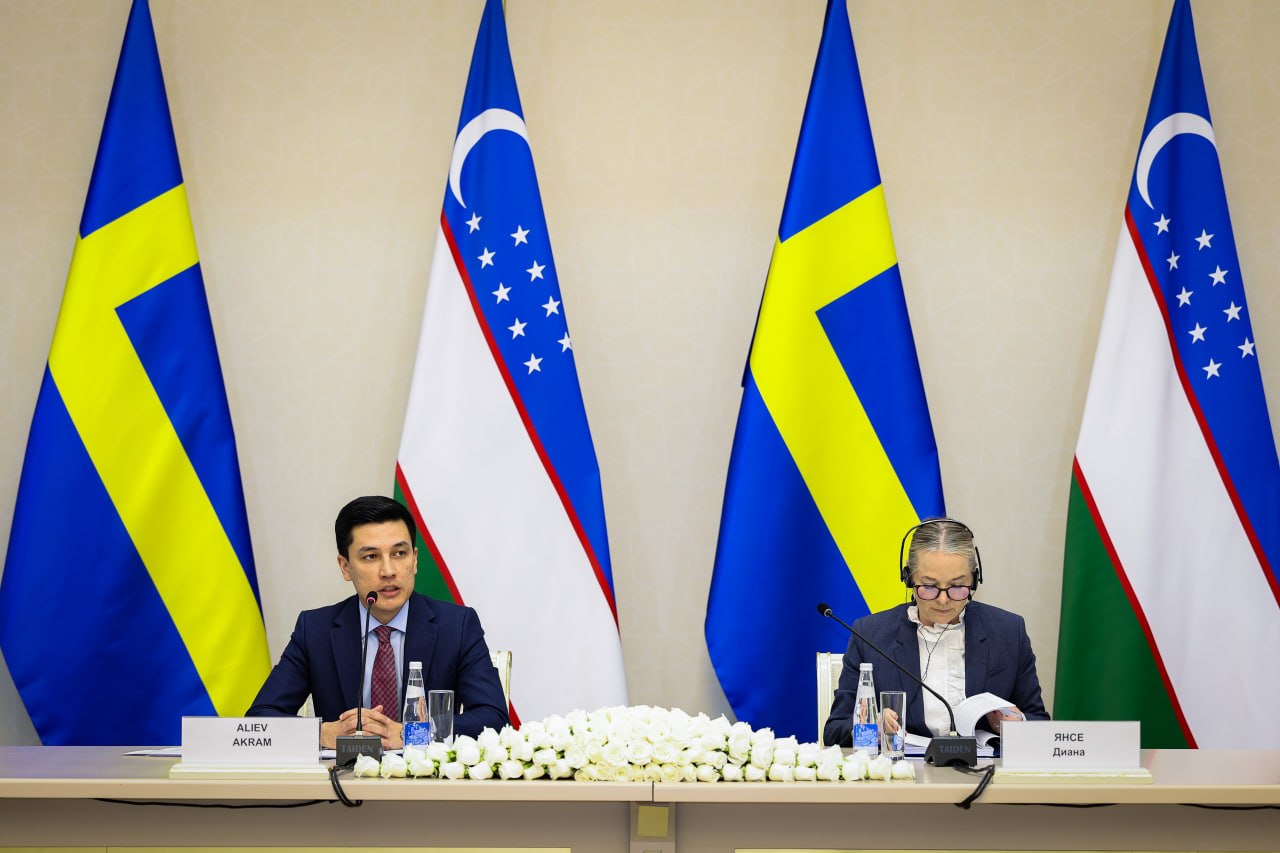
The discussions took place during the Uzbek-Swedish Roundtable in Tashkent, convening Deputy Minister of Investments, Industry and Trade Akram Aliev and Diana Janse, Sweden’s State Secretary to the Minister for International Development Cooperation and Foreign Trade. The meeting was attended by diplomats, government officials, and executives from leading Swedish companies, including Sandvik, ABB, Elekta, AstraZeneca, SKF, and Ericsson.
During the roundtable, the sides reviewed Uzbekistan’s recent economic performance and articulated future development objectives. It was noted that Uzbekistan’s gross domestic product reached 147 billion euro (approximately $169 billion) by the end of 2025, accompanied by 150 billion euro (around $173 billion) in foreign direct investment. The country has set a target to expand its economy to 240 billion euro (approximately $276 billion) by 2030.
The participants also examined trade opportunities under the European Union’s GSP+ preferential trade scheme, which permits duty-free access for roughly 6,200 categories of Uzbek products to European markets. Sweden’s interest in enhancing its presence in Central Asia, a region encompassing a consumer market of approximately 80 million, was underscored.
The discussions further identified promising avenues for bilateral cooperation. In the pharmaceutical sector, particular attention was given to opportunities within the Tashkent Pharma Park cluster. The information technology industry was highlighted, with Uzbekistan offering tax incentives for investors through 2040. In the mining and energy sectors, dialogue focused on Uzbekistan’s strategic objective of increasing the share of renewable energy in power generation to 54% by 2030.
Separate business-to-business and business-to-government sessions focused on practical steps for implementing joint investment projects and expanding commercial partnerships between Uzbek and Swedish companies.



