


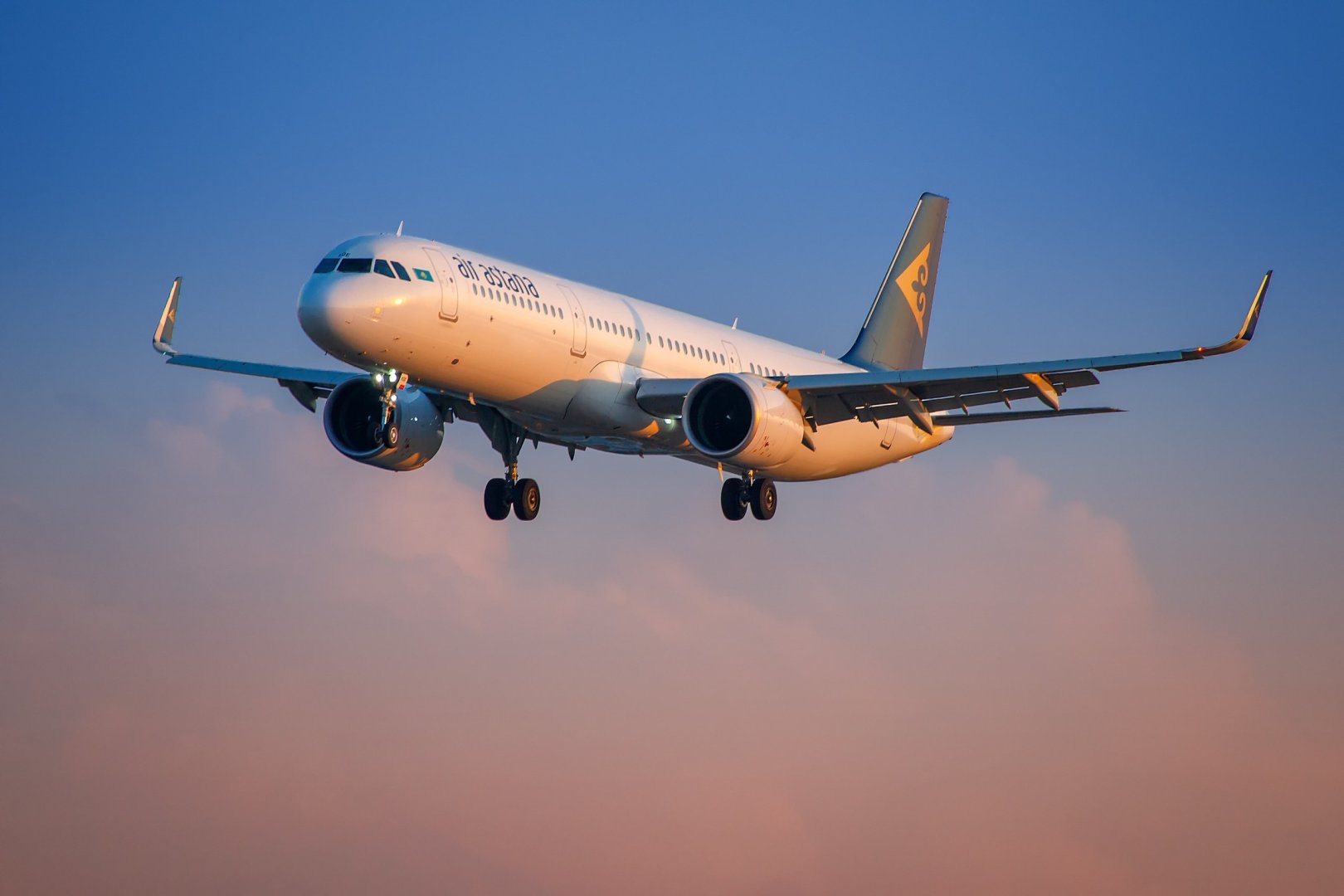

ASTANA, Kazakhstan, August 8. Kazakh Air Astana airline summarized the results of the first half of 2025, demonstrating growth in key financial and operational indicators, Trend reports citing Air Astana.
The total revenue of the Group of companies, including the
low-cost carrier FlyArystan, amounted to $658.2 million, which is
12.1 percent higher than the same period last year - $587.2
million.
The Group’s net profit in the first half of 2025 reached $10.7
million, increasing by 131.9 percent compared to last year - $4.6
million. The number of passengers carried also grew, totaling 4.5
million people, which is 11.6 percent more than in the same period
of 2024. The EBITDAR indicator increased by 24.1 percent to $157
million, with a margin of 23.9 percent.
Moreover, the growth in passenger traffic was ensured, among other things, by the expansion of the route network. In the first half of 2025, 20 new destinations were launched, including flights to China, India, Southeast Asian countries, and the Persian Gulf. The development of Chinese and Indian routes has been particularly active: the number of flights to China increased to 30 per week, with new routes opened to Guangzhou and Yining. In India, in addition to Delhi, flights are now operated to Mumbai as well.
According to the results of the second quarter of 2025, revenue amounted to $365.8 million, showing a 13.5 percent increase compared to the same period in 2024. EBITDAR was 97.1 million dollars with a growth of 17.2 percent, and net profit $18 million.
The Group’s fleet increased to 61 aircraft. After retiring Embraer aircraft, the carrier now operates a fleet of Airbus A320 and Boeing 767.
Air Astana is modernizing its technical base and training infrastructure. In the first half of 2025, the capacity of the maintenance center was expanded, and a subsidiary company for ground handling, Air Astana Terminal Services, was registered. The Group is also implementing a digital transformation strategy: AI-based solutions have been introduced to optimize crew selection and fuel efficiency management.
As part of the environmental agenda, the Low Carbon Development Program has been updated, according to which the company plans to achieve carbon neutrality by 2050.
The program for replacing and repairing Pratt & Whitney engines continues to be implemented, including through the use of spare engines and capacity redistribution.
According to the company, demand for air transportation remains stable despite geopolitical situations and currency fluctuations.
EBITDAR is a financial indicator that stands for Earnings Before Interest, Taxes, Depreciation, Amortization, and Rent. In simple terms, EBITDAR shows a company’s operating profit excluding interest, taxes, depreciation, amortization, and especially rent expenses, which is important for companies with high rental costs (such as airlines, restaurants, hotels).



