


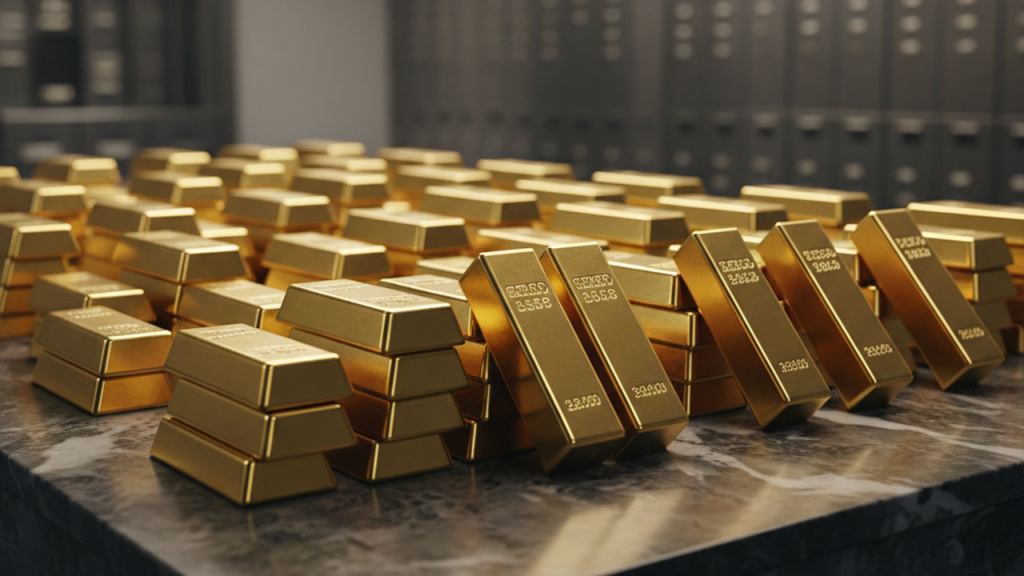

BAKU, Azerbaijan, July 12. Gold was headed for its steepest quarterly loss since 2013 on Tuesday as investors recalibrated expectations for U.S. interest rates, with persistent inflation concerns and rising oil prices reinforcing the case for further Federal Reserve tightening.
This was reflected in the statement published by the KAP DEPO.
According to the KAP DEPO, spot gold rose 0.2% to $4,046.2 an ounce by late trading, but remained down 11.2% since the start of April, putting the metal on track for its first quarterly decline since 2024.
The retreat comes as higher crude prices, fueled by renewed tensions in the Middle East, have stoked concerns that inflation could remain elevated for longer, reducing the likelihood of near-term policy easing.
While bullion is typically seen as a hedge against inflation and geopolitical turmoil, higher borrowing costs tend to undermine its appeal by raising the opportunity cost of holding non-yielding assets.
Treasury yields remained elevated, offering investors stronger returns in fixed-income markets and adding pressure on gold.
According to CME FedWatch data, traders are pricing in a 65% probability of a Federal Reserve rate hike in September, with markets now anticipating up to three increases before year-end.
Focus is now shifting to upcoming U.S. labor market data, which could provide fresh clues on the Fed’s next move and shape expectations for the pace of tightening.
Still, structural demand from central banks continues to offer support. A recent OMFIF survey showed reserve managers intend to gradually reduce their exposure to the U.S. dollar over the next decade while increasing allocations to gold, citing ongoing geopolitical uncertainty and diversification needs.
The latest correction in gold prices reflects a broader shift in global monetary expectations rather than a collapse in underlying demand. With bullion falling below $4,000 per ounce for the first time since November and extending losses of more than 20% from January’s record highs, markets are increasingly adjusting to the prospect of higher U.S. interest rates for longer, due to Trend's analysis.
The main pressure comes from the Federal Reserve’s hawkish stance, which has strengthened the U.S. dollar and kept Treasury yields elevated. This has reduced the appeal of non-yielding assets such as gold, prompting investors to rotate into fixed-income markets. At the same time, downward revisions by major financial institutions, including Goldman Sachs and Deutsche Bank, have added to bearish sentiment, reinforcing expectations that the metal could remain under pressure in the near term.
Still, the longer-term picture remains more balanced. Continued purchases by central banks, which expanded at the fastest pace in more than a year during the first quarter, suggest that institutional demand for gold as a reserve diversification tool remains intact. This could help cushion further declines even as speculative flows weaken.
"For Uzbekistan, the correction carries wider macroeconomic significance. Gold remains the country’s largest export commodity and accounts for the bulk of its international reserves, which reached $70.6 billion in May. Recent Central Bank data showed the value of gold reserves fell by $156 million during the month as prices weakened, despite an increase in physical holdings. This highlights Uzbekistan’s exposure to global bullion markets, where prolonged price declines could weigh on export earnings, reserve valuations, and the pace of foreign currency accumulation," the Trend's analysis said.



