


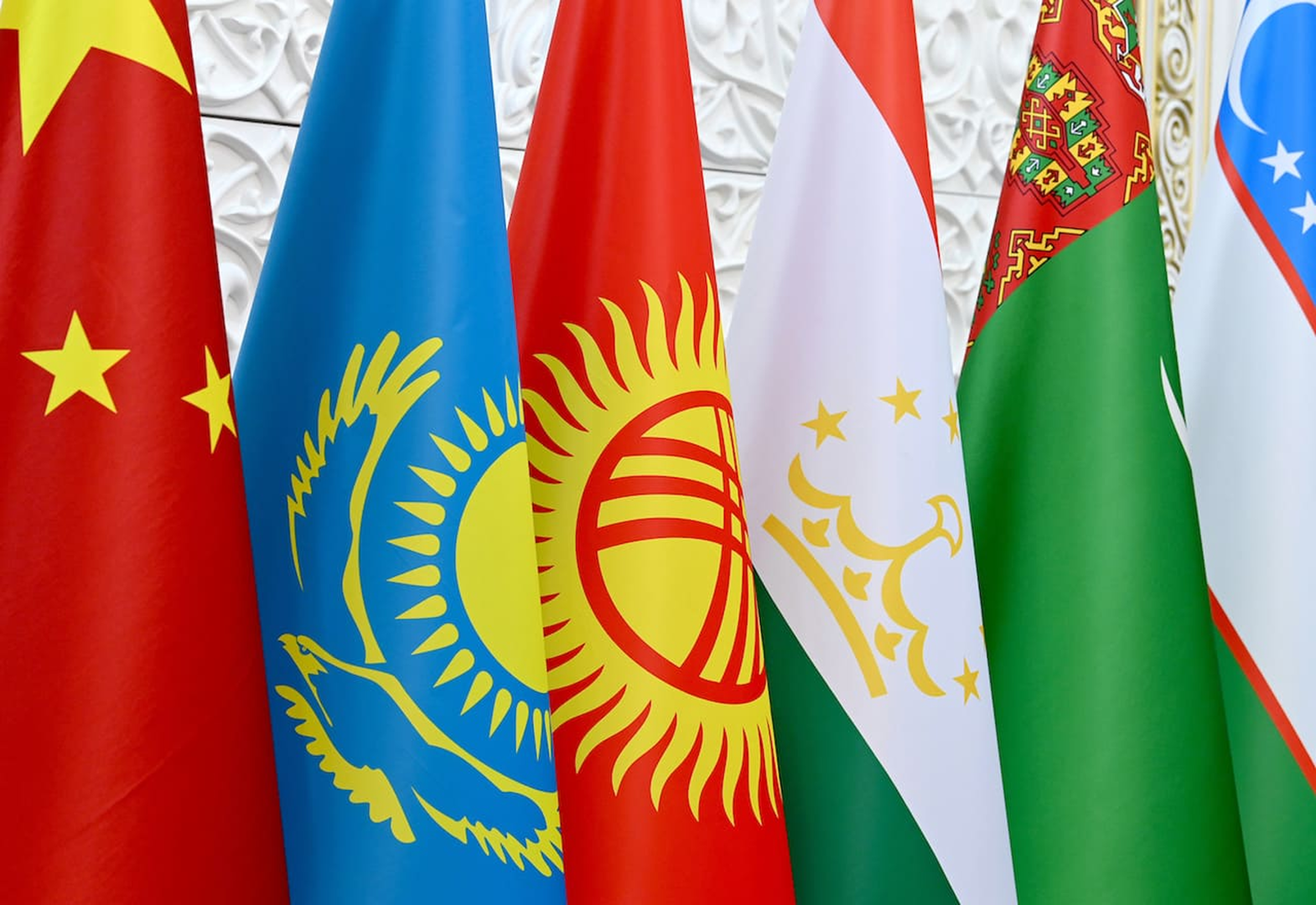

BAKU, Azerbaijan, August 30. The Shanghai Cooperation Organization (SCO) is becoming an increasingly important platform for Central Asian countries as they seek to expand regional connectivity, attract investment and strengthen cooperation in transport, energy, finance and digitalization. With the SCO summit approaching in Bishkek, the organization's growing economic agenda is gaining particular relevance for the region, whose economies are undergoing rapid expansion and deeper integration with major markets.
In recent years, SCO cooperation with its Central Asian members has increasingly focused on practical economic priorities alongside security issues. Discussions on transport corridors, energy cooperation, financial mechanisms and digital infrastructure have gained momentum, while individual countries have simultaneously expanded economic partnerships with China, Russia, Azerbaijan and other external partners.
This trend reflects a broader transformation in Central Asia's economic position. The region is strengthening its role in Eurasian trade and transit while attracting investment into energy, industry, infrastructure and technology. Against this backdrop, the SCO has the potential to provide an additional framework for coordinating cross-border projects and facilitating economic cooperation among its members.
Against this backdrop, the Bishkek summit is expected to further develop the SCO's economic agenda, with particular attention to transport connectivity, energy cooperation, investment and financial mechanisms.
Finance could become a new pillar of SCO cooperation
One of the most significant developments is the continuing work on an SCO Development Bank.
SCO Deputy Secretary-General Sohail Khan said in May that consultations on the institution had begun and that the proposed bank could become a key mechanism for financing joint projects and strengthening the organization's financial architecture.
The issue remained on the agenda at the July meeting of SCO foreign ministers in Cholpon-Ata, where member states noted progress in consultations on the bank, particularly in relation to joint investment, infrastructure and transport and logistics projects.
For Central Asian economies, the potential significance is substantial.
The region is entering a period of intensive infrastructure development, requiring large amounts of capital for railways, roads, energy generation, electricity transmission, industrial facilities and digital infrastructure. An SCO financial institution, if established and adequately capitalized, could provide an additional source of long-term financing for projects involving several member states.
The proposed institution could also complement existing financing channels rather than replace them. Central Asian governments already work with the World Bank, Asian Development Bank, European financial institutions, Chinese policy banks and national development institutions.
This makes the SCO Development Bank potentially more useful as an additional instrument for cross-border projects than as a substitute for existing international financial institutions.
The same logic applies to discussions on increasing the use of national currencies in mutual settlements. Greater use of local currencies could gradually reduce transaction costs and exposure to fluctuations in third-country currencies, although the scale of such a shift will depend on the development of financial markets and mechanisms for converting and settling those currencies.
Transport connectivity offers the most immediate opportunity
Transport is arguably the area where SCO cooperation could produce the most visible benefits for Central Asia.
At a meeting of SCO transport ministers in Bishkek in April, members discussed the development of transport corridors, digital solutions and measures to improve connectivity.
For Central Asian countries, the objective is broader than simply increasing transit volumes. Kazakhstan, Uzbekistan, Kyrgyzstan and Tajikistan are seeking to reduce logistical costs, diversify export routes and strengthen connections with China, Russia, the Caspian Sea, South Asia and Europe.
The China-Kyrgyzstan-Uzbekistan railway is particularly relevant in this context. Once developed, the project could strengthen China's connection with Central Asia while providing Uzbekistan and Kyrgyzstan with an additional east-west transport route.
At the western end of this emerging network lies the Caspian Sea and the Middle Corridor.
During Kyrgyz President Sadyr Japarov's July meeting with Azerbaijani President Ilham Aliyev, Japarov highlighted Azerbaijan's role as a key link in the Middle Corridor connecting Central Asia with European markets. This illustrates an important point: Central Asian connectivity is not developing along a single axis. The region is simultaneously strengthening links with China to the east and the Caspian, South Caucasus and Europe to the west.
"Your role in the development of ties between Central Asia and the South Caucasus is of particular importance. Azerbaijan's participation in the Consultative Meetings of the Heads of State of Central Asia opens up new opportunities for expanding cooperation in the trade, economic, transport, and energy spheres," Japarov said.
The SCO could contribute to the integration of existing transport initiatives by promoting greater coordination across the region. Harmonizing customs procedures, digital documentation, logistics operations, border-crossing processes and transportation standards could improve the efficiency of individual infrastructure projects and strengthen their contribution to regional connectivity.
Energy cooperation could link the region's complementary resources
Energy is another area where SCO cooperation could have a long-term impact.
At the June meeting of SCO energy ministers in Bishkek, member states discussed energy security, energy efficiency, infrastructure protection, the energy transition and renewable energy. They also continued discussions on the possible creation of an SCO Energy Consortium.
The idea is particularly relevant to Central Asia because the region's energy resources are complementary.
Among the SCO's Central Asian members, Kazakhstan and Uzbekistan have substantial oil and gas resources, while Kyrgyzstan and Tajikistan possess significant hydropower potential. At the same time, solar and wind capacity is expanding across the region as electricity demand rises. Turkmenistan, although not an SCO member, is also an important part of the region's wider energy landscape, particularly through its extensive natural gas cooperation with China.
Recent China-Central Asia projects demonstrate the scale of investment already entering the sector.
Tajikistan has discussed with Chinese companies the implementation of the 160-megawatt Ayni and 100-MW Yavan hydropower projects, as well as a 200-MW solar power plant. Turkmenistan continues to deepen its energy partnership with China. In April, Turkmengas and China National Petroleum Corporation signed an agreement on the fourth phase of development of the Galkynysh gas field, a project valued at about $5.1 billion.
These projects are bilateral rather than SCO projects. However, they demonstrate the broader economic environment in which the organization is attempting to expand energy cooperation.
If an SCO Energy Consortium eventually moves beyond consultations and develops concrete projects, its potential value could lie in coordinating investment, infrastructure and energy flows across countries with different but complementary resources.
Digitalization is emerging as a new area of cooperation
The recent engagement between Uzbekistan and the SCO Business Council suggests that the organization's economic agenda is also moving beyond traditional infrastructure. At an August 13 meeting, the sides discussed potential investment in Uzbek IT startups as well as cooperation in digital infrastructure, data centers and research and development.
The discussions included electronic mapping, government information platforms, transportation and healthcare information systems, while participants also examined integrated projects combining computing capacity, energy supply and operational infrastructure. The development is significant because Central Asia's next phase of economic growth will increasingly depend on productivity and technological capabilities rather than infrastructure alone.
Kazakhstan is pursuing a similar strategy. During his July visit to Shanghai, President Kassym-Jomart Tokayev proposed a Kazakhstan-China Digital Bridge initiative and emphasized the importance of developing domestic human capital, digital infrastructure and institutional capacity.
The trend suggests that the economic relationship between China and Central Asia is evolving from infrastructure and commodities toward technology, industrial localization and digital services. For the SCO, this creates an opportunity to expand its economic agenda into artificial intelligence, data infrastructure, research and development and technology investment.
China's growing role raises the value of multilateral coordination
China's expanding economic role in Central Asia is an important factor behind the region's growing interest in connectivity and investment mechanisms.
China was Uzbekistan's largest trading partner in January-May 2026, with bilateral trade reaching $7.7 billion. Trade with Kyrgyzstan reached $2.09 billion during the same period, accounting for 33.4% of Kyrgyzstan's total foreign trade.
Tajikistan's trade with China reached $1.4 billion in the first five months of the year, while China remains a major market for Turkmenistan's gas exports.
Kazakhstan is also deepening its economic relationship with Beijing. During President Kassym-Jomart Tokayev's July visit to Shanghai, the two sides signed more than 70 commercial agreements worth over $15 billion, while new projects in industrial production and renewable energy were subsequently announced.
These developments demonstrate that China's economic presence in Central Asia is already extensive. The role of the SCO, therefore, is unlikely to be about creating China's economic presence in the region. Instead, it could provide a broader multilateral framework through which Central Asian countries seek to maximize the benefits of their economic relationships with major powers. This is particularly important because Central Asian states continue to pursue multi-vector economic policies.
They maintain extensive relations with China and Russia while simultaneously developing partnerships with the European Union, Türkiye, the Gulf states, South Korea, India and countries in the South Caucasus. The SCO is consequently more likely to function as one component of this architecture than as an exclusive economic bloc.
Central Asia could benefit from a more practical SCO
The interests of the region's Central Asian members largely converge around several objectives: attracting investment, improving transport infrastructure, strengthening energy security, expanding trade and developing new sources of economic growth.
The SCO can potentially contribute to each of these areas.
For Kazakhstan, improved transport connectivity can strengthen its position as a major Eurasian transit hub.
For Uzbekistan, expanded investment and regional connectivity can support industrialization, exports and the development of its technology sector.
For Kyrgyzstan and Tajikistan, better transport and energy connectivity can help unlock their geographic and hydropower potential.
For Turkmenistan, deeper energy cooperation provides opportunities to strengthen its role as a major regional energy supplier.
At the same time, regional cooperation can create benefits that individual bilateral agreements cannot always provide.
A railway crossing several countries, for example, requires coordination between customs authorities, logistics companies, infrastructure operators and governments. Similarly, regional electricity projects require compatible infrastructure and coordinated energy policies. This is where multilateral mechanisms could provide practical value.
Bishkek will test whether the SCO can move from declarations to implementation
The success of the September summit will ultimately depend on the extent to which existing initiatives advance toward implementation and produce tangible economic and institutional outcomes.
Four areas will be particularly important.
First, members could provide greater clarity on the future of the SCO Development Bank and its institutional structure.
Second, the proposed SCO Energy Consortium could receive additional political support or move toward concrete areas of cooperation.
Third, transport discussions could produce practical measures aimed at reducing logistical and customs barriers.
Fourth, the growing emphasis on digitalization could become a more established part of the organization's economic agenda.
None of these developments would immediately transform the SCO into an integrated economic bloc. The organization includes countries with substantially different economic structures and geopolitical interests, making deep institutional integration difficult. The more realistic scenario is the gradual expansion of project-based cooperation. Countries do not need to share identical foreign-policy priorities to cooperate on a railway, an energy project, a financial mechanism or digital infrastructure. This flexibility could ultimately become one of the SCO's greatest advantages.
The outlook: a platform rather than an economic bloc
For Central Asia, the SCO's future economic relevance will depend on whether it can complement — rather than duplicate — the growing number of regional and international cooperation formats.
The region is already becoming part of an increasingly complex economic network connecting China, Russia, the Caspian Sea, South Asia, the Middle East and Europe. The China-Central Asia mechanism, the Middle Corridor, the Eurasian Economic Union, international financial institutions and bilateral partnerships all play different roles in this architecture.
The SCO can complement these mechanisms by providing an additional platform for coordinating cooperation across a broad group of countries. Its future role could increasingly focus on facilitating practical collaboration in areas such as transport, energy, finance and digitalization.
If the Development Bank becomes operational, energy cooperation acquires an institutional framework, and transport and digital initiatives produce measurable improvements, the SCO could become considerably more relevant to Central Asia's economic development. The Bishkek summit therefore represents less a turning point in the region's external relations than a test of the SCO's ability to become more practical.
For Central Asia, the real measure of success will be whether the organization can convert its growing economic agenda into capital, infrastructure, connectivity and technology. If it does, the SCO could emerge not as a replacement for the region's other partnerships, but as another important layer of Central Asia's increasingly interconnected and multi-vector economic architecture.



