



BAKU, Azerbaijan, August 29. For Kazakhstan, the Shanghai Cooperation Organization (SCO) is primarily of practical importance: through it, the country engages with Eurasia's largest economies, expands trade ties, promotes investment cooperation and transport projects.
Kazakhstan has been one of the founding members of the SCO since
the organization was established in 2001. The member states are
directly important to Kazakhstan as trading partners and
participants in major regional projects.
This is well reflected in Kazakhstan's foreign trade statistics. In
January-June 2026, China accounted for 18.6% of Kazakhstan's
exports, while Russia accounted for 8.6%. In the structure of
imports, Russia accounted for 30.9%, while China accounted for
29.1%.
Thus, a significant share of Kazakhstan's foreign trade turnover is accounted for by SCO member states. According to Kazakh President Kassym-Jomart Tokayev, the country's trade turnover with the organization's member states approached $70 billion in 2024.
For Astana, the SCO serves both as a platform for political dialogue and as a mechanism for promoting economic ties with the major markets of its member states.
The composition of the organization is also important. China and India are among the world's largest economies, while Russia remains one of Kazakhstan's key trading partners. As a result, Kazakhstan has an opportunity to develop relations simultaneously with several major economic centers without focusing exclusively on a single partner. This directly corresponds to Astana's multi-vector approach to foreign policy.
The SCO's transport potential is particularly important for Kazakhstan. The country is located between China and European markets and also has access to the Caspian Sea.
According to available estimates, Kazakhstan accounts for about 85% of overland freight traffic between China and Europe. This makes the development of rail and other transport infrastructure one of the key tools for strengthening the country's economic role in the region.
For Kazakhstan, the growth of transit traffic is important not only in itself. It enables the development of logistics centers, warehousing infrastructure, processing and higher-value-added manufacturing, turning the country's transit position from a geographical advantage into a source of economic activity.
Kazakhstan is seeking not only to use the existing opportunities offered by the SCO, but also to create new mechanisms for cooperation.
In particular, at the previous summit, Tokayev supported China's initiative to establish an SCO Development Bank and stated Kazakhstan's readiness to participate in the implementation of this project. A political decision to establish the SCO Development Bank was made on September 1, 2025.
Another proposal from Kazakhstan is to establish an SCO Office for the Support of Promising Investment Projects at the Astana International Financial Centre. Such a structure could bring together financial, legal and consulting capabilities to promote projects.
This is an important signal: Astana is interested in ensuring
that cooperation within the SCO leads not only to increased trade,
but also to the emergence of new joint ventures, investment
projects and sources of financing.
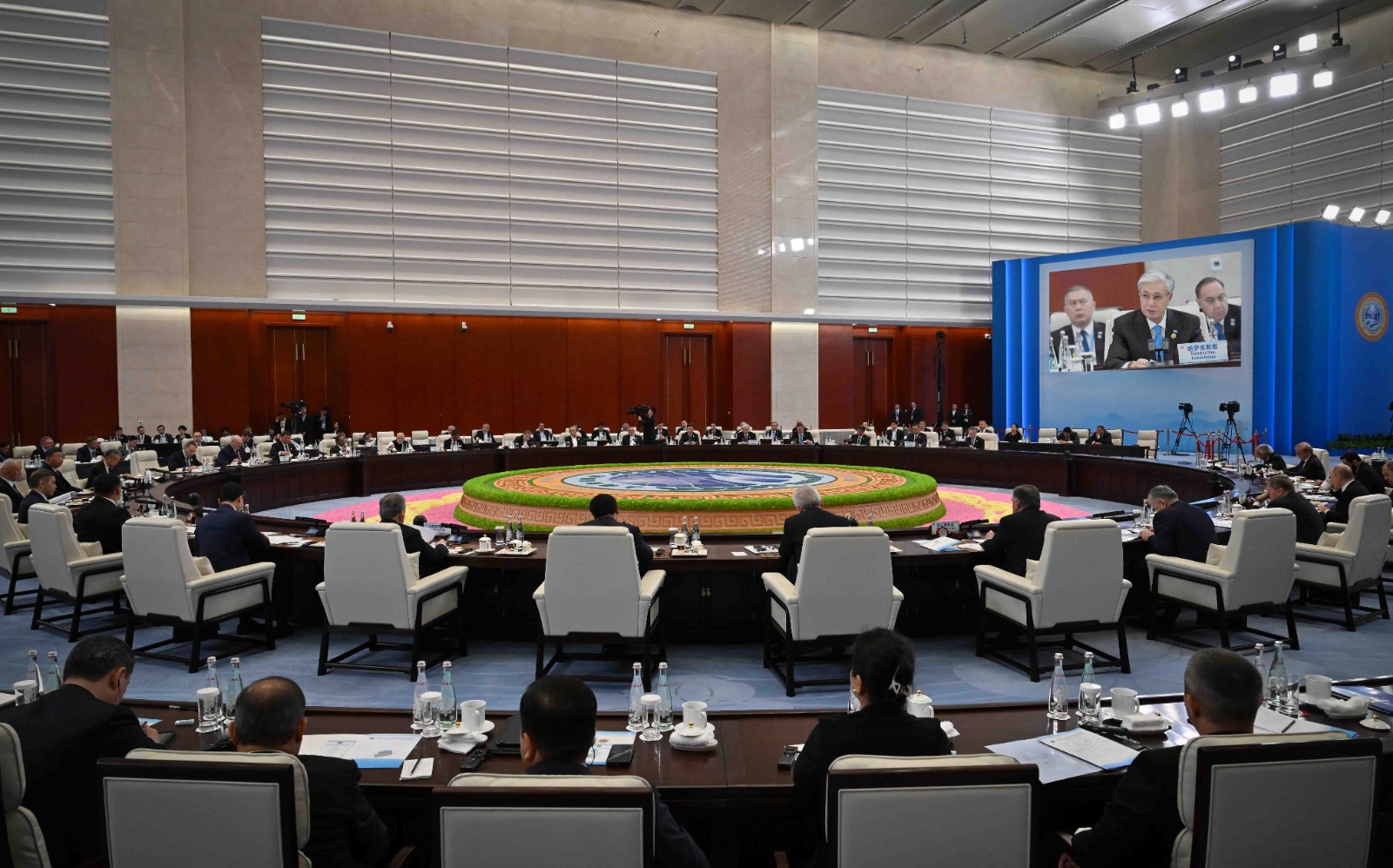
In addition, last year, at the SCO Council of Heads of State
meeting in Tianjin, Tokayev supported the establishment of four SCO
centers to combat security challenges and threats. The President
also proposed strengthening cooperation between the SCO and the
Conference on Interaction and Confidence-Building Measures in Asia
and using the potential of the UN Regional Centre for the
Sustainable Development Goals for Central Asia and Afghanistan to
coordinate regional cooperation.
In other words, Kazakhstan is seeking to use the SCO to address specific issues directly related to its interests, ranging from security and sustainable development to transport, trade and investment.
Against this backdrop, the SCO summit in Bishkek, marking the organization's 25th anniversary, is important for Kazakhstan primarily in terms of further filling the economic component of cooperation with concrete projects. For Astana, the most interesting areas may include further promoting the SCO Development Bank, increasing trade among the organization's member states, developing transport routes and attracting investment.
The SCO is important to Kazakhstan because it brings together, in a single framework, countries that are already crucial to its trade, investment, transit and regional security. This is particularly important for Astana's multi-vector policy, as Kazakhstan can simultaneously develop relations with several major centers of power without tying its foreign economic strategy to a single direction.



