


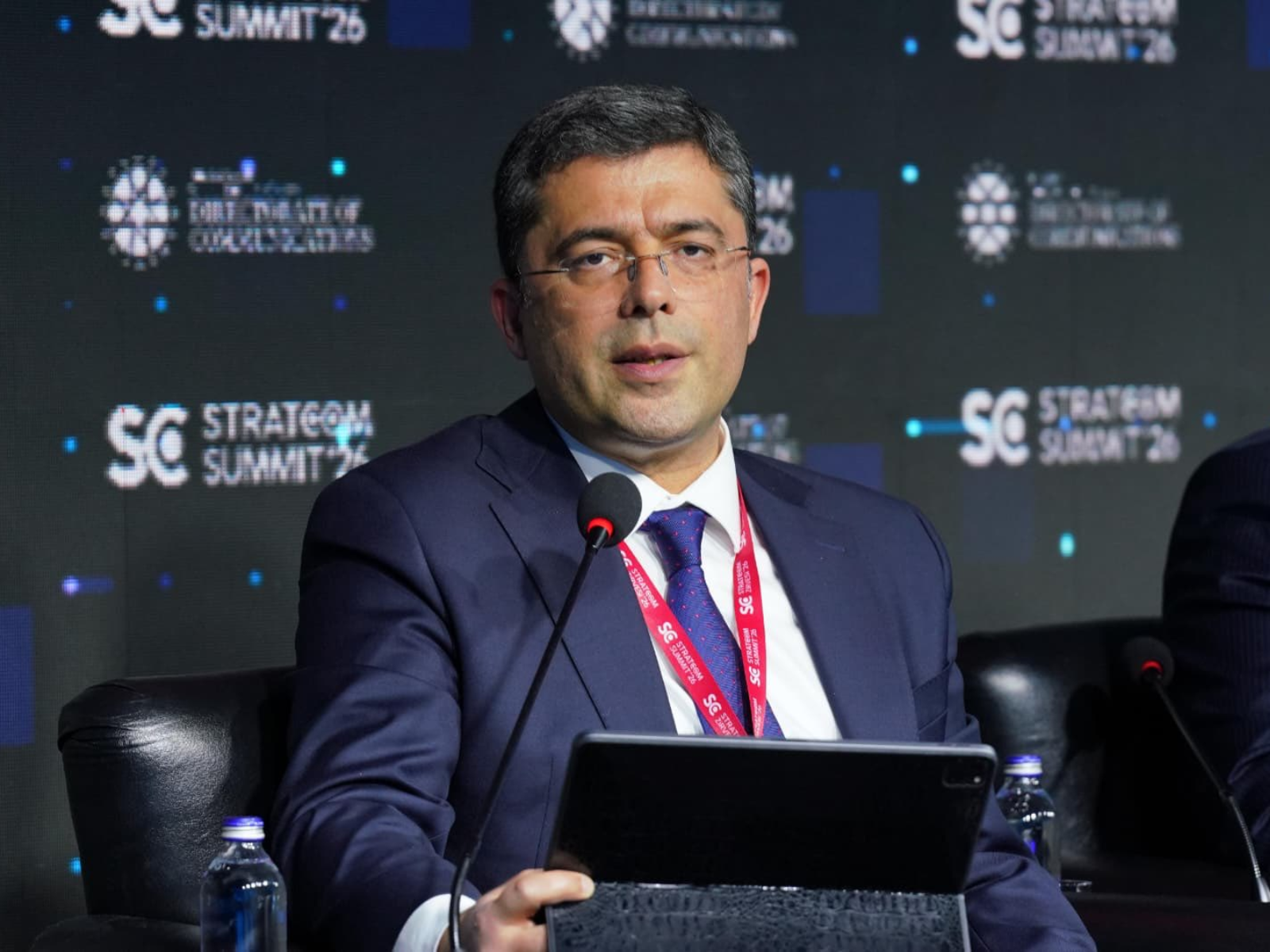

BAKU, Azerbaijan, March 27. Algorithms based on artificial intelligence have become a leading actor in shaping public opinion, the Executive Director of the Media Development Agency of Azerbaijan, Ahmad Ismayilov said at the panel session titled “Transformation of Global Public Opinion in the Ecosystem of Digital Communication,” held today in Istanbul as part of the International Strategic Communications Summit (Stratcom Summit 2026), Trend reports.
He noted that in the modern era, public opinion is no longer a social phenomenon formed solely within national borders. As a result of the rapid development of digital communication technologies, public opinion has transformed into a multipolar and dynamic system shaped on a global scale. This transformation has not only increased the speed of information flow but has also had a significant impact on its content, mechanisms of influence, and criteria of reliability.
According to Ismayilov, whereas traditional media once played a key role in shaping public opinion, today social media platforms, digital content producers, and even AI-based algorithms have become leading actors in this process. This, in turn, has simultaneously strengthened both the democratization and fragmentation trends of the information space:
“One of the main characteristics of the digital communication ecosystem is its decentralized and interactive nature. Users are no longer just consumers of information but also its producers and distributors. This new reality, along with the increase in the number of actors involved in shaping public opinion, has also led to a diffusion of responsibility.”
The Executive Director added that this transformation has also given rise to a number of challenges:
“First of all, the rapid spread of disinformation and unreliable information requires special attention. The algorithmic structure of digital platforms sometimes prioritizes emotional and sensational content, which negatively affects the formation of objective and fact-based public opinion.
The second important issue is related to information sovereignty and national communication security. The dominance of global platforms in some cases leads to the weakening of national information spaces and pushes local content into the background. This makes it necessary to develop new approaches in the communication policies of states.
The third area is the crisis of trust. Alongside the growing number of information sources, doubts about their reliability are also increasing. Under these conditions, strengthening institutional mechanisms for forming stable and healthy public opinion becomes particularly important.”



