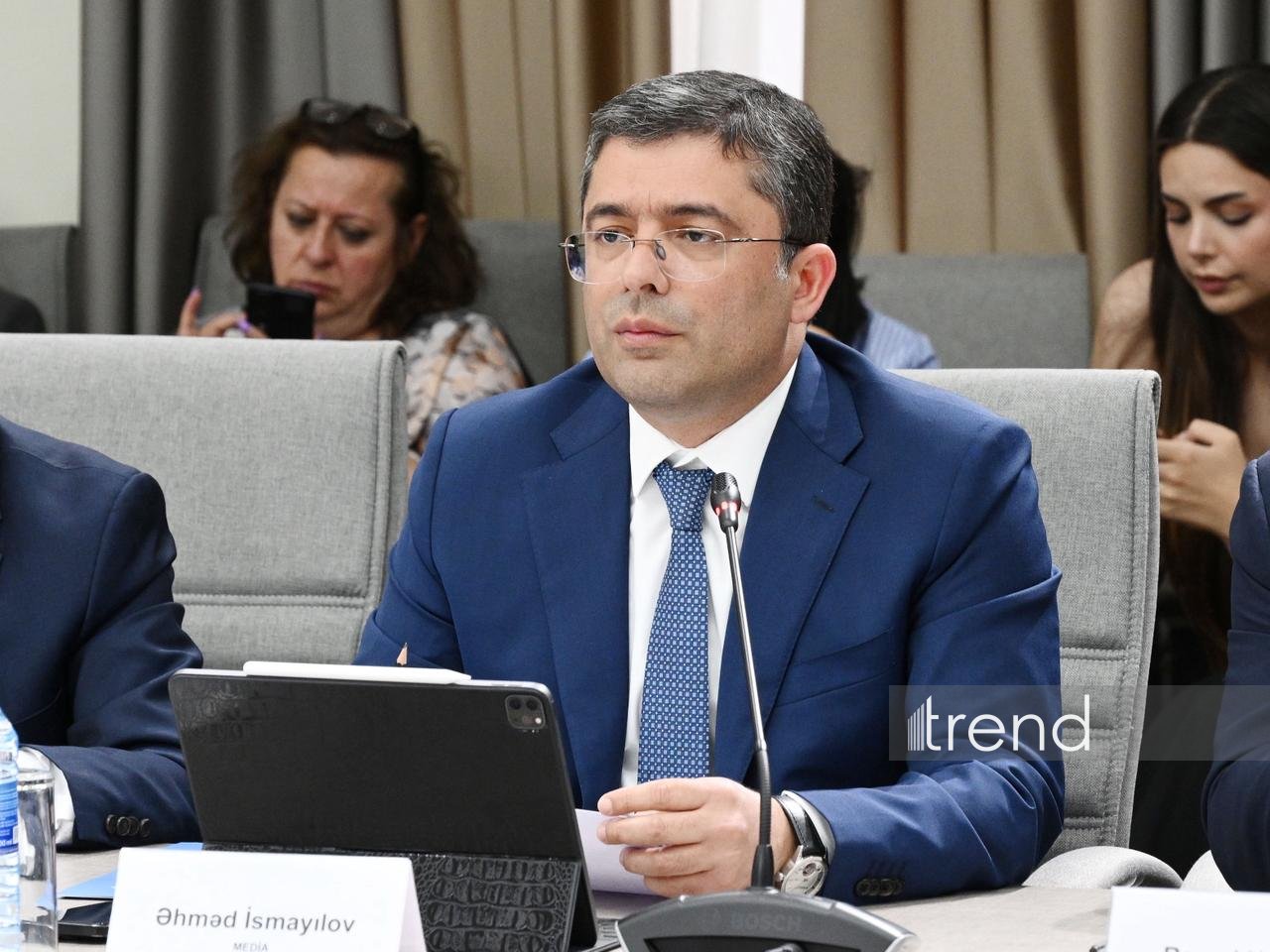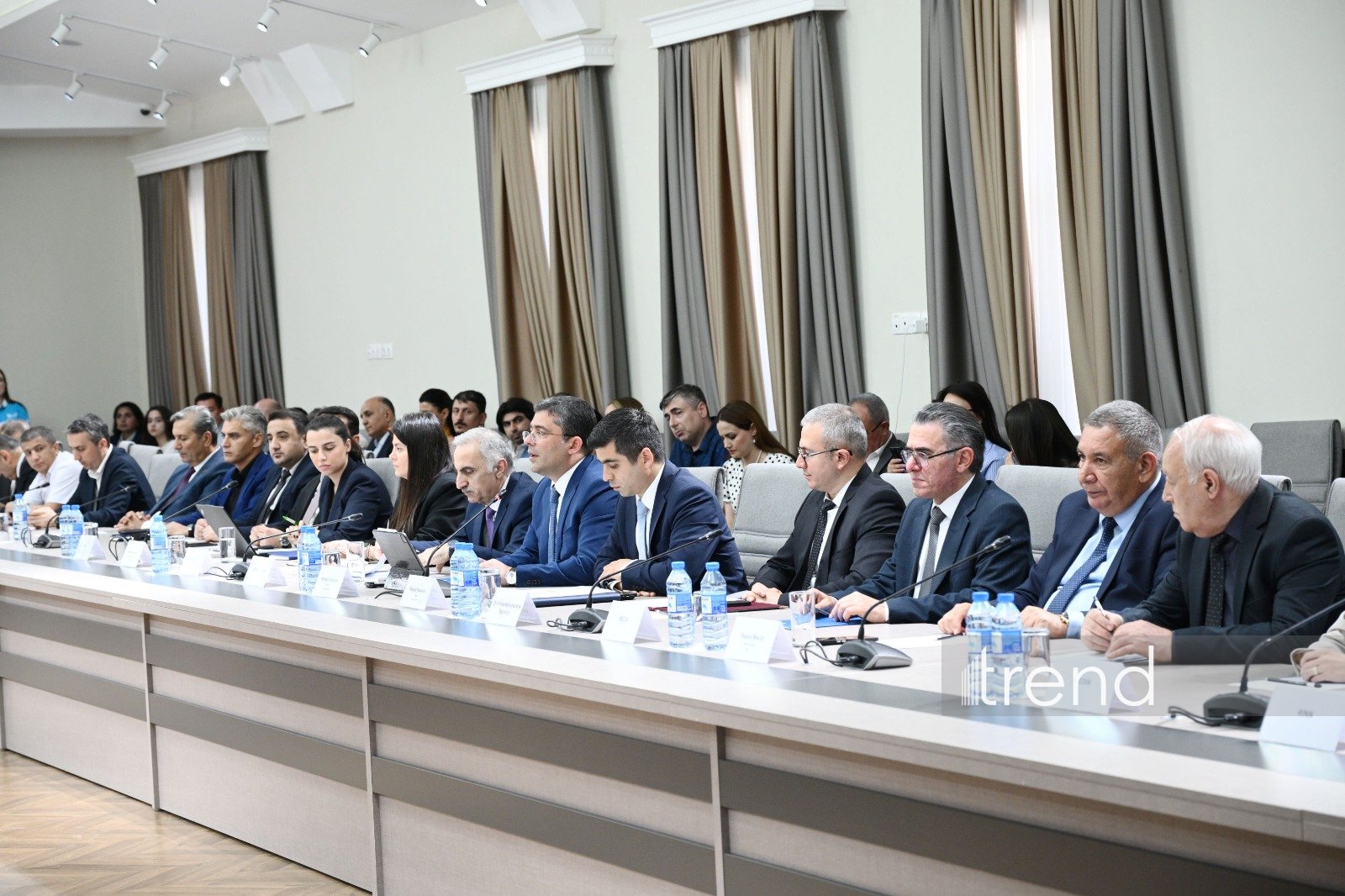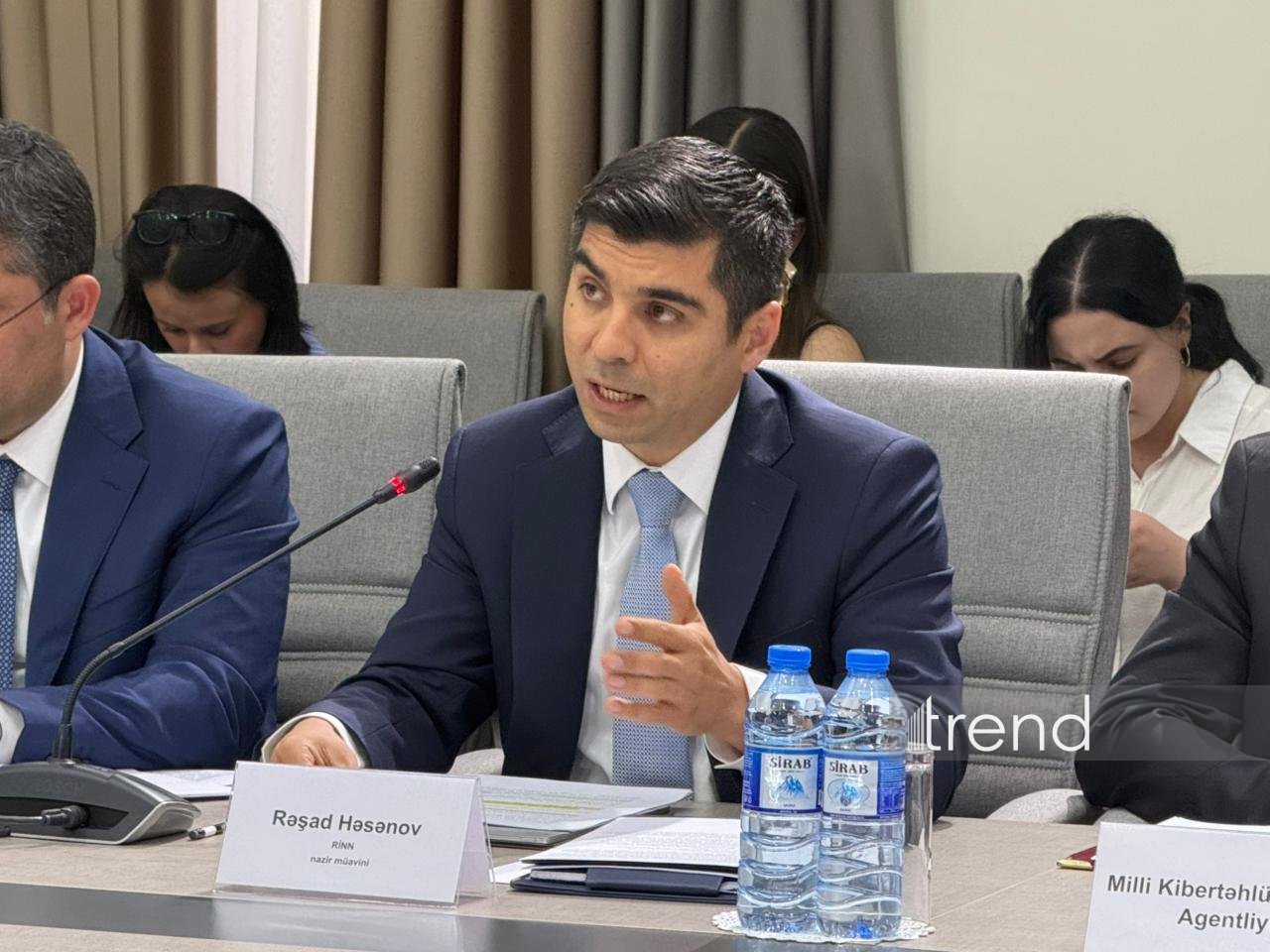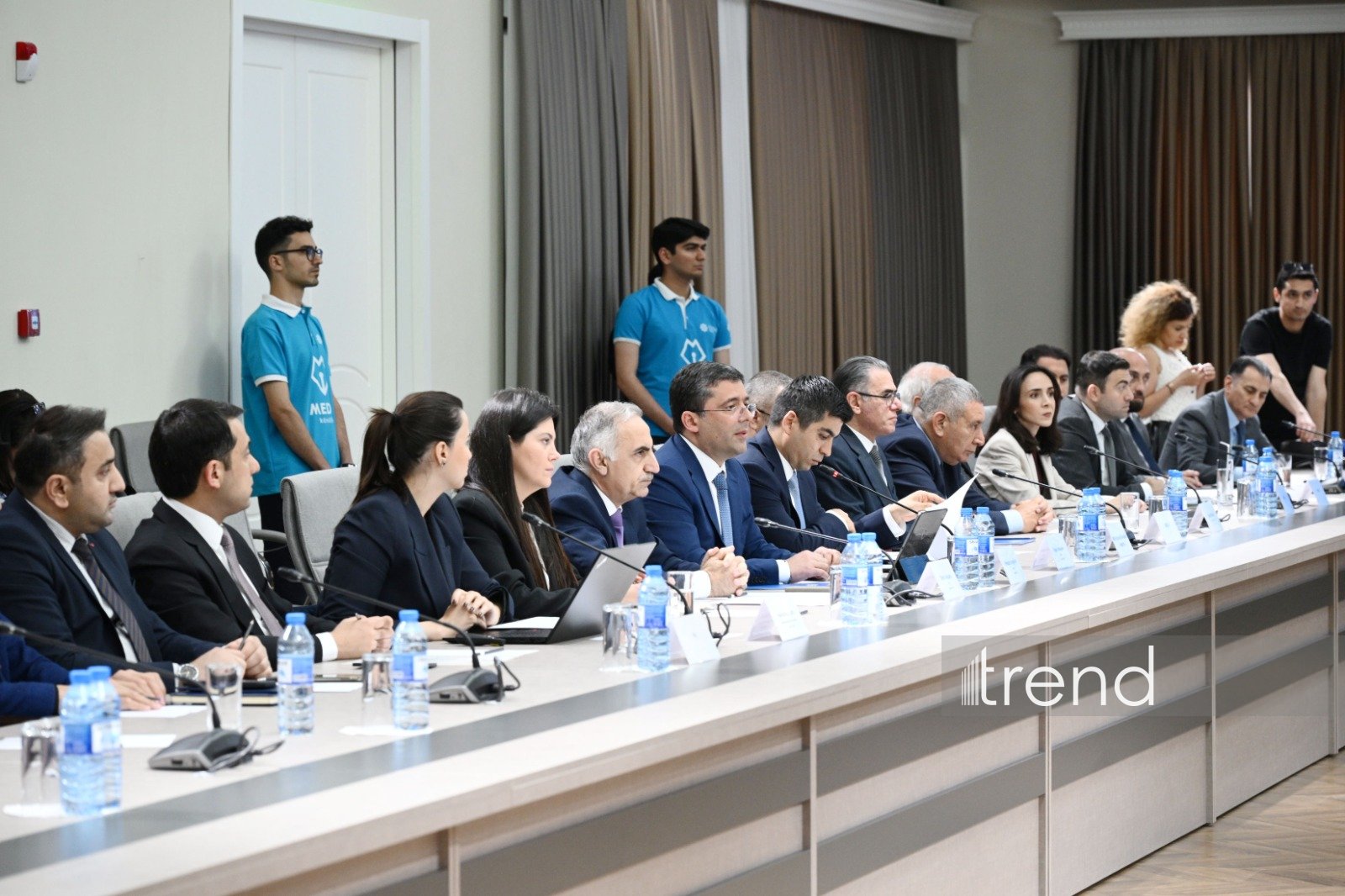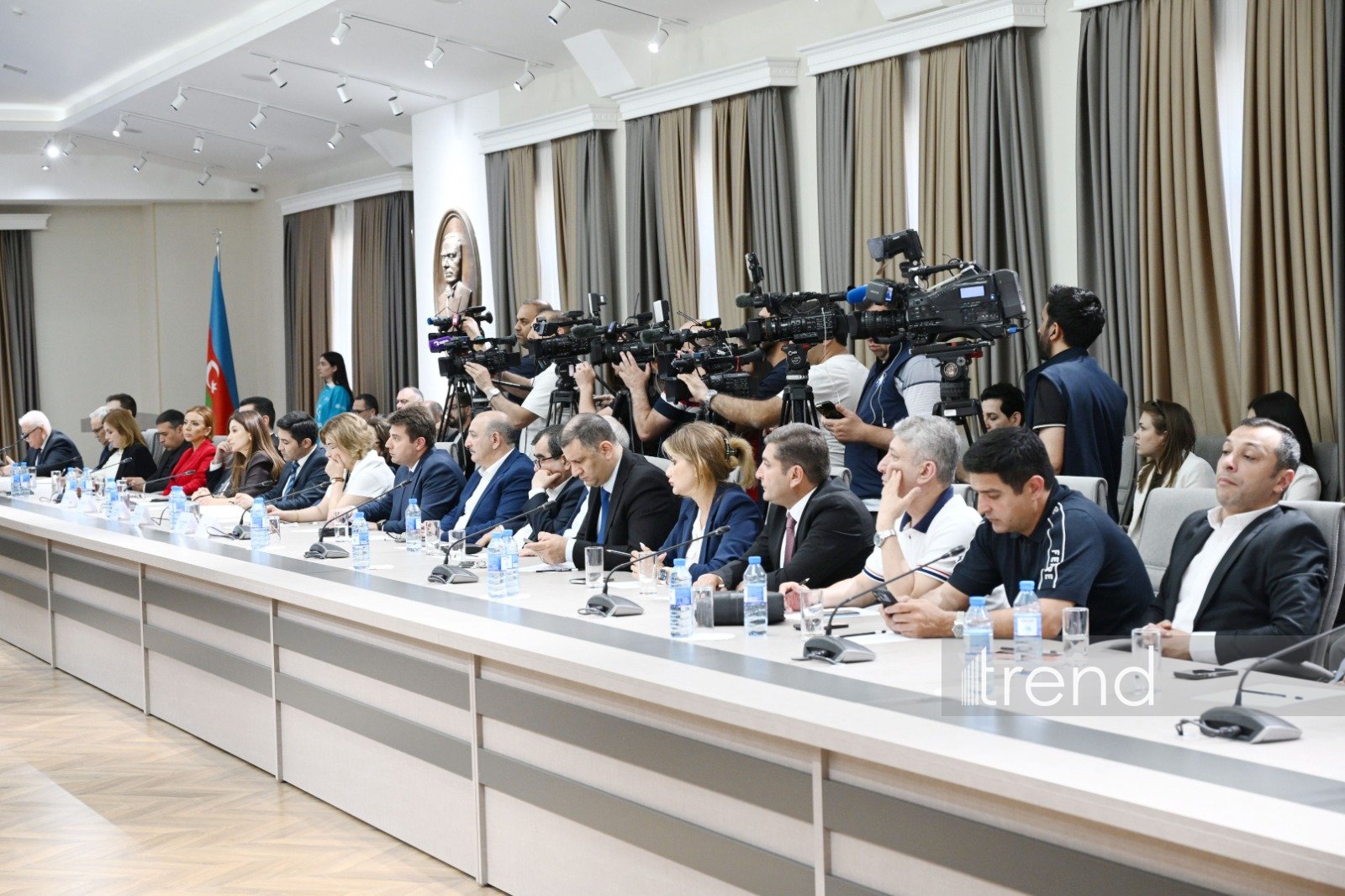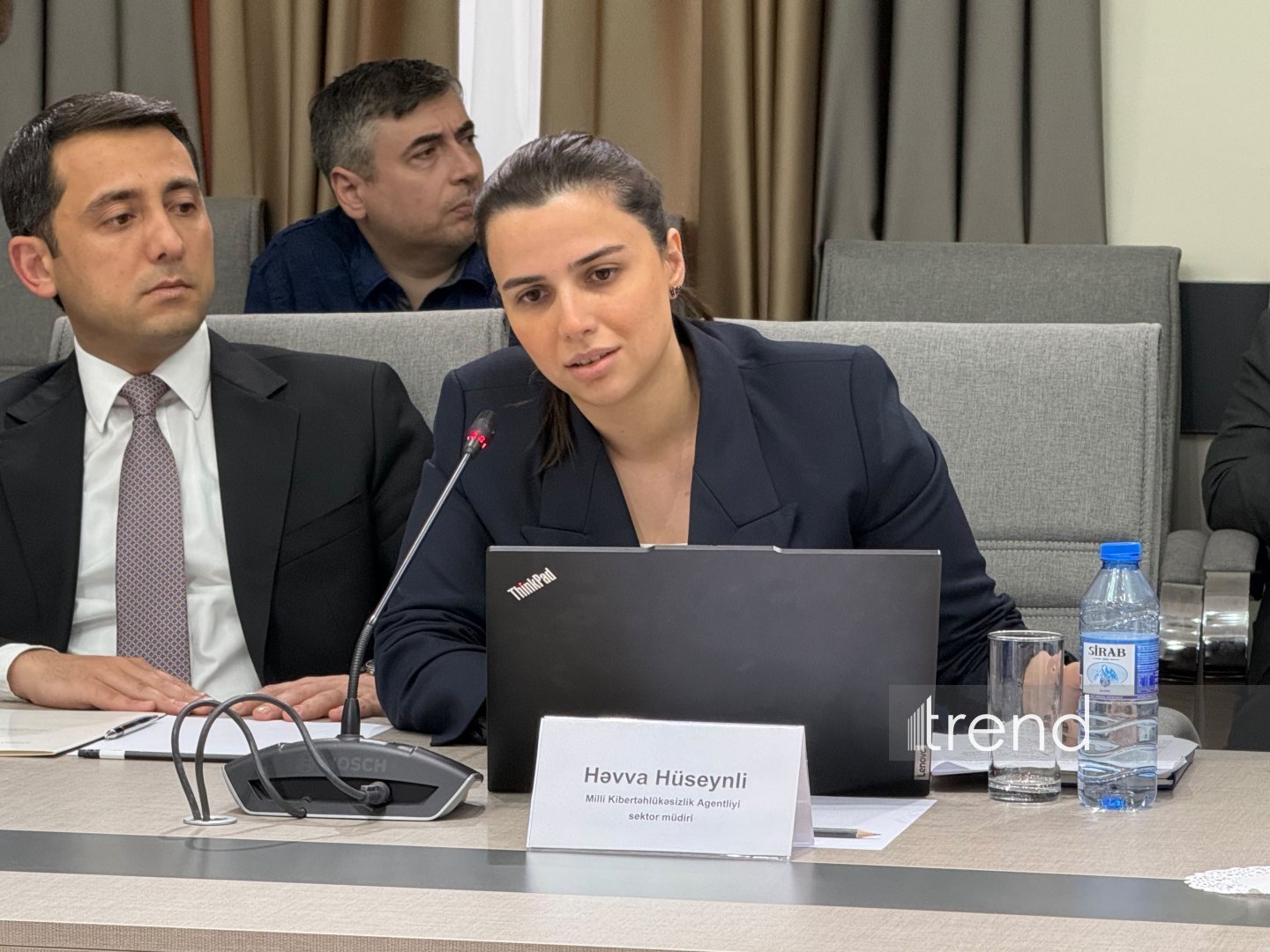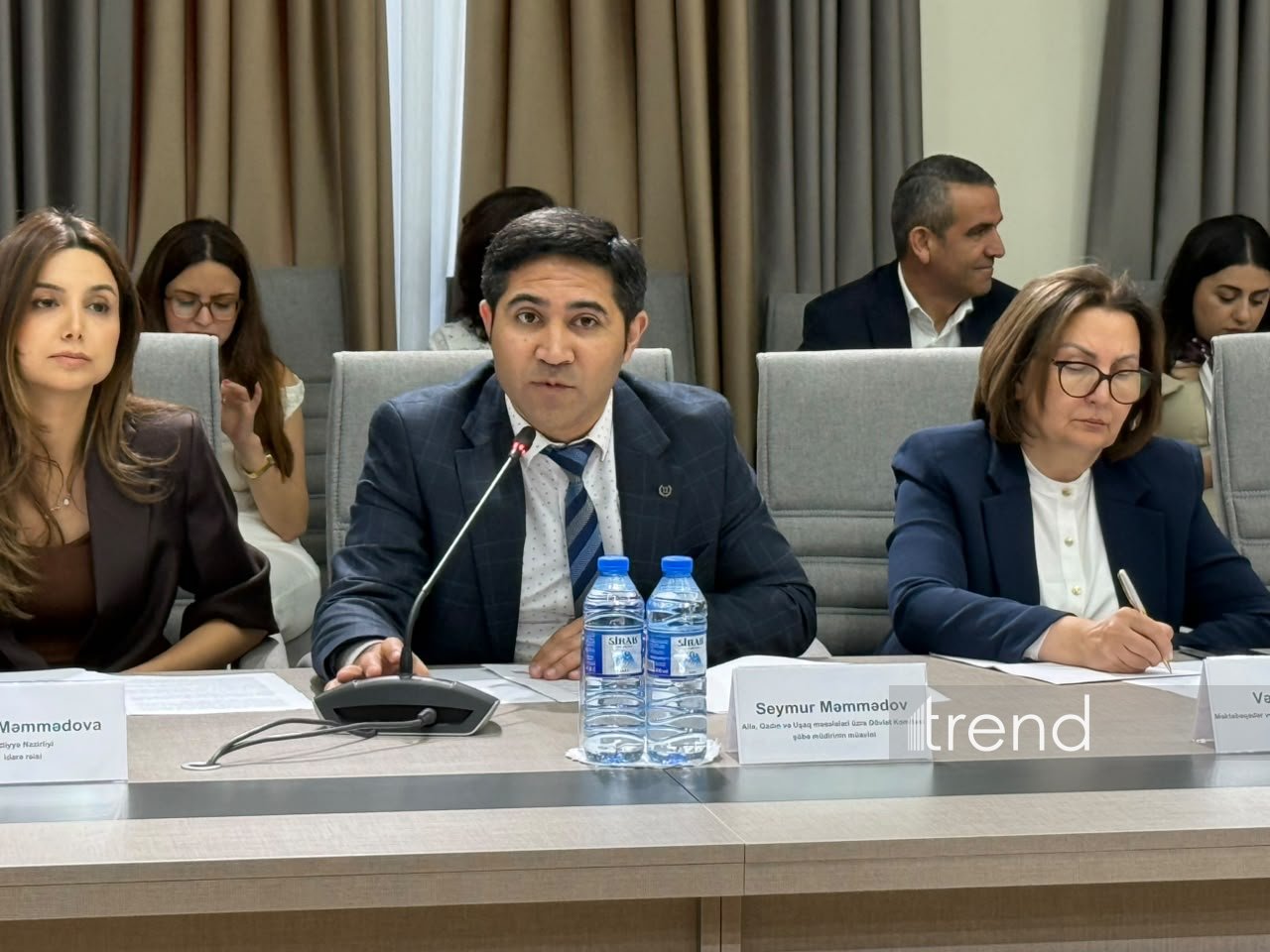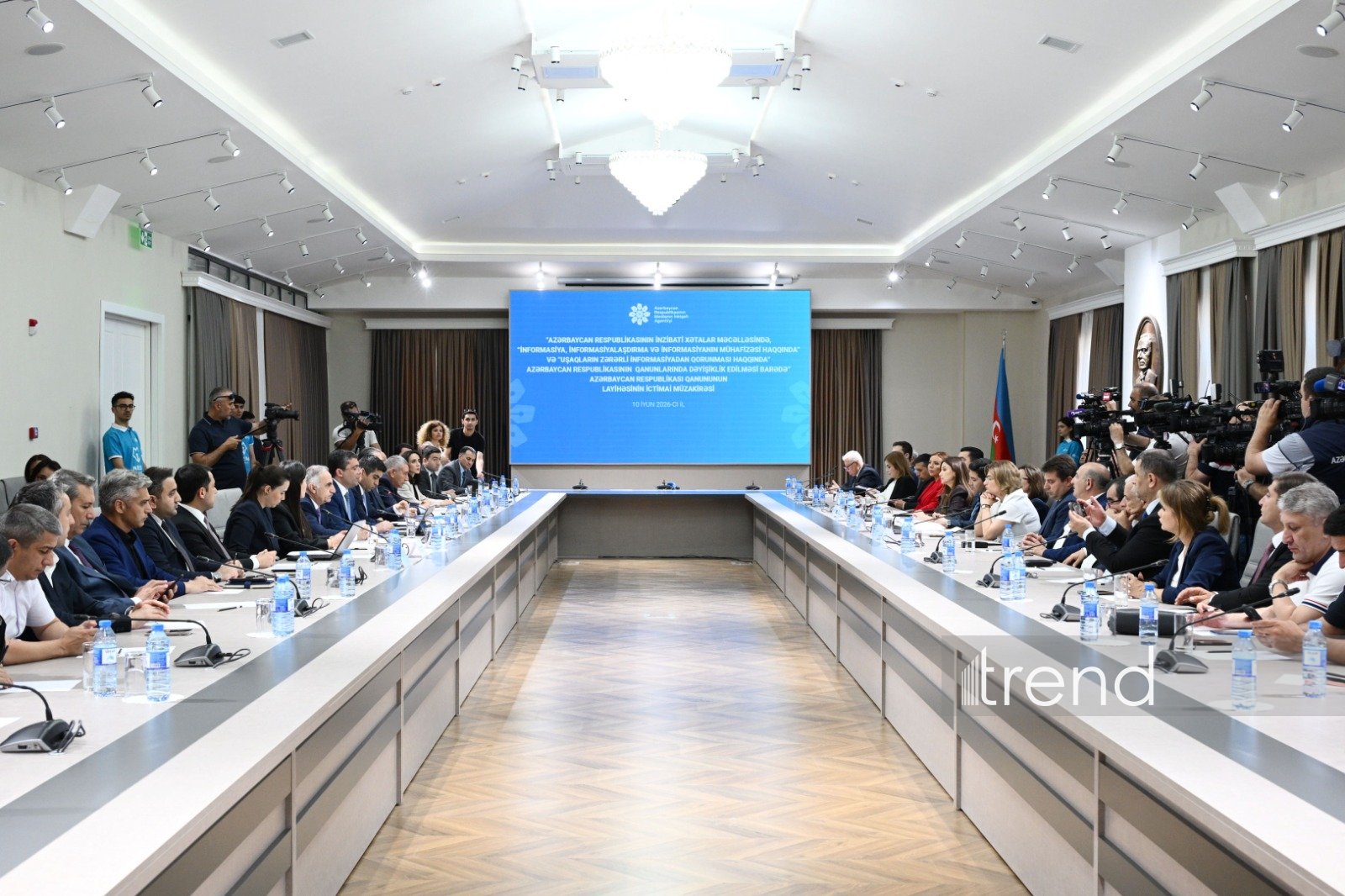

BAKU, Azerbaijan, June 10. A public discussion of the draft law on amendments to the Azerbaijani Code of Administrative Offenses, the laws "On information, informatization and information protection" and "On the protection of children from harmful information" has been held, organized by the Media Development Agency (MEDIA), Trend's correspondent reports from the event.
Representatives of relevant government agencies, media representatives, and experts participated in the discussion.
During the discussions, an exchange of views have been held on the innovations envisaged in the draft law and issues related to their implementation.
Speaking at the event Executive Director of Azerbaijan's Media Development Agency, Ahmad Ismayilov said that children's personal data mustn't be turned into commercial interests.
According to him, using social networks at an early age sharply increases the risk of minors being exposed to bullying, digital addiction, psychological trauma, and transnational influences.
The executive director noted that the integration of the strong family and child policy, as well as the strategy for the protection of national and moral values, successfully implemented by the Azerbaijani state for many years, into the digital environment through legal mechanisms is no longer a subjective desire, but an objective and inevitable necessity.
"When evaluating this draft law, we must be guided by two main fundamental criteria - advanced international experience and digital media development trends.
The proposed draft is fully consistent with the existing legal regulatory mechanisms in advanced world practice and meets international standards.
These changes are not just a set of sanctions, but primarily serve to form a safe, transparent, and efficient ecosystem in the digital space.
We evaluate this draft law as a mechanism that ensures that internet providers and digital platforms bear social and legal responsibility before the state and society in the moral formation and intellectual development of children," he explained.
Ismayilov emphasized that this is an important approach aimed at protecting citizens from digital threats, hybrid information effects and various risks. The issue is of particular importance in the prism of media ethics, law and journalism professionalism, and it should be noted that the draft is an important reference from a conceptual point of view.
"First, the draft strictly prohibits the storage of personal data collected for the purpose of age verification in the system or its transfer to third parties for advertising purposes. This is one of the basic requirements of modern digital ethics and international privacy law. This norm clearly indicates that children's personal data cannot be turned into commercial interests of digital corporations. The legal regulatory mechanism will play the role of a reliable shield ensuring the preventive protection of children.
Second, the right to complete and permanent deletion of data shared on digital platforms during childhood and adolescence is envisaged, upon the application of a minor or his/her legal representative. This is an important ethical and legal guarantee that protects a person's future online reputation. This approach prevents digital behaviors committed in the past from becoming an obstacle or threat to the person in the future.
Moreover, after the adoption of the law, conducting extensive digital awareness campaigns in society, especially in educational institutions, among parents and teachers, will significantly increase its effectiveness because even the most perfect law doesn't give full results without digital literacy and parental control.
He pointed out that this draft law serves to create a healthier and safer environment to protect children from the negative effects of the digital world.
"The proposed changes are fully consistent with universal ethical norms, national interests, and advanced international legal standards.
We believe that this step will make a significant contribution to the health of the national information environment and the protection of future generations," he concluded.
Sector Head of the Department for Work with Non-Governmental Organizations and Communication of Azerbaijan's Presidential Administration Elmir Valizade further emphasized that information negatively impacting children should be limited.
According to him, work is underway in the country to improve legislation in the field of protecting children from harmful information.
He noted that the rapid development of digital technologies has increased the risk of children encountering content that is not appropriate for their age on various platforms. In this regard, it's important to limit information that may negatively affect the psychological and moral development of children.
"Relevant measures are being taken in many countries around the world. Countries such as Australia and France have adopted legislative initiatives aimed at ensuring the safety of children in the digital environment. In addition to legislative changes, it's also planned to implement awareness programs for parents, teachers, and children. Wide awareness-raising events will be organized in this area with the participation of state agencies, educational institutions, and civil society institutions," the official added.
In turn, Azerbaijan's Deputy Minister of Internal Affairs, Ismat Aliyev noted that virtual space has become a serious risk environment.
According to him, the dangers children face today aren't limited to the streets and domestic environments.
"Psychological pressure, harmful content, blackmail, online exploitation, and other dangerous situations are observed over the mass media and social networks. In this regard, comprehensive measures are implemented together with parents and educational institutions to raise awareness and increase awareness in accordance with the challenges created by modern technologies. The protection of children's rights is not ensured by the activities of only one institution.
This requires coordinated cooperation between government agencies, educational institutions, families, and civil society organizations. Various events are organized within the framework of joint activities with relevant state institutions of Azerbaijan. Meetings are held in secondary schools with the participation of commissions, social workers, representatives of law enforcement agencies, and youth organizations operating under local executive authorities, and public awareness events are organized. At the same time, appropriate monitoring is carried out to prevent violations of children's rights and ensure a safe environment in educational institutions," he noted.
Chairman of the Presidium of the Bar Association of Azerbaijan Anar Baghirov said that it's not easy to both conduct research in the field of children's rights and prepare a textbook that is understandable for children.
According to him, this requires both will, resources, and a sincere belief in the importance of the work, and the committee has demonstrated all of these.
"Another point that makes me happy is that Abil Bayramov, the author of the 'Children and Law' book, is a member of the Bar Association, and this is a matter of pride for us because this fact both shows the commitment of the legal community to children's rights and confirms that the members of the Bar Association make valuable contributions to society, especially to children. For this, I would like to thank him.
One of the main points that caught my attention in the study presented today is that legal thinking is one of the main pillars of society, and its formation during adolescence is especially important. This period is a stage in which a person's personality, sense of responsibility, and values are formed, and the right direction here also creates a basis for the future society.
The purpose of the study is to understand the state of legal thinking of adolescents, to identify the social and psychological factors that affect it, and to reveal the existing gaps. Because without such an empirical basis, legal education policy cannot be established correctly.
In everyday life, we encounter various legal situations, and the same applies to children. Therefore, it is very important to explain rights and obligations in simple language, instill a sense of justice and responsibility. In this regard, the 'Children and Law' book is one of the first serious steps that fills a huge gap.
The purpose of the book is not just to memorize legal articles, but to give children the opportunity to understand the law through real-life situations. This approach is both simpler and more useful.
The role of a lawyer in protecting children's rights in a democratic society is very important. A lawyer is often the voice of a child who has difficulty expressing himself, defending his rights, and standing by him. A child's first contact with the legal system is often through a lawyer, and this experience shapes their future views.
If this contact is fair and professional, the child grows up as a person who believes in the law; this belief can be damaged. Therefore, this responsibility is very great.
As the Bar Association, we also understand this responsibility. Raising awareness, training, expanding free legal aid opportunities, and cooperation with schools in the field of children's rights are among our main directions. At the same time, cooperation with the State Committee for Family, Women, and Children's Issues also yields very important results in this area and serves to more effectively protect children's rights. Law is not just a set of laws, but a culture. It's the common duty of all of us to properly convey this culture to children," he noted.