



BAKU, Azerbaijan, August 27. Kazakhstan's average annual real GDP growth is forecast to exceed 5% in 2027-2029.
This was announced by the press service of the Kazakh government, following a cabinet meeting chaired by Prime Minister Olzhas Bektanov and dedicated to the country’s socioeconomic development forecast.
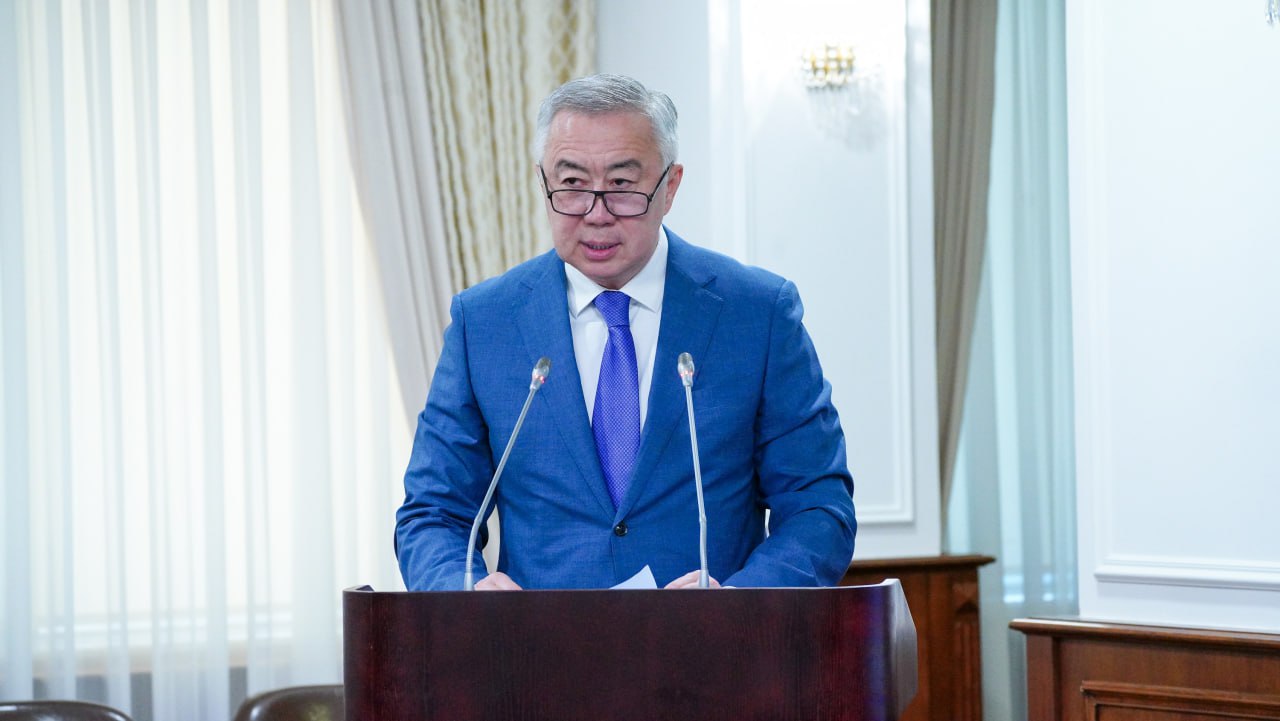
According to the Kazakh government, in the course of the meeting, the Deputy Prime Minister and Minister of National Economy Serik Zhumangarin presented the macroeconomic parameters and budget forecast, which take into account global economic prospects and conditions on external markets.
''Under the baseline scenario, real GDP growth is projected at 5.3% in 2027, 5.5% in 2028 and 5.4% in 2029. Nominal GDP is expected to increase from 199.3 trillion tenge (about $420 billion) in 2027 to 245 trillion tenge ($516 billion) in 2029. Economic growth will be driven primarily by increased output in non-oil sectors. Manufacturing is expected to grow by an average of 5.9% annually, outpacing mining, where growth is forecast at 2%,'' the information notes.
Metallurgy, machinery, construction materials, chemicals and food production will make the largest contribution to manufacturing growth.
''Agriculture will also become one of the drivers of economic growth, with average annual growth of at least 5%. In construction, growth is projected to accelerate from 16% in 2027 to 17.3% in 2029,'' Zhumangarin said.
He added that this growth would be supported by the implementation of projects to develop transport and logistics, energy and water infrastructure, as well as the modernization of housing, utilities and social infrastructure.
The services sector is also expected to maintain steady growth. Trade is projected to expand by an average of 5.7% per year, information and communications by 9.2%, and transport and warehousing by 10.4%.
Kazakhstan is expected to maintain a positive foreign trade balance. Goods exports are forecast to rise from $82.8 billion in 2027 to $88.5 billion in 2029, while imports are projected to increase from $80.5 billion to $88.4 billion.
Inflation is projected at 7.5%-9.5% in 2027, followed by a decline to 6%-8% in 2028-2029.
Republican budget revenues excluding transfers are projected at 19.9 trillion tenge ($41.9 billion) in 2027, 21.7 trillion tenge ($45.7 billion) in 2028, and 23.4 trillion tenge ($49.3 billion) in 2029.
The guaranteed transfer from the National Fund is set at 2.4 trillion tenge ($5.1 billion) in 2027-2028 and 2 trillion tenge ($4.2 billion) in 2029, in line with the budget rule. Targeted transfers from the National Fund for critical facilities and projects of national importance are planned at 2 trillion tenge ($4.2 billion) in 2027 and 1.5 trillion tenge ($3.2 billion) annually in 2028-2029.
Republican budget expenditures are projected at 30.2 trillion tenge ($63.6 billion) in 2027, 29.4 trillion tenge ($61.9 billion) in 2028 and 29.6 trillion tenge ($62.4 billion) in 2029.
To maintain the sustainability of public finances, the budget deficit is forecast to decline from 2.3% of GDP in 2027 to 0.4% in 2029. The non-oil deficit is expected to decrease from 5.3% to 2.5% of GDP over the same period.
Meanwhile, National Fund assets are projected to increase. Total inflows are expected at 5.1 trillion tenge ($10.7 billion) in 2027, 5.5 trillion tenge ($11.6 billion) in 2028, and 5.7 trillion tenge ($12 billion) in 2029, while net inflows are forecast at 0.5 trillion tenge ($1.1 billion), 1.4 trillion tenge ($3 billion), and 2 trillion tenge ($4.2 billion), respectively.
The National Fund's foreign currency assets are expected to rise from $65.2 billion in 2027 to $70.6 billion in 2029.
According to Trend's analysis, Kazakhstan's 2027-2029 economic outlook points to a gradual shift in the structure of economic growth, with non-oil sectors expected to make a larger contribution to overall GDP expansion. The projected 5.3%-5.5% annual growth is underpinned by manufacturing, agriculture, construction, and services, while mining is expected to grow at a more moderate 2%. Particularly notable are the projected growth rates in transport and warehousing, information and communications, and construction, which indicate that infrastructure development, logistics and digitalization are likely to remain key areas of economic activity. The stronger performance of manufacturing compared with mining also suggests that Kazakhstan is seeking to deepen domestic processing and increase the role of higher value-added industries, including metallurgy, machinery, chemicals and construction materials.
At the same time, the fiscal projections indicate an attempt to balance economic expansion with greater budget sustainability. The decline in the budget deficit from 2.3% of GDP in 2027 to 0.4% in 2029, alongside a reduction in the non-oil deficit, points to a gradual consolidation of public finances.
However, the continued use of guaranteed and targeted transfers from the National Fund shows that state support will remain important for financing major infrastructure and nationally significant projects. The projected increase in the Fund's foreign currency assets to $70.6 billion by 2029 could provide Kazakhstan with a stronger financial buffer against external shocks, including commodity price volatility. Overall, the forecast suggests a policy mix aimed at maintaining relatively high growth while gradually strengthening the economy's non-oil base and fiscal resilience.



