


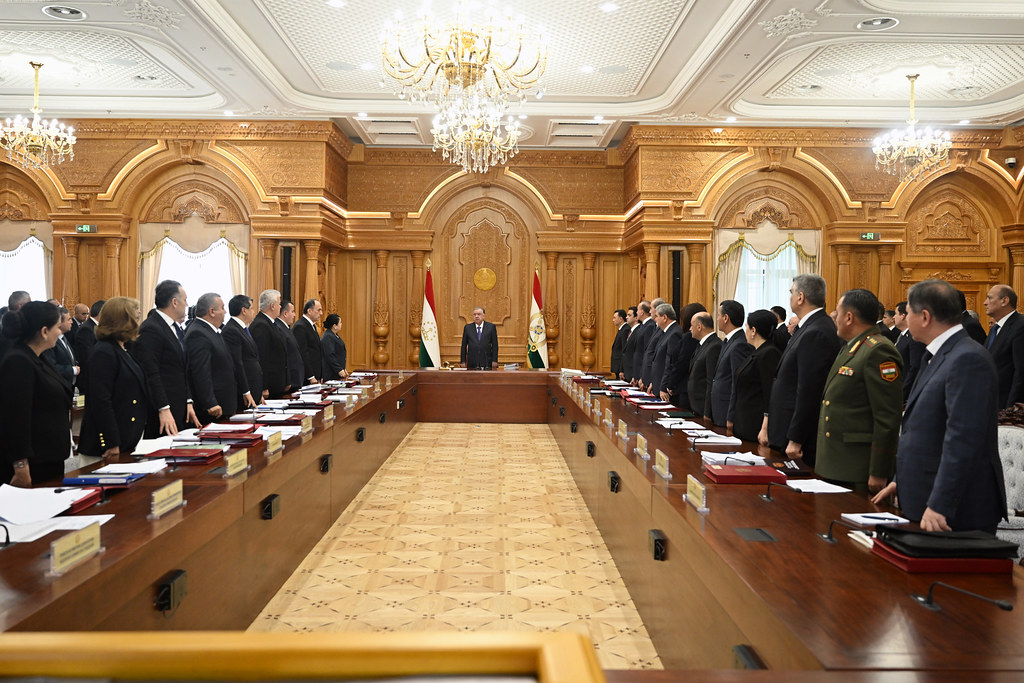

BAKU, Azerbaijan, June 30. A government meeting was held in Tajikistan on June 30 under the chairmanship of the President of Tajikistan and the Head of Government Emomali Rahmon.
According to the press service of the President of Tajikistan, the meeting reviewed the State Program for Innovative Development of the Cotton Industry of Tajikistan for 2026–2030.
Meanwhile, in the course of the meeting, it was noted that the program was developed taking into account the important role of cotton production in ensuring employment, providing raw materials for the textile and food industries, increasing exports, and introducing mechanisms aimed at ensuring sustainable development of the cotton sector.
Moreover, it was emphasized that cotton farming remains one of the key sectors of Tajikistan’s agro-industrial complex, playing an important role in employing the rural population, developing the national economy, and expanding the country’s export potential.
The program is aimed at addressing existing challenges in the sector, creating favorable conditions for further development, organizing the cultivation of domestic and foreign cotton varieties, and improving the professional capacity of industry specialists.
The meeting also considered the State Program for the Development of Sericulture and Cocoon Processing in Tajikistan for 2026–2030.
In addition, it was noted that the main objectives of the program are to increase silkworm cocoon production, ensure employment, develop export potential, attract investment, and modernize cocoon processing technologies.
The implementation of the program will focus on five key areas: the creation and development of mulberry plantations, import of silkworm seeds, silkworm breeding, cocoon production, and manufacturing of finished products.
In addition, officials presented the State Program for the Development of Rural Libraries of Tajikistan for 2027–2031.
The program aims to support the development of rural libraries, establish systems for professional training, retraining, and development of specialists, strengthen material and technical facilities, and bring library activities in line with modern requirements.
The initiative includes equipping rural libraries with computer technology, connecting them to the internet, creating electronic book collections, improving the professional skills of library workers, and expanding readership, particularly among children, teenagers, and young people.
President Emomali Rahmon instructed relevant ministries and agencies to ensure the effective implementation of the approved programs.
The government meeting also reviewed the Government’s work plan for the second half of 2026, the draft law “On Official Statistics,” and a draft investment agreement between the Government of Tajikistan and Kristall Green Glass LLC on the construction and commissioning of facilities for quartz production and enrichment, as well as the production of panel glass and glass containers.
Other issues included regulations on connecting electricity generated from renewable energy sources to the national energy system and supplying it to consumers, as well as measures to support the Tourism Development Fund of Tajikistan.
At the conclusion of the meeting, Rahmon instructed responsible officials to develop comprehensive programs and intensify efforts to promote a culture of peace both domestically and internationally within the framework of the UN resolution declaring 2027–2036 the International Decade of Strengthening Peace for Future Generations.
The President also issued instructions to expand repeated sowing on irrigated lands, create necessary reserves of seeds, and ensure proper preparations for the celebration of the 35th anniversary of Tajikistan’s state independence through accelerated improvement and development initiatives.
Meanwhile, the approval of new state programs for cotton production, sericulture, and rural libraries reflects Tajikistan’s broader strategy to strengthen domestic production, expand export capacity, and improve socio-economic development.
The focus on cotton and silk industries highlights the country’s efforts to increase the value-added potential of traditional agricultural sectors by improving production technologies, developing processing capacities, and strengthening professional skills.



