


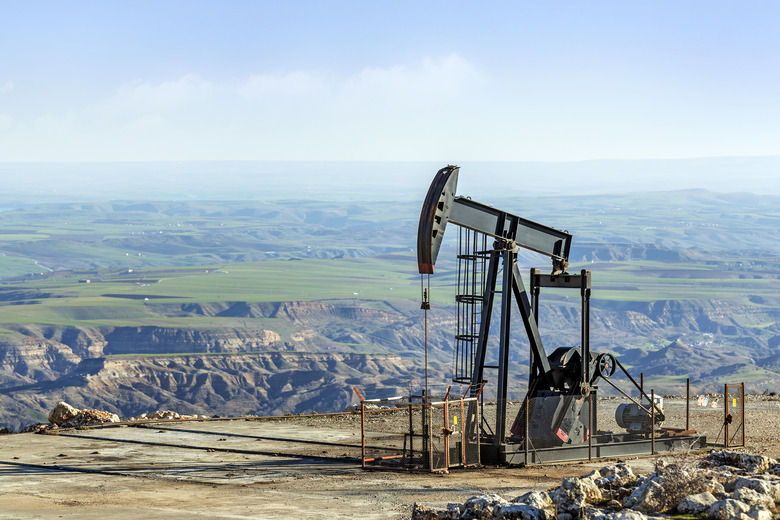
BAKU, Azerbaijan, July 6. Iran has launched the development process for the second phase of the Azar oil field, a joint oil field with Iraq (known as Badra in Iraq).
This was announced by Keyvan Yarehmadi, an official at Iran’s Petroleum Engineering and Development Company.
"By the end of last year, the development of the second phase of the Azar oil field was approved and announced to the contractor. A joint management committee meeting on the field’s second-phase development was held, and a decision was made to allocate the required budget," he said.
Yarehmadi noted that 13 work packages have been prepared as part of the second phase, including a tender for the installation of drilling rigs and the start of operations for drilling the first well.
The company official added that part of the equipment required for the drilling rigs has already been delivered, part has been manufactured, and part has been imported and is currently being cleared through customs. He said that the war and maritime blockade in the country have caused some delays in importing and delivering the necessary equipment.
According to Yarehmadi, technical meetings have been held on the installation of two downhole pumps, which are expected to be manufactured domestically and delivered to the Petroleum Engineering and Development Company by the end of the year.
"The installation of two downhole pumps, as well as a mobile operating system (MOS), is planned. Once these facilities are installed, production from the Azar oil field is expected to increase from 18,500 barrels per day to 22,000 barrels per day by the end of the year," he said.
The Azar oil field is one of the joint oil fields between Iran and Iraq. One-third of the field’s reserves are located in Iranian territory, while the remaining reserves lie in Iraq. The field’s oil reserves are estimated at 2.5 billion barrels, with recoverable reserves estimated at 400 million barrels.
According to Trend’s analysis, Iran’s Azar oil field is considered one of the most challenging fields to develop due to its geological characteristics. Iran views the development of the field as an important part of its strategy to jointly develop oil and gas fields with neighbouring countries.
However, sanctions imposed on Iran, limited financing, and a lack of interest from foreign investors in the country’s oil and gas sector due to sanctions have slowed progress on planned hydrocarbon production projects. In this context, Iran is also focusing on developing its oil and gas sector through projects requiring smaller-scale investments.



