


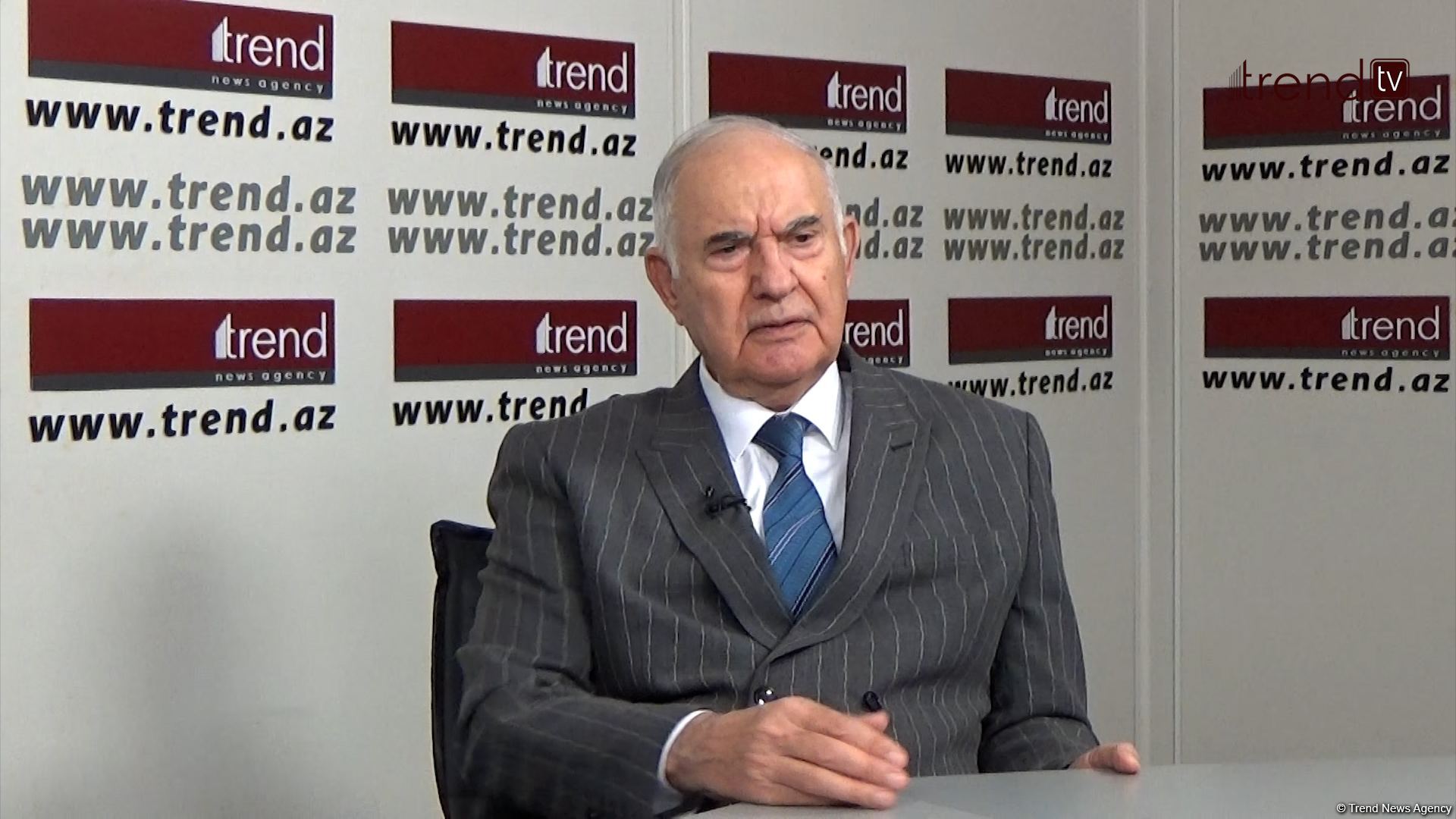
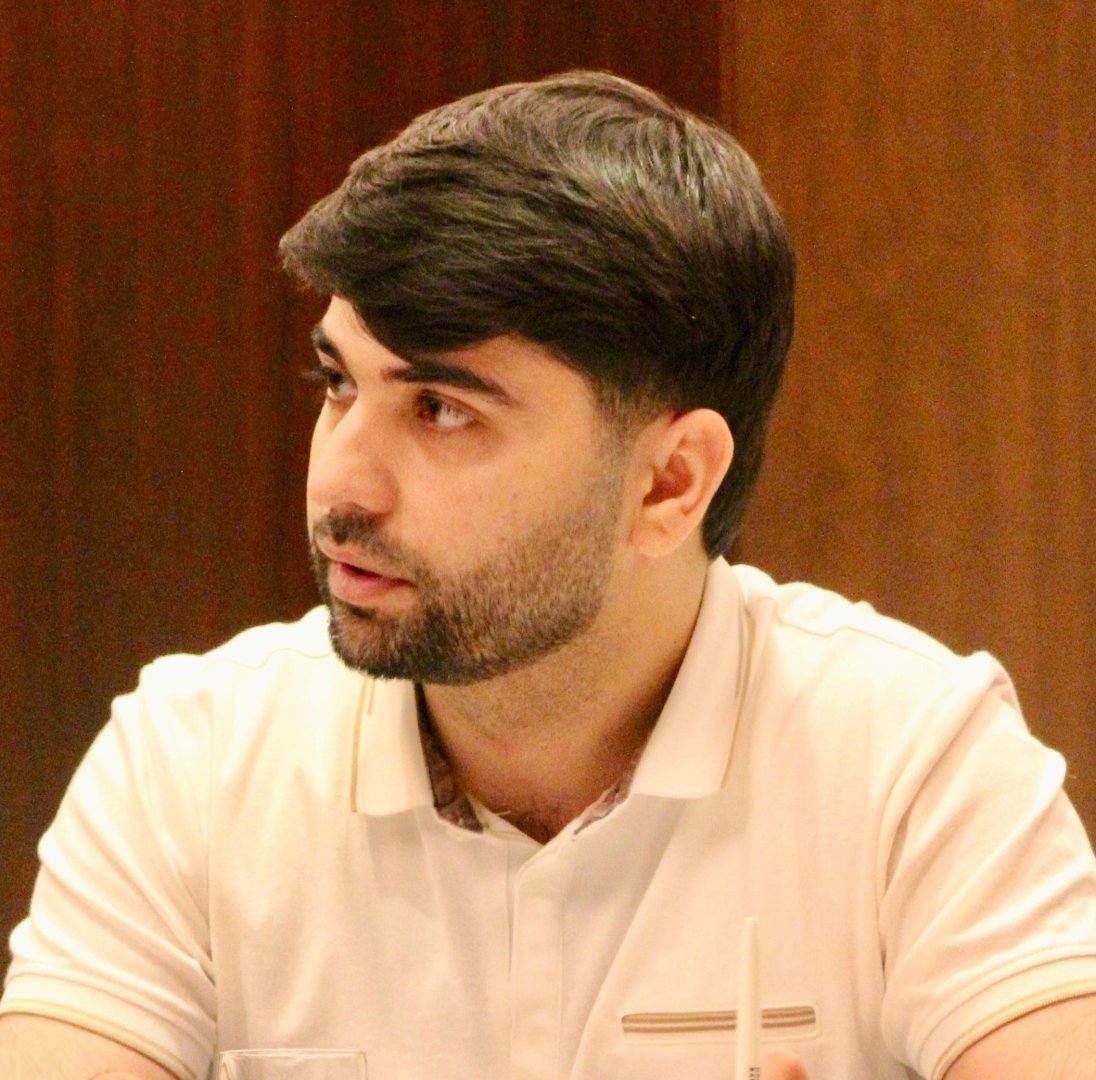
BAKU, Azerbaijan, May 26. The one-sided approach taken by certain circles serves revanchist tendencies rather than peace between Azerbaijan and Armenia, Azerbaijan's political analyst Azer Garayev told Trend.
According to him, at a time when a new geopolitical reality is taking shape in the South Caucasus, and important steps are being taken towards the signing of a peace treaty between Azerbaijan and Armenia, some international political circles and organizations are once again returning to the rhetoric of unilateral accusations. In particular, in recent months, statements by individual members of the UK Parliament, the promotion of a survey by the Human Rights Institute of the International Bar Association on the so-called "destruction of Armenian cultural heritage in Karabakh", as well as resolutions adopted against Azerbaijan in the European Parliament, raise the question of the extent to which they serve the normalization process in the region.
"Approaching the issue from only one direction, ignoring the complex historical and political context of the region, is incompatible with objectivity. If the goal is to give a legal and political assessment of the issues of human rights, humanitarian law, and the protection of cultural heritage in the South Caucasus, then the approach should be comprehensive, not selective, because the history of the Armenian-Azerbaijani conflict isn't limited to the last few years or months.
Historical facts show that since the 19th century, the demographic and political balance in the region has been changed by artificial interventions. There are numerous archival documents on the resettlement of tens of thousands of Armenians from Iranian and Ottoman territories to the region, including Karabakh, within the framework of the Russian Empire's South Caucasus policy, especially after the Turkmenchay Treaty of 1828. This process aimed to form a loyal social base in the border zones of the empire and created the basis for subsequent ethno-political conflicts," he said.
According to him, the tragic events that took place at the beginning of the 20th century left a deep mark on the collective memory of the region.
"During the March events of 1918, thousands of Azerbaijanis were killed in Baku, Shamakhi, Guba, and other regions. Traces of these events remain today in mass graves and archival materials. In the following decades, the policy of gradual expulsion of Azerbaijanis from the territory of present-day Armenia continued. The deportations carried out in 1948-1953, and the expulsion of hundreds of thousands of Azerbaijanis from their homeland in 1988-1989 were one of the most painful stages in the process of transforming Armenia into a mono-ethnic state.
Against the backdrop of all these events, the occupation of the Karabakh region of Azerbaijan and seven surrounding districts in the early 1990s created one of the most severe humanitarian crises in the region. Nearly a million people became refugees and internally displaced persons, cities were devastated, and villages were razed to the ground. The traces of the occupation in Aghdam, Fuzuli, Jabrayil, and other districts created the appearance of "dead cities" for many years. The facts of the destruction and desecration of dozens of mosques, the vandalism of cemeteries, and the changing of the origin of historical monuments did not receive due attention on international platforms for many years," he noted.
Garayev pointed out that this is precisely why raising the topic of "Armenian cultural heritage" alone today raises legitimate questions in public opinion: why have the destroyed cities of Azerbaijan, the destroyed cultural heritage, and the rights of people displaced from their lands not been brought to the agenda with the same sensitivity for 30 years? If the goal is justice and legal assessment, then all humanitarian tragedies that have occurred in the region should be investigated with the same objectivity.
"After the 44-day Second Karabakh War that took place in 2020, a completely new reality has formed in the region. Azerbaijan has effectively fulfilled the requirements of UN Security Council resolutions that have not been implemented for years and has restored its territorial integrity. After that, official Baku declared the line of normalization and cooperation a priority. Today, large-scale reconstruction and reconstruction work in the liberated territories, the restoration of religious and cultural monuments regardless of their affiliation, and the creation of conditions for the return of former internally displaced persons to their homelands are among the main directions of the post-conflict period.
As President Ilham Aliyev has repeatedly emphasized on various international platforms, Azerbaijan is a supporter of long-term peace in the South Caucasus and advocates building relations on the principles of mutual sovereignty and recognition of territorial integrity. The progress achieved in recent years in the direction of peace negotiations also shows that the emergence of a new stage of cooperation in the region is a real prospect," he said.
The analyst emphasized that, however, at such a sensitive stage, unilateral political campaigns, accusations taken out of historical context, and initiatives based on the narrative of only one side do not serve peace.
"On the contrary, such steps can inspire the revanchist circles that still exist in Armenia, undermine the atmosphere of trust, and slow down the normalization process. The future of the South Caucasus lies not in the accusation race, but in mutual responsibility, a holistic acceptance of historical truths, and a balanced approach by international actors. Selectively remembering history serves neither justice nor lasting peace. The region's need is not a new rhetoric of confrontation, but rather in drawing conclusions from the past and looking to the future," Garayev added.



