


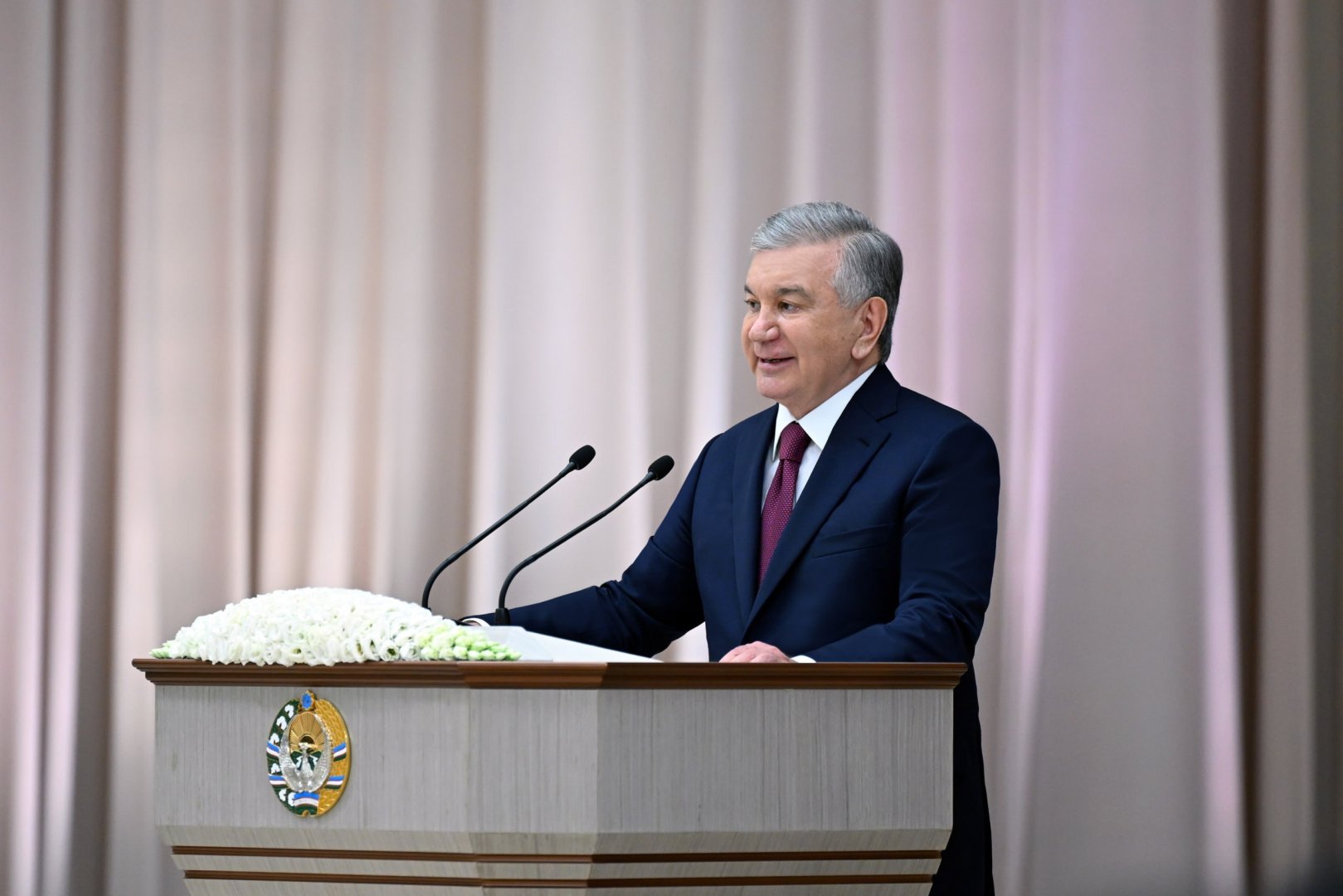

BAKU, Azerbaijan, June 23. President Shavkat Mirziyoyev reviewed a package of measures aimed at accelerating the development of Uzbekistan’s capital market, part of broader efforts to attract investment, expand private sector financing, and modernize the country’s financial system.
This was reflected in the statement by the press service of the Uzbek president.
The presentation highlighted recent progress in economic liberalization, state-owned enterprise reform, privatization, and the creation of a more investor-friendly business environment. Officials emphasized that developing a modern capital market is a key component of these reforms.
Last month, Uzbekistan reached a significant milestone in its financial sector when the National Investment Fund's shares were listed on both the London Stock Exchange and the Tashkent Stock Exchange through an initial public offering. This was seen as a significant step towards integrating Uzbekistan’s capital markets with the global financial system.
According to the press service, international investors are showing increasing interest in Uzbekistan’s financial markets. Several major international financial institutions, including the Asian Development Bank, the International Finance Corporation and the European Bank for Reconstruction and Development, have also expressed an interest in issuing local-currency bonds in Uzbekistan.
During the presentation, officials stressed the importance of building a modern market infrastructure, establishing a legal framework aligned with international standards, providing appropriate tax incentives, and ensuring a transparent and predictable business environment.
A centerpiece of the reform agenda is a new draft Law on the Capital Market, developed in cooperation with international financial organizations. The proposed legislation, consisting of 16 chapters and 123 articles, is designed to regulate the capital market according to modern market principles, strengthen investor protections, improve market infrastructure, and introduce new financial instruments.
The draft law would allow the introduction of derivatives widely used in global financial markets, including options, swaps, futures, and forwards. The framework would also incorporate netting agreements and align with standards established by the International Swaps and Derivatives Association (ISDA).
The reforms would establish a legal basis for banks to issue covered bonds and mortgage-backed securities, measures intended to attract long-term financing, support mortgage market development, and expand access to financial services.
Officials also outlined plans to introduce Islamic finance instruments for the first time in Uzbekistan’s securities market. The legislation would define rules for issuing sukuk, including partnership-based, lease-based, trade-based, and agency-based structures commonly used in Islamic finance.
Additional measures focus on strengthening market infrastructure. Under the proposals, the Central Securities Depository would receive expanded authority to manage centralized dividend payments and open correspondent accounts with foreign banks.
Financial institutions would be authorized to provide professional custody and securities administration services, while simplified procedures for foreign nominee holders would facilitate greater participation by international institutional investors.
The reforms also seek to align the powers of market regulators with international standards, enhancing oversight of market participants, improving transparency, strengthening enforcement mechanisms, and providing stronger protection for investors.
In order to support the international placement of shares in Uzbek companies and improve safeguards for investor assets, it is planned that more than ten existing laws and legal codes will be amended.
"Our country’s president emphasized that the capital market is an important source for attracting long-term resources into the economy, transforming enterprises, and expanding the flow of private investment." the press service said.
He instructed relevant agencies to continue consultations with international partners on the draft legislation, develop market infrastructure in line with global standards, introduce new financial instruments, and strengthen professional training for the financial sector.



