


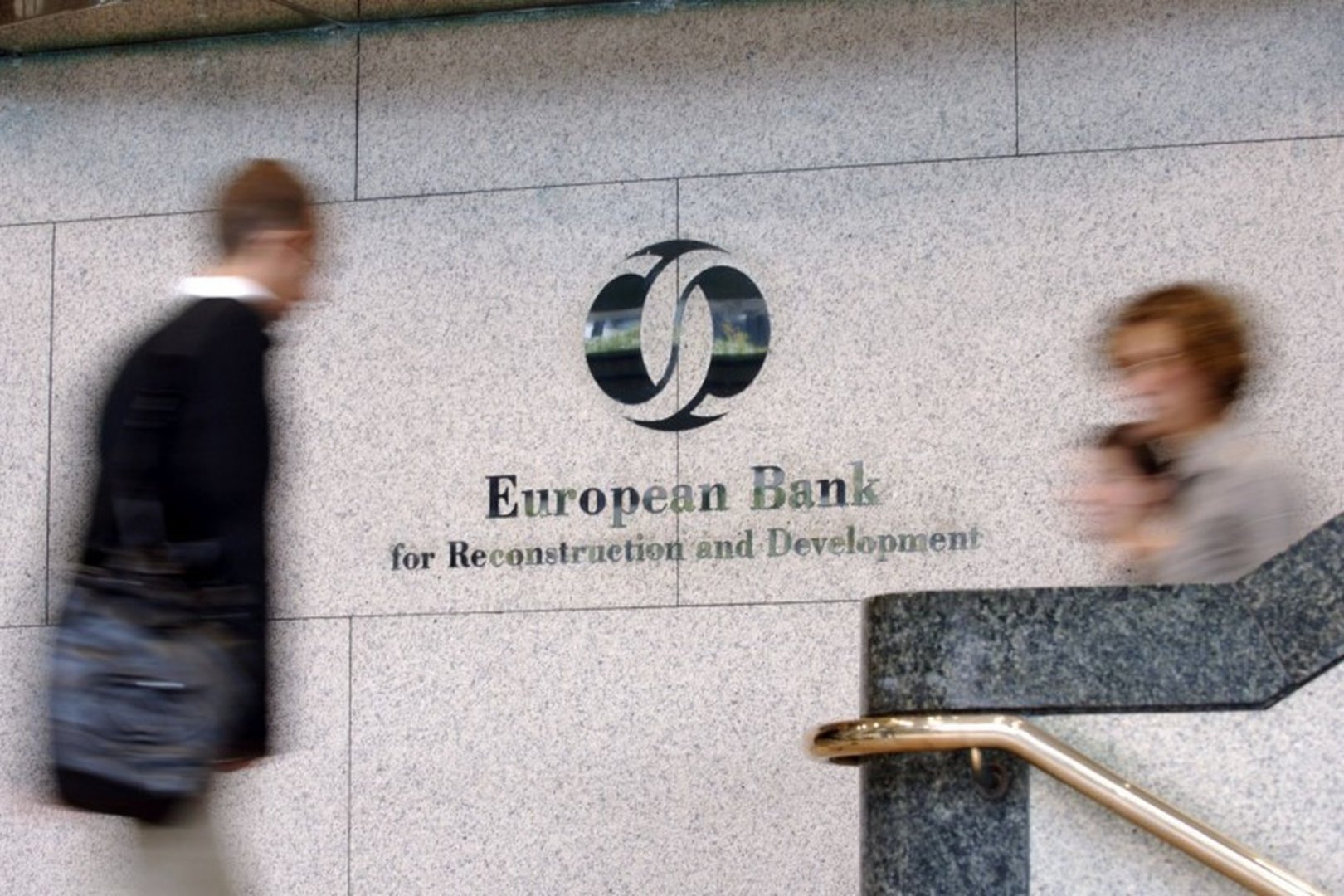
BAKU, Azerbaijan, July 3. EBRD President Odile Renaud-Basso is set to visit Turkmenistan in July. As Turkmenistan’s Minister of Foreign Affairs Rashid Meredov announced at a Cabinet meeting on June 26, the visit will include talks on expanding cooperation with the Bank as well as the signing of a number of bilateral documents. According to Meredov, the sides will discuss cooperation in energy, transport, communications, environmental protection, small and medium-sized enterprises, and the financial and banking sector - the very areas in which new agreements are expected to shape the future agenda of cooperation between Turkmenistan and the EBRD.
The visit by the EBRD President will continue the course the Bank has been steadily pursuing in Turkmenistan over recent years. The EBRD has operated in the country since 1992. During this period, it has financed 88 projects worth approximately €322 million, with all current operations focused on the private sector. According to the EBRD’s country strategy, its key priorities in Turkmenistan remain the development of private entrepreneurship, support for small and medium-sized enterprises, strengthening the financial sector, facilitating foreign trade, and attracting foreign investment.
Political dialogue between the two sides has intensified significantly in recent months. At the end of February, during a working visit to the United Kingdom, Turkmenistan’s Foreign Minister Rashid Meredov held talks with EBRD President Odile Renaud-Basso, where they discussed expanding financial and investment cooperation, energy projects, and the Bank’s participation in developing the East-West international transport corridor. At that meeting, the EBRD President reaffirmed the Bank’s interest in further expanding cooperation with Turkmenistan.
Several weeks later, on March 18, during the IFT 2026 International Investment Forum in Ashgabat, EBRD Head of Office in Turkmenistan Eric Livny stated that the Bank was ready to deepen cooperation through public-private partnership (PPP) mechanisms. According to him, PPP projects make it possible to attract foreign investment, modern technologies, and long-term financing into infrastructure sectors, while Turkmen construction companies have already shown interest in this format.
Cooperation received another boost in June, when Rashid Meredov and Eric Livny once again discussed support for economic reforms, investment promotion, and the implementation of projects in strategically important sectors of the economy. Following the meeting, the parties reaffirmed their mutual interest in further developing the partnership and stressed the importance of regular dialogue for launching new joint initiatives.
Against this backdrop, the upcoming agreements do not appear to be a one-off initiative. Rather, they represent the logical continuation of a consistent policy of expanding cooperation that both sides have been building over recent months, gradually moving from discussions on individual areas toward preparing a comprehensive package of new agreements.
At the same time, the upcoming agreements reflect not only the EBRD’s growing interest in Turkmenistan but also the changes taking place within the Turkmen economy itself. As Trend noted in its earlier analytical article, Inside Turkmenistan’s investment cycle: How Turkish contractors anchor a new phase of economic expansion, the country has effectively entered a new investment cycle over recent months, steadily expanding the sectors that will subsequently require substantial financing, advanced technologies, and supporting infrastructure.
The energy sector provides perhaps the clearest example. On April 17, Turkmenistan launched the fourth phase of development of its giant Galkynysh gas field together with China’s state-owned CNPC. In June, state concern Hazarnebit and Malaysia’s PETRONAS signed a new production sharing agreement covering offshore Blocks 19 and 20 in the Turkmen sector of the Caspian Sea. At the same time, the country continues to develop its petrochemical industry, transport infrastructure, and export-oriented manufacturing in line with Turkmenistan’s Socio-Economic Development Program and Investment Program for 2026-2028.
It was against this backdrop that Turkmen President Serdar Berdimuhamedov paid a state visit to Azerbaijan on July 22-23, during which the two sides agreed to expand cooperation in energy, transport, industry, and maritime logistics. In essence, the agreements point to the emergence of a new external economic architecture in which Azerbaijan is becoming Turkmenistan’s key gateway to international markets across the Caspian Sea and onward toward Europe. Trend examined these developments in greater detail in its analytical article Energy, transport, industry: what stands behind Turkmenistan President’s visit to Azerbaijan.
Thus, the upcoming agreements with the EBRD come at a time when Turkmenistan is already creating new sources of economic growth while simultaneously developing the infrastructure needed to integrate them into international supply chains. This means that the country’s primary need is no longer the launch of individual projects but rather the financial and institutional support required for a new stage of economic development.
Yet there is another element in the story of the forthcoming agreements between the EBRD and Turkmenistan that, at first glance, appears to be an ordinary personnel decision but in reality may reveal much about the Bank’s future plans in the country. On September 1, 2026, Nodira Mansurova will assume the position of EBRD Regional Director for Turkmenistan, Uzbekistan, and Tajikistan after serving as the Bank’s Head of Office in Tunisia since 2021. It will be she who oversees the implementation of the agreements reached only a few weeks before taking up her new position.
Mansurova’s professional background itself offers clues as to the direction in which the EBRD intends to develop cooperation with Ashgabat. During her tenure in Tunisia, the Bank focused on projects combining government priorities with private capital, including transport and energy infrastructure, support for small and medium-sized businesses, industrial modernization, renewable energy financing, and improvements to the investment climate. Importantly, this was not the application of a standard EBRD model but rather its adaptation to Tunisia’s specific needs, with the Bank working simultaneously alongside government institutions, international financial organizations, and private investors.
Particularly noteworthy is her experience in building multi-source financing mechanisms. Under Mansurova’s leadership, the EBRD actively implemented projects together with the European Investment Bank (EIB) and the European Union, using co-financing arrangements, grant support, and risk-sharing instruments to attract private investment. This approach enabled the implementation of several major infrastructure and energy projects that would have been considerably more difficult to finance through a single institution alone.
That experience appears especially relevant for Turkmenistan. In May 2026, an EIB representative told Trend in an exclusive interview that transport connectivity, sustainable infrastructure, private sector support, and green finance projects were among the Bank’s priority areas for potential cooperation with Turkmenistan. These priorities closely match both the agenda of the upcoming EBRD-Turkmenistan negotiations and the sectors identified by the Turkmen government as priorities under its 2026-2028 economic development and investment program.
Against this backdrop, the convergence of several factors - the July visit by the EBRD President, preparation of a new package of agreements, the appointment of a new Regional Director, and Turkmenistan’s current stage of economic development - is difficult to dismiss as coincidence. Rather, it suggests that the Bank is moving beyond isolated projects toward a more comprehensive model of cooperation, one centered on long-term investment programs requiring continuous coordination among the government, international financial institutions, and the private sector. This is precisely the model that Nodira Mansurova demonstrated during her tenure in Tunisia.
Taken together, the July visit by the EBRD President to Ashgabat, the preparation of a new package of agreements, and the forthcoming leadership transition at the Bank’s regional office appear not as separate events but as elements of a single process. Over recent months, Turkmenistan has significantly accelerated development in areas traditionally prioritized by international financial institutions: energy, transport infrastructure, industry, and the expansion of external economic ties. These are precisely the sectors previously identified by the Turkmen side as the key topics for the upcoming negotiations with the EBRD.
In this context, the appointment of a new Regional Director becomes more than a routine personnel decision; it serves as an indicator of the next stage of cooperation. Nodira Mansurova’s experience suggests that the EBRD is betting not on one-off investments but on the long-term implementation of projects bringing together the government, international financial institutions, and private business. Should the July negotiations conclude with the anticipated agreements, this model of cooperation is likely to become the foundation of the Bank’s next phase of partnership with Turkmenistan.



