


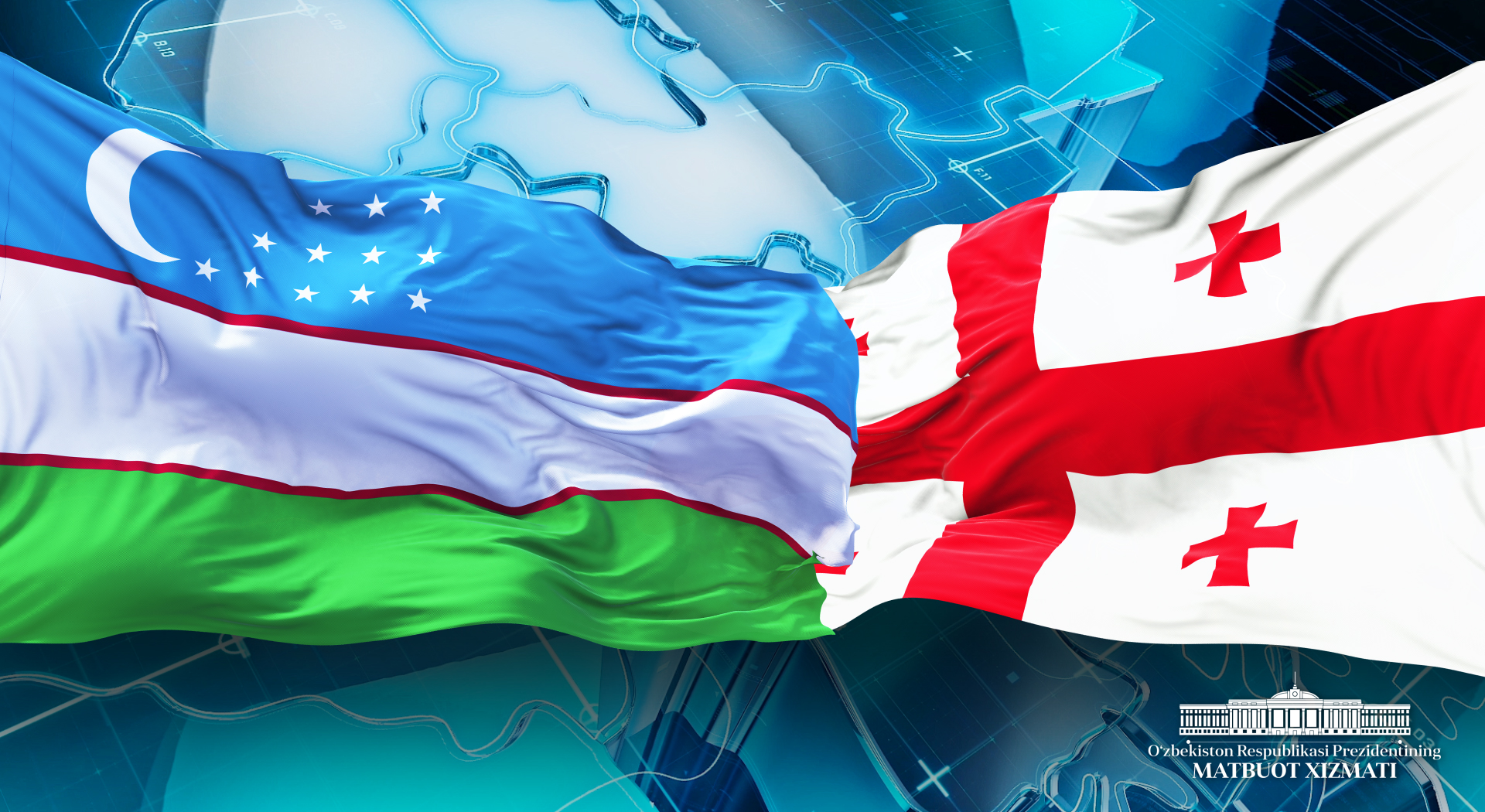

BAKU, Azerbaijan, July 2. The upcoming visit of President Shavkat Mirziyoyev to Tbilisi highlights the continued expansion of bilateral relations between Uzbekistan and Georgia.
The visit takes place against the backdrop of deepening economic and political cooperation between the two states and reflects Tashkent’s broader strategy of diversifying its external partnerships beyond Central Asia while enhancing engagement with the South Caucasus.
In this context, Georgia has assumed increasing importance for Uzbekistan as a transit hub connecting Central Asia with Europe via the Middle Corridor, particularly amid ongoing shifts in Eurasian trade patterns. For Tashkent, closer ties with Tbilisi provide improved access to Black Sea logistics routes and European markets, thereby supporting efforts to diversify export corridors and reduce dependence on traditional northern routes.
The economic scale of both countries further underscores the strategic rationale for closer cooperation. Uzbekistan, with a nominal GDP of $181.5 billion in 2026 according to the International Monetary Fund, remains one of Central Asia’s largest and fastest-growing economies, with projected annual growth of 6.5%. The increase in GDP per capita, estimated at $4,661 this year and up by more than 21% compared to 2025, also reflects strengthening domestic demand and the expansion of industrial capacity.
Meanwhile, Georgia continues to demonstrate solid economic momentum, with GDP growth reaching 6.4% in May and averaging 7.8% over the first five months of 2026, driven primarily by finance, manufacturing, transportation, and communications. Against this background, enhanced Uzbek - Georgian cooperation appears increasingly economically viable, as Uzbekistan can leverage Georgia’s transit infrastructure and access to the Black Sea to expand its export capacity, while Georgia can further consolidate its role as a gateway for Central Asian trade and investment. This growing economic complementarity creates favorable conditions for deeper long-term cooperation in trade, logistics, energy, and industrial development.
At the same time, Georgia has intensified its engagement with Central Asia as part of its long-term strategy to establish itself as a key trade and transit bridge between Europe and Asia. For Tbilisi, deeper cooperation with regional economies such as Uzbekistan, Kazakhstan, and Turkmenistan is essential for fully unlocking the potential of the Middle Corridor and increasing cargo flows through Georgian infrastructure.
Georgia’s growing outreach to Central Asia was recently illustrated by Prime Minister Irakli Kobakhidze’s visit to Kazakhstan, during which trade, transit, and transport cooperation were key topics. The talks reflected Tbilisi’s wider efforts to expand regional connectivity and enhance its strategic importance in Eurasian trade routes.
Against this backdrop, Mirziyoyev’s upcoming visit appears to be part of a wider regional trend rather than an isolated bilateral event. In recent years, Georgia has expanded political dialogue with Central Asian states and promoted investment opportunities in logistics, energy, tourism, and transport, reflecting the region’s growing importance in global supply chains as businesses seek alternative routes between China and Europe.
Transport and logistics are expected to remain central to the upcoming talks. For Uzbekistan, Georgian infrastructure, particularly the Black Sea port of Poti, has become increasingly important as a gateway for exports to European and Mediterranean markets. The port serves as a critical node in the Azerbaijan - Georgia transit corridor and plays an important role in facilitating container shipments from Central Asia.
Taken together, the logistics agenda suggests Georgia is seeking to cement its role as Central Asia’s primary Black Sea gateway, while Uzbekistan is working to strengthen alternative export corridors amid evolving regional trade dynamics. This mutual interest indicates that the visit could move beyond symbolic diplomacy and result in practical agreements aimed at deepening trade, improving regional connectivity, and expanding long-term investment cooperation.



