


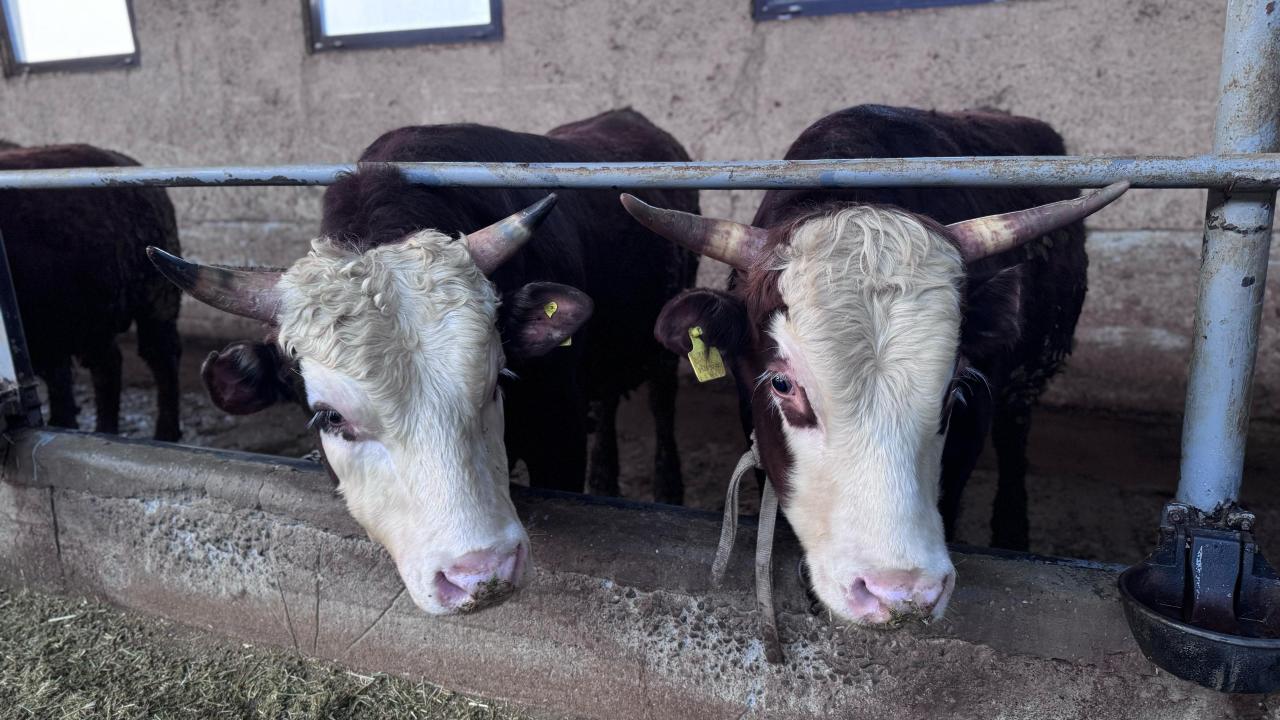

ASTANA, Kazakhstan, April 29. Kazakhstan imposes new rules for the distribution of export quotas for the supply of bulls and rams from country to third countries and EAEU member states from April 30, 2025, Trend reports citing the Ministry of Agriculture of Kazakhstan.
According to information, the quantitative limit for exporting bulls over 12 months old is set at 60,000 head, including 40,000 head allocated for feedlots and 20,000 head for producers.
The ministry also stated that the quantitative limit for exporting rams over 4 months old is set at 120,000 head, including 60,000 for feedlots and 60,000 for producers.
“The quota for a single feedlot to export bulls over 12 months old from the territory of the Republic of Kazakhstan must not exceed, either at once or in total, 30 percent of the feedlot’s capacity. For an individual producer, the limit is capped at 500 head for the entire quota period,” the ministry noted.
For feedlots with a capacity of 5,000 head or more, the limit for exporting rams over 4 months old must not exceed 1,500 head during the entire quota period.
Furthermore, at the time of quota allocation, the actual number of animals present at the feedlot or with the producer must be at least twice the requested quota volume as registered in the quarantine application.
The ministry emphasized that animals intended for export must be registered in the agricultural animal identification database under the name of the applicant (either a feedlot or producer) no earlier than three months before being placed in quarantine.
Moreover, the quota remains valid for the duration of the epizootic inspection report, and animals must be exported within this timeframe.
Quotas are distributed via the "E-licensing" portal and are issued automatically upon receipt of a license to export specific types of goods, following the rules for the state service "Issuance of a license for the export and/or import of certain types of goods under quantitative restrictions (quotas)." The regulation will remain in effect for six months.



