


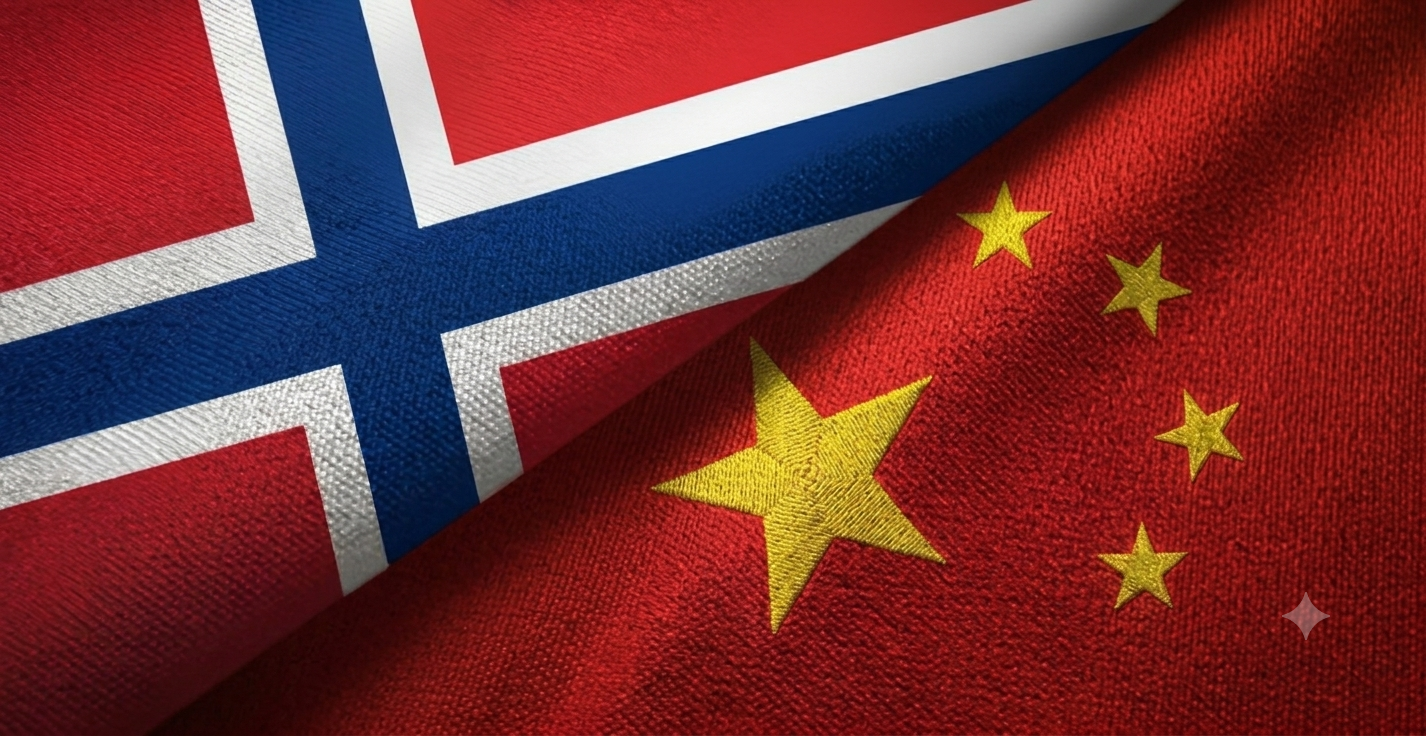

BAKU, Azerbaijan, July 8. Chinese Foreign Minister Wang Yi concludes his week-long tour of Scandinavia on July 8 with talks in Oslo with Norwegian Foreign Minister Espen Barth Eide. The six-day trip has taken him to Denmark, Sweden, Finland and Norway.
Global trade has shown signs of stabilizing following a series of direct diplomatic contacts and negotiations between U.S. President Donald Trump and Chinese President Xi Jinping. Beijing is using this window to broaden its network of partners across Europe, looking beyond traditional hubs such as Berlin and Paris to capitals including Oslo. Norway is a small but important link, supplying raw materials and technology while serving as a reliable Western partner.
The trade figures reflect the growing relationship. Norway exported $4.7 billion worth of goods to China in 2025, with growth continuing into 2026. In May alone, exports reached $1.26 billion. Fish and seafood dominated shipments, generating $1.19 billion in export revenue, including 12.3 billion Norwegian kroner (about $1.15 billion) from salmon and other fish products. China is now among the three largest markets for Norwegian salmon. In several months during 2025 and 2026, seafood exports rose by 50% to 80% year-on-year, driven in part by growing uncertainty in the U.S. market following tariff measures.
Norway's imports from China are led by telecommunications equipment, electronics, machinery and clothing. Imports totaled $1.26 billion in May, reinforcing the upward trend. At the same time, Norwegian exports declined by 25% year-on-year in April 2026 to 3.21 billion kroner ($325.5 million), underscoring that trade growth has been uneven rather than linear.
The Oslo talks are expected to focus on three main areas of practical economic cooperation. The first is green energy, including offshore wind, hydrogen technologies and marine resource management, where Norway offers advanced engineering expertise and China provides large-scale industrial capacity and market demand. The second is Arctic cooperation, covering scientific research and logistics through initiatives such as the China-Nordic Arctic Research Center and related forums, including events scheduled in Tromsø in 2026. The third is services, with Norway set to be the guest country at the China International Fair for Trade in Services (CIFTIS 2026) in Beijing this September, creating new opportunities for Norwegian companies in shipping, green technology and aquaculture.
Another practical factor supporting closer ties is easier business travel. Since 2024, Norwegian citizens have benefited from a 15-day visa-free entry policy for China, helping maintain strong business mobility between the two countries. According to the Norwegian Business in China 2026 report, Norwegian companies operating in China remain moderately optimistic about their prospects and continue to view the Chinese market as a long-term strategic destination.
Wang's visit is part of Beijing's broader effort to diversify its partnerships across Europe. For China, Norway offers expertise in green technologies, maritime industries and a stable supply of seafood. For Norway, China represents an expanding export market at a time of heightened uncertainty in trade with the United States. The next phase of the relationship is likely to be driven by sector-specific cooperation, with concrete agreements in fisheries, offshore energy and services linked to CIFTIS expected to provide the clearest indication of where Beijing-Oslo ties are headed.



