


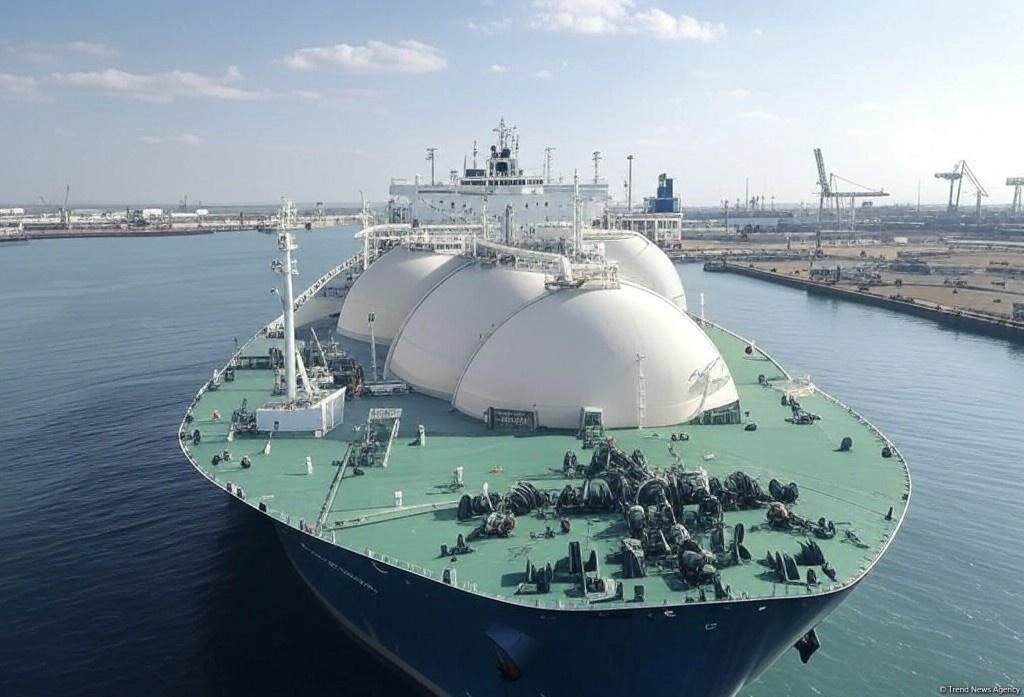

BAKU, Azerbaijan, July 7. ADNOC has signed a 15-year liquefied natural gas (LNG) supply agreement with Japan's INPEX CORPORATION.
The deal secures the delivery of 1 million tonnes per annum (mtpa) from the Ruwais LNG project, as the UAE advances its long-term LNG export strategy despite near-term supply disruptions highlighted by the International Energy Agency (IEA).
Under the sales and purchase agreement (SPA), LNG will be primarily supplied from the Ruwais LNG project in Abu Dhabi, which is scheduled to begin commercial operations in 2028. The project will have a total liquefaction capacity of 9.6 mtpa, with around 90% of its output already committed to customers in Asia and Europe through long-term contracts.
The agreement strengthens the longstanding partnership between ADNOC and INPEX and supports the Japanese company's INPEX Vision 2035, which seeks to expand its LNG portfolio and diversify supply sources.
"The agreement further strengthens the longstanding relationship between INPEX and the ADNOC Group," ADNOC said, adding that the project represents another milestone in its global LNG expansion strategy.
The Ruwais LNG facility is expected to become the first LNG export plant in the Middle East and Africa powered by clean electricity. ADNOC said the project will also use artificial intelligence and advanced technologies to improve operational efficiency and reduce emissions.
ADNOC Gas previously announced plans to acquire ADNOC's 60% stake in the Ruwais LNG project for an estimated $5 billion in 2028. Once completed, the acquisition would increase ADNOC Gas' operated LNG production capacity to about 15 mtpa, more than doubling its current output.
However, the project comes as the UAE's existing LNG exports remain under pressure following disruptions caused by the Middle East conflict.
According to the IEA's Gas Market Report Q3-2026, damage to key gas infrastructure and restrictions on shipping through the Strait of Hormuz have sharply reduced UAE LNG exports in 2026. The Habshan gas processing complex, which normally handles more than half of the country's domestic gas supply, has been operating below full capacity following Iranian strikes, while exports from the Das Island LNG terminal slowed significantly during the March-June period. ADNOC Gas expects Habshan's processing capacity to recover to around 80% by the end of 2026 and fully by 2027, the agency said.
Despite these disruptions, the IEA expects global LNG supply to remain broadly stable this year. The agency estimates that LNG exports from Qatar and the UAE combined will decline by about 45% year on year, or 54 billion cubic metres (bcm), in 2026. However, this reduction is expected to be largely offset by new LNG production from North America, Africa and Australia, together with higher output from existing projects.
"New projects in North America, Africa and Australia are expected to add close to 50 bcm of supply to the global balance in 2026," the IEA said, adding that legacy projects are expected to contribute more than 10 bcm of additional supply.
The agency warned, however, that further delays in restoring Gulf LNG exports could push the global LNG market into its first annual supply decline since 2012.
For Japan, the impact of the Hormuz crisis is expected to remain limited. The IEA estimates the country's natural gas demand fell by about 1.5% in the first half of 2026 due to lower gas-fired power generation, increased coal use and the restart of the Kashiwazaki-Kariwa nuclear power plant. Because only around 6% of Japan's LNG imports originate from the Middle East, the agency expects the country's total natural gas demand to decline by around 5% in 2026.



