


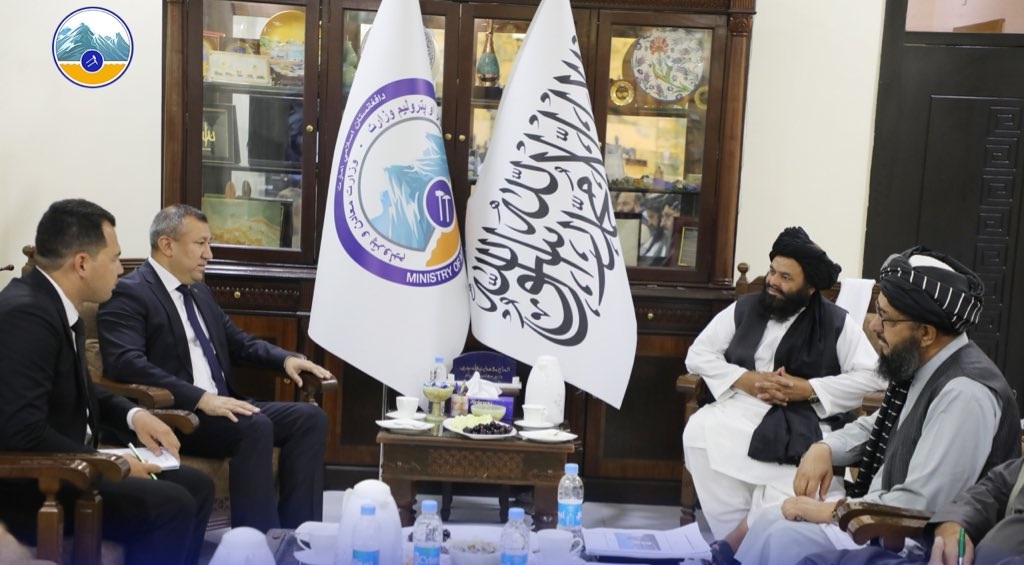

BAKU, Azerbaijan, July 7. Turkmenistan and Afghanistan discussed the implementation of the TAPI gas pipeline project and its current construction progress during talks in Kabul.
This was announced by the spokesperson for Afghanistan's Ministry of Mines and Petroleum following a meeting between Acting Minister of Mines and Petroleum Mullah Hedayatullah Badri and Turkmenistan's Ambassador to Afghanistan, Hoja Ovezov.
"The implementation of the TAPI project is progressing successfully, and 102 kilometers of the pipeline have now been laid in Afghanistan," the Turkmen ambassador said during the meeting.
According to the spokesperson, the ambassador also said the remaining construction work would be completed in line with the established schedule and that all commitments under the project would be fulfilled.
For his part, Badri reaffirmed Afghanistan's support for the project, assuring "full legal cooperation" in the implementation of the TAPI gas pipeline, the spokesperson reported.
Meanwhile, the Turkmenistan-Afghanistan-Pakistan-India (TAPI) pipeline is a planned 1,800-kilometer natural gas pipeline designed to transport up to 33 billion cubic meters of gas annually from Turkmenistan’s giant Galkynysh field to Afghanistan, Pakistan, and India. Ashgabat views the project as one of the main routes for diversifying gas exports and strengthening regional economic integration.
The gas resource base for TAPI is the Galkynysh field, one of the world's largest gas deposits with estimated reserves exceeding 27 trillion cubic meters. In April 2026, Turkmengaz and China's CNPC launched the fourth phase of the field's development. The project involves the construction of new production facilities and the drilling of wells, which will enable the additional production of up to 10 billion cubic meters of commercial gas per year.
In early June, the Belfer Center for Science and International Affairs at Harvard’s Kennedy School noted in its analysis that the TAPI gas pipeline is being re-anchored in regional energy discussions as a structured mechanism for regional energy flows, connecting Turkmenistan’s gas resources with demand centers in South Asia.



