


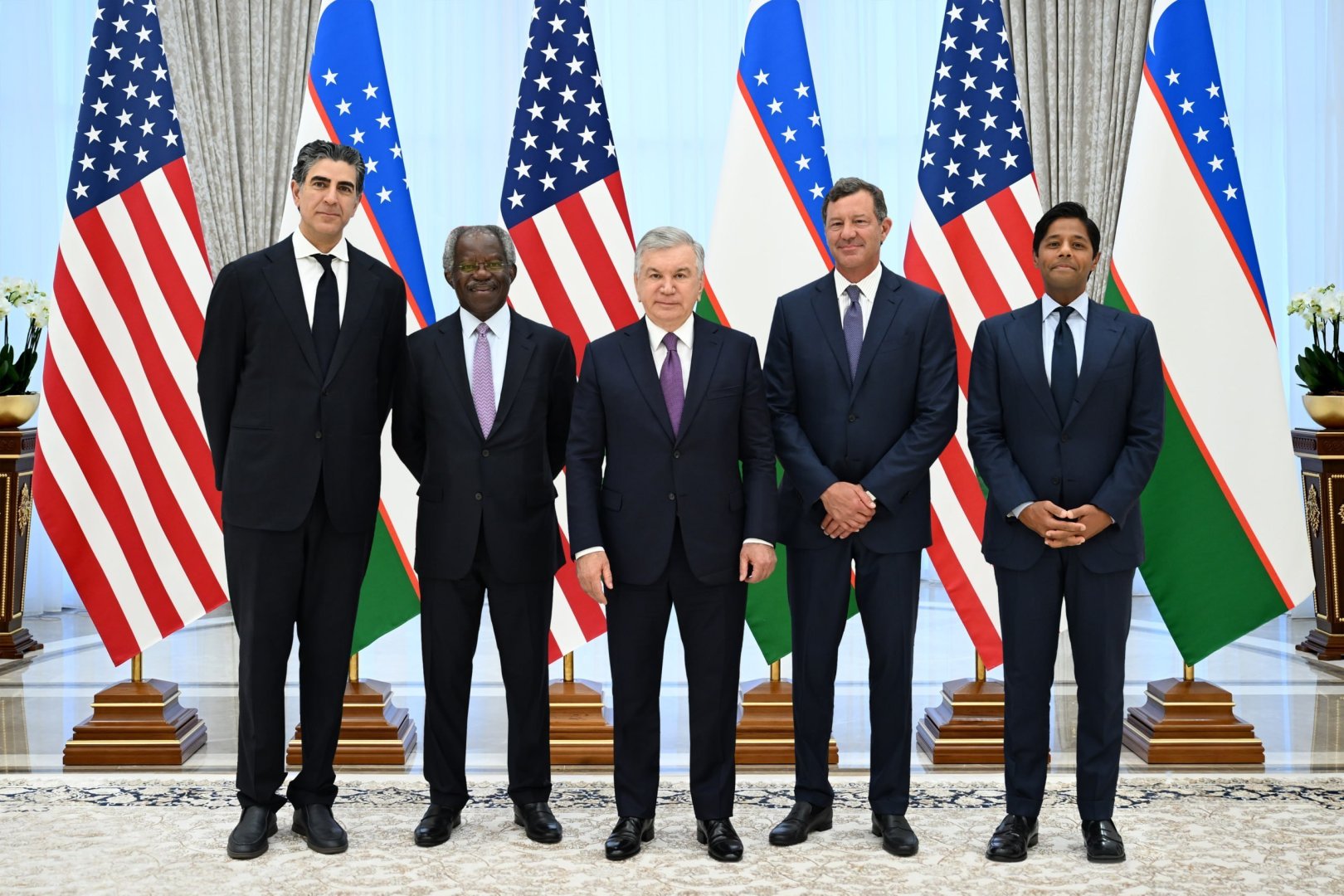

BAKU, Azerbaijan, July 7. Uzbekistan and global investment firm BlackRock discussed expanding cooperation in privatization, capital markets, energy, and artificial intelligence.
This was reflected in the statement published by the press service of the Uzbek president following the meeting between President Shavkat Mirziyoyev and Senior Managing Director, member of the Global Executive Committee, and a Board of Directors member at BlackRock, Adebayo Ogunlesi.
According to the press service, the meeting focused on strengthening the strategic partnership between Uzbekistan and BlackRock, with particular emphasis on the fuel and energy sector. The sides also reviewed progress on the company's ongoing projects in the country.
Mirziyoyev outlined several priority areas for future cooperation, including expanding BlackRock's participation in Uzbekistan's privatization program, enhancing the country's investment attractiveness, developing financial markets, advancing petrochemical projects, and pursuing joint investments in artificial intelligence technologies.
“The parties reviewed current areas of cooperation and discussed opportunities to further strengthen the strategic partnership, particularly in the fuel and energy sector,” the presidential press service said.
Founded in 1988 and headquartered in New York, BlackRock is the world’s largest asset management company, providing investment management, risk management, and technology services to institutional and retail investors globally. The company manages approximately $14 trillion in assets as of 2026 and serves clients in more than 100 countries. Its investment platform covers a wide range of asset classes, including equities, fixed income, private markets, alternatives, and exchange-traded funds through its iShares brand.
Meanwhile, Uzbekistan and U.S.-based BlackRock are actively building ties in joint infrastructure investment and sovereign equity. This collaboration centers on BlackRock and its subsidiary Global Infrastructure Partners (GIP) deploying capital across the Central Asian nation's economy.



