


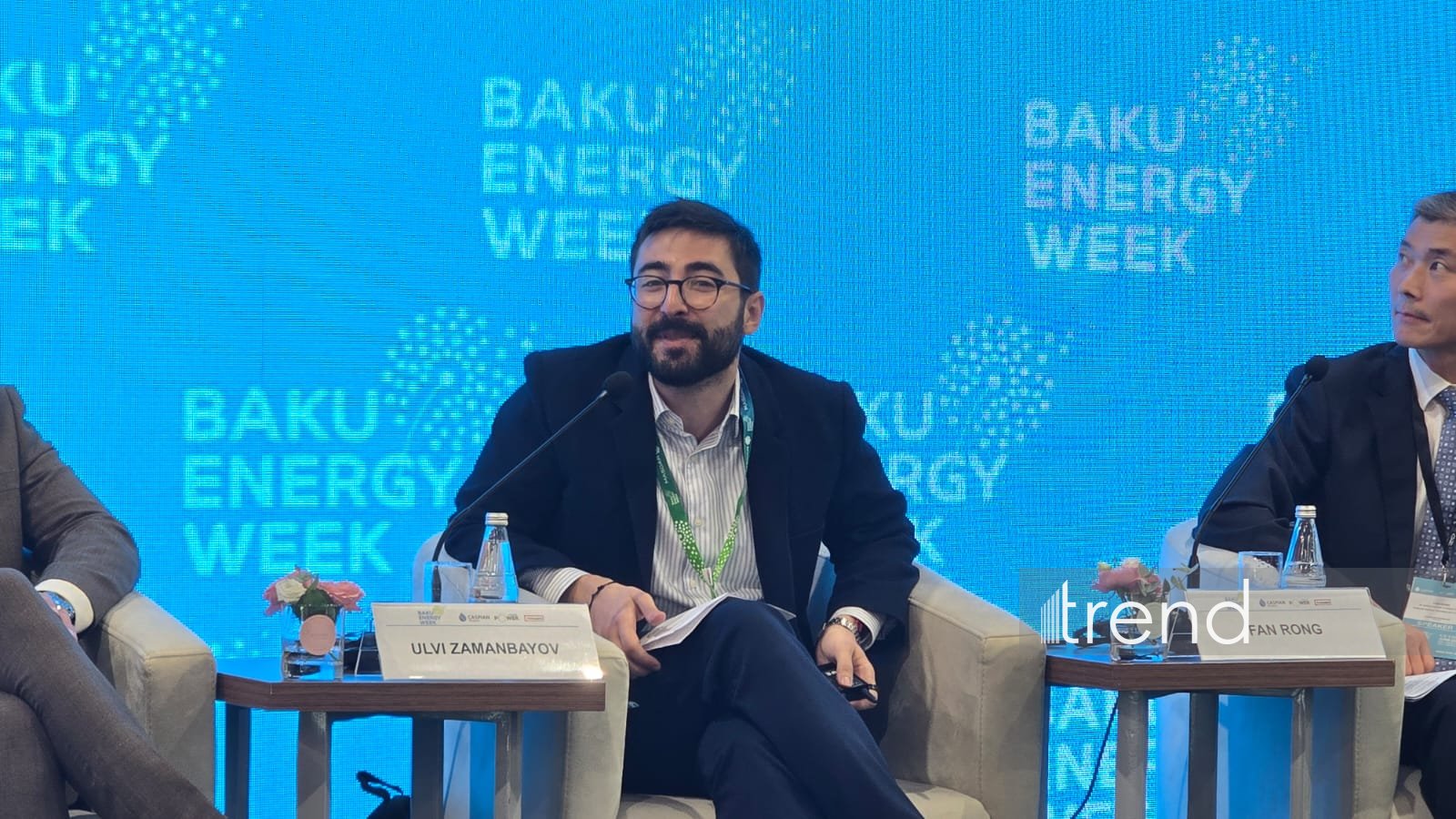

BAKU, Azerbaijan, June 1. The oil and gas sector aims to predict risks in advance, Machine Learning Manager at Caspian AI Institute, Ulvi Zamanbayov, said at a panel discussion within the framework of the 31st International Caspian Oil and Gas Exhibition in Baku today, Trend reports.
He noted that the main priority in the application of artificial intelligence (AI) in the oil and gas industry is safety, and therefore, the transition to fully automated, closed-loop systems should be carried out in stages.
According to him, since the oil and gas sector is a high-risk area, the cost of mistakes here is very high, and safety should be at the center of all decisions.
"We aren't trying to fully automate everything right away. First of all, it's important to ensure the security of systems, maintain human control, and ensure maximum participation of the business side in the processes. Only then can we move to broader automation," he explained.
Zamanbayov pointed out that the main goal in the industry is to move from a reactive approach to a predictive and recommendatory approach.
"Instead of solving problems after they occur, we are working to identify risks in advance, predict production, and propose the most optimal action options," he emphasized.
According to him, the Caspian AI Institute, established at the initiative of SOCAR, is working on the development of artificial intelligence solutions by bringing together specialists in various fields.
"Our team includes geologists, chemical engineers, software and data science specialists. This approach allows us to better understand business needs and industry-specific features. It is also important to involve user representatives in the process as product owners during project development," said Zamanbayov.
He added that the institute prioritizes the creation of scalable products that can be widely used across the company rather than solving individual problems.
One of the projects presented during the panel was the "Virtual Flow Meter" system, which is currently being developed jointly with SOCAR.
According to Zamanbayov, this project is based on "soft sensor" technology for more accurate assessment of production in wells.
"Previously, in many cases, well production was measured once a month, and it was assumed that this indicator remained unchanged throughout the month. However, production is constantly changing. The Virtual Flow Meter system allows you to predict production on an hourly or daily basis using high-frequency data such as pressure, temperature, and control equipment indicators," he noted.
According to him, this approach allows for more accurate monitoring of production processes, improved decision-making, and increased operational efficiency.
Stay up-to-date with more news on Trend News Agency's WhatsApp channel



