



BAKU, Azerbaijan, September 4. On August 30, 2026, Japanese Foreign Minister Toshimitsu Motegi visited Turkmenistan, where he held talks with President Serdar Berdimuhamedov. The sides discussed the development of bilateral relations, with particular attention to trade and economic cooperation, advanced technologies, and artificial intelligence.
A key economic outcome was Japan’s expressed interest in participating in projects aimed at further diversifying Turkmenistan’s economy. The sides also highlighted the experience already accumulated by Japanese companies in gas chemistry, power generation, and industry. The talks resulted in the signing of a Cooperation Program between the foreign ministries of the two countries for 2027-2029.
Tokyo’s stated interest in supporting the diversification of Turkmenistan’s economy is backed by an already established foundation of cooperation. According to President Serdar Berdimuhamedov, 44 investment projects involving Japanese companies have been implemented or are underway in the country, with a total value of more than $11 billion. The most active Japanese partners include Itochu Corporation, Kawasaki Heavy Industries, Mitsubishi Corporation, Sojitz, Toyo Engineering, Mitsui and Sumitomo Corporation.
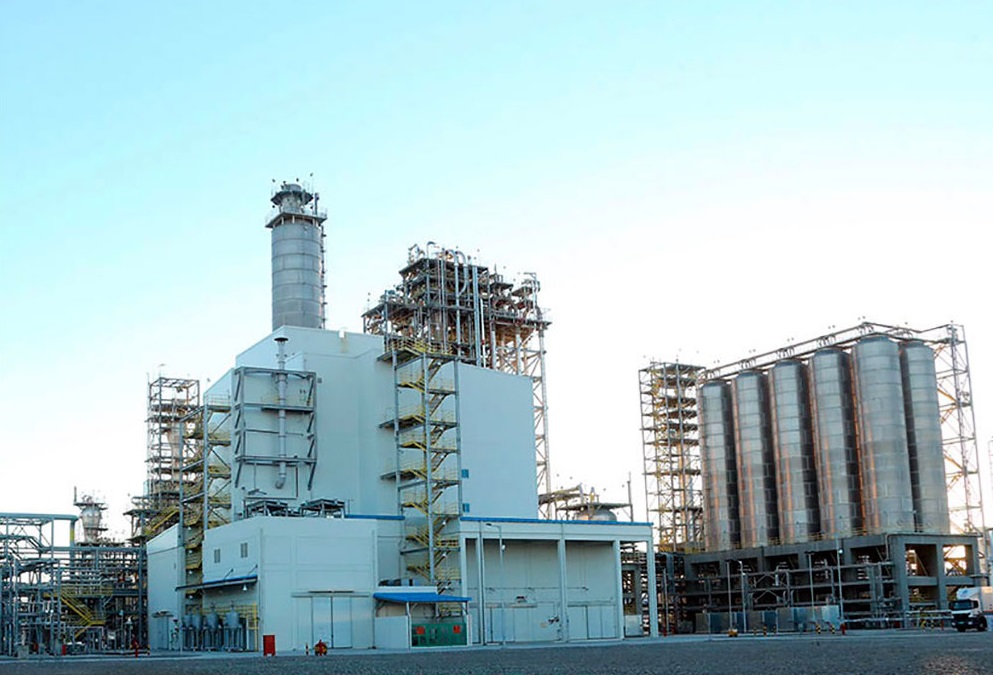
For many years, the core of this presence has been projects focused on natural gas processing and the production of higher value-added products. One of the earliest major examples was the ammonia and urea plant in Mary, built by Kawasaki Heavy Industries and Sojitz and commissioned in 2014. Japanese companies subsequently participated in the development of other major chemical industry facilities. Mitsubishi Corporation and Mitsubishi Heavy Industries were involved in the construction of the Garabogazkarbamid plant, while Toyo Engineering participated in the Kiyanly gas chemical complex, which produces polyethylene and polypropylene.
This specialization became even more pronounced with the Ahal GTG project. Kawasaki Heavy Industries served as a key technology and engineering partner in the construction of the natural gas-to-gasoline plant, which was commissioned in 2019. The facility has a production capacity of up to 600,000 tons of gasoline per year. Japanese involvement has therefore gradually covered different stages of hydrocarbon processing, ranging from fertilizers and polymers to synthetic fuel.
At the same time, Japan’s presence has not been limited to the construction of such facilities. After major projects are completed, Japanese companies continue to work with the infrastructure they helped create, providing technical maintenance, spare parts and equipment modernization. Kawasaki, for example, continues to provide technical support for Ahal GTG, Mitsubishi Heavy Industries provides services for equipment at the Garabogazkarbamid plant, while Toyo Engineering returned to the Kiyanly complex as part of its restoration and modernization efforts. This creates a long-term presence for Japanese businesses that extends well beyond the initial EPC contract.
Japanese companies have also expanded their involvement in the power sector. One of the largest projects was a 432-MW gas-fired power plant in Lebap Velayat, implemented with the participation of Sumitomo Corporation and Mitsubishi Hitachi Power Systems. The Japanese side supplied key equipment and engineering solutions, while the project received support from Japanese export financing. Here too, cooperation did not end with the commissioning of the plant: Sumitomo continues to participate in its technical maintenance and is considering further development of the facility.
Beyond heavy industry, Japanese companies have established a broader commercial presence. Itochu has supplied Komatsu construction and road-building machinery to Turkmenistan for many years, while Sumitomo has developed its automotive business, including the supply of Toyota vehicles. These activities differ in nature from major gas chemical complexes, but demonstrate that Japanese businesses have established themselves in the country not only as contractors for state industrial projects, but also as long-term suppliers of technologies, equipment and products.
This traditional model is now gradually expanding. In addition to energy and industry, artificial intelligence, digital technologies, data centers, space and satellite solutions, and more efficient resource-use technologies are emerging on the Japanese-Turkmen agenda. Some of these initiatives remain at the memorandum or project-preparation stage, but the shift in focus itself is significant: Japanese companies are seeking to apply their accumulated industrial experience to new segments of Turkmenistan’s economy.
Overall, Japan’s presence in Turkmenistan can no longer be reduced to the construction of major gas chemical facilities. Based on the activities of Japanese companies in the country, it is possible to identify a three-stage model. The first stage focused on establishing an industrial base through fertilizer plants, polymer production, synthetic fuel and power generation facilities. The second stage has been characterized by the continued involvement of Japanese businesses through servicing, modernization and equipment supplies. A third stage is now emerging, in which traditional energy and industrial projects are being complemented by AI, digital technologies, space solutions and other areas. This sequence makes it possible to view Japan’s current proposal to support the diversification of Turkmenistan’s economy as a potential expansion of an already established model of engagement.
The interest of Japanese businesses in further cooperation with Turkmenistan is also reflected in statements made by the companies themselves in interviews with Trend. Their responses show that this interest is gradually extending from traditional areas into a broader range of activities related to industrial development, technology and infrastructure.
Mitsubishi Heavy Industries specifically highlighted the prospects of Turkmenistan’s chemical and petrochemical sectors, linking them to the country’s resource base and its efforts to increase value-added processing.
"We recognize the potential of Turkmenistan's chemical and petrochemical sectors, particularly in light of its natural gas resources and initiatives to enhance value-added processing", the company said in an interview with Trend.
Kawasaki Heavy Industries, for its part, said in an interview with Trend that "Our primary focus is on industrial modernization. However, we aim to leverage our solutions to expand into other sectors as well".
Sumitomo Corporation also directly linked its continued involvement to the long-term nature of relations between the two countries. In an interview with Trend, the company stressed that it has extensive experience in Turkmenistan and remains interested in further deepening economic ties.
"Sumitomo Corporation has conducted several businesses in Turkmenistan over the years and highly values its longstanding relationship with the country", the corporation said.
Sumitomo also noted that the expansion of cooperation is taking place not only at the level of individual companies, but also within broader intergovernmental efforts.
"We recognize that various efforts to promote economic cooperation between Japan and Turkmenistan are being pursued at both governmental and private-sector levels, and we hope that such cooperation will continue to grow and deepen in the years ahead", the company emphasized.
For Toyo Engineering, which has extensive experience in Turkmenistan’s industrial sector, its priorities also remain linked to the development of natural gas-based production. In an exclusive interview with Trend, the company reaffirmed its interest in continuing to contribute to the country’s industrial development.
"TOYO remains interested in contributing to Turkmenistan’s industrial development, particularly in the gas-chemical and fertilizer sectors, while evaluating each future opportunity on its technical and commercial merits", the company said in an exclusive interview with Trend.
A more specialized approach is demonstrated by Tohkemy Corporation. In an interview with Trend, a company representative said that it is looking to develop water desalination projects in Turkmenistan, primarily small- and medium-scale projects targeting rural areas.
"We are aiming medium and small size of desalination for rural area. As for large one we will cooperate with Japanese large company with our close relationship," the Tohkemy Corporation representative said.
At the same time, the current dynamics of Turkmenistan-Japan cooperation are also largely underpinned by President of Turkmenistan Serdar Berdimuhamedov’s policy of strengthening bilateral ties and expanding economic partnership. During a meeting with the heads of leading Japanese companies in Tokyo on December 19, 2025, the head of state reaffirmed Turkmenistan’s readiness to offer the Japanese business community favorable conditions for long-term investment and mutually beneficial partnerships, while outlining priority areas for a new stage of cooperation, ranging from high-tech manufacturing and water resource management to green energy, waste processing and the circular economy.
At the same time, Serdar Berdimuhamedov is also paying attention to strengthening the political foundation of bilateral relations. During meetings with the leadership of the House of Representatives of Japan and the chairman of the Japan-Turkmenistan Parliamentary Friendship Group, particular emphasis was placed on developing parliamentary diplomacy, which the sides view as a tool for advancing economic projects in practical terms and fostering long-term interstate cooperation.
Meanwhile, growing interest from Japanese businesses comes against the backdrop of a new investment cycle taking shape in Turkmenistan’s economy, based, as Trend has previously reported, on the large-scale development of the gas sector. Its starting point was the launch of the fourth phase of development of the Galkynysh field, where a ceremony marking the start of work was held on April 16, 2026, with the participation of Chairman of the Halk Maslahaty of Turkmenistan Gurbanguly Berdimuhamedov. The project envisages the production and processing of up to 10 billion cubic meters of natural gas annually, while the scope of work to be carried out by the Chinese contractor is estimated at $5.1 billion.
As a result, the scale of the gas project is creating a multiplier effect, driving demand in construction, energy, transport, equipment manufacturing and other sectors and laying the groundwork for a new multi-year investment cycle. Against this backdrop, the growing interest of Japanese companies in Turkmenistan is becoming increasingly relevant.
Meanwhile, the experience of Japanese businesses in other countries shows that their international activities traditionally extend beyond equipment sales or direct investment in individual enterprises. Japanese companies, particularly in industry, generally seek to become part of a longer value chain, covering everything from project design and technology supply to production, operation, maintenance and subsequent modernization.
This model is particularly evident in Asia. Since the 1980s, Japanese manufacturers have actively relocated production capacity to ASEAN countries, creating regional production networks. Today, around 11,000 overseas establishments of Japanese manufacturing companies operate in Asia. At the same time, Japanese expansion is gradually moving beyond simple production localization, with companies focusing on developing local supply chains, serving local markets, promoting technological cooperation and improving production efficiency.
Vietnam provides a telling example. Japanese businesses there are involved not only in trade, but also in manufacturing, information technology, research and development, consulting and other fields. According to the Japan External Trade Organization (JETRO), of 5,257 approved Japanese investment projects in Vietnam between 1988 and 2023, 1,952, or 37.1%, were in manufacturing. At the same time, 14.4% were in information technology, while 15.4% were in consulting, including architecture, engineering and research and development.
Thus, the Japanese model increasingly combines industrial production with technology, engineering expertise and services. This does not necessarily mean the most high-tech industries in the narrow sense. More important is whether a project enables the production of more sophisticated goods, improves productivity, establishes a local industrial base and moves the country higher up the value chain.
This approach has also become increasingly explicit in Japan’s government policy in recent years. Japan’s Ministry of Economy, Trade and Industry (METI), in its 2025 strategy for international trade and the economy, directly points to the need to use overseas markets and investment to maximize the added value of the Japanese economy. At the same time, the Japanese government seeks to support high-value-added activities by Japanese companies overseas, promote cooperation with countries of the Global South and diversify supply chains.
The 2026 strategy further develops this approach. Among the opportunities for Japanese businesses in developing countries, METI highlights strengthening energy value chains based on Japan’s technological capabilities, developing industrial and urban infrastructure, and introducing new technologies, including artificial intelligence solutions. At the same time, increasing the global added value of the Japanese economy remains a strategic objective.
Another feature of the Japanese model is the close connection between business and government financial and development institutions. Japan’s revised Development Cooperation Charter of 2023 established the concept of "co-creation". Under this approach, governments, the private sector and public financial institutions combine technologies, knowledge, expertise and financial resources. Japan explicitly envisages a model in which public assistance can be used to create basic infrastructure, while the private sector takes responsibility for investment, operation and maintenance.
This distinguishes the Japanese approach from a model in which a foreign company enters a market primarily to build an individual facility or supply equipment. It is in this context that Japan’s presence in Turkmenistan should be viewed. Historically, the largest Japanese projects in the country have focused on gas chemistry, fertilizer production, natural gas processing and power generation. In other words, Japan has already participated in creating industries that turn Turkmenistan’s natural resources into more sophisticated products, including polyethylene, polypropylene, urea, ammonia and gasoline.
In other words, the Japanese approach to diversifying Turkmenistan’s economy can broadly be described as creating added value through technology, engineering expertise and long-term project support. This is why the experience of Japanese companies in Turkmenistan is important not only in terms of the scale of projects already implemented, but also as a potential foundation for the country’s next stage of industrial diversification.



