


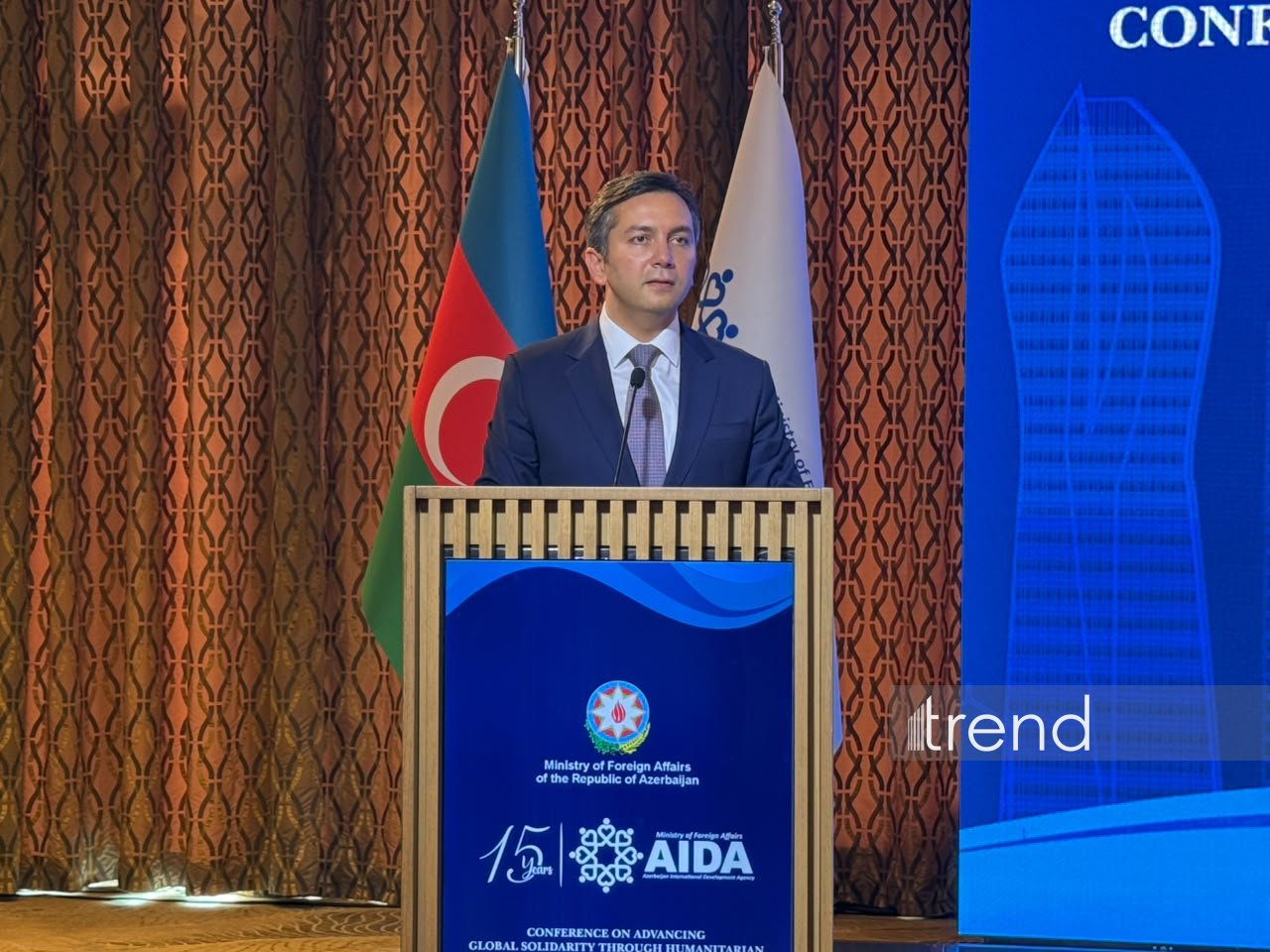

BAKU, Azerbaijan, September 10. Azerbaijan International Development Assistance Agency (AIDA) will focus on building new partnerships, improving cooperation mechanisms, and expanding the country's practical contribution to the global development agenda at the next stage, Deputy Foreign Minister of Azerbaijan Yalchin Rafiyev said during the closing of the conference on "Advancing Global Solidarity through Humanitarian Assistance and Development Cooperation" dedicated to the 15th anniversary of the establishment of AIDA, Trend's correspondent reports from the event.
He noted that the discussions held within the framework of the conference once again showed that international humanitarian and development cooperation is facing new challenges in a rapidly changing global environment.
"Challenges such as armed conflicts, climate change, natural disasters, food and energy security, health crises, and forced displacement are increasingly interconnected. This requires more flexible, coordinated, and long-term approaches to their solution," Rafiyev pointed out.
According to the deputy minister, humanitarian assistance remains important in terms of timely and effective response to crises. At the same time, in order to achieve sustainable results, humanitarian interventions should be accompanied by measures aimed at supporting development, strengthening institutional capacity, investing in human capital, and increasing resilience.
"The discussions within the panel once again showed the importance of linking immediate crisis response measures with long-term efforts to strengthen resilience," he said.
Rafiyev stressed the importance of basing humanitarian action on the principles of humanism, impartiality, neutrality, and independence, as well as strengthening coordination between governments, international organizations, and other partners.
He also noted that the nature of development cooperation is changing and new cooperation mechanisms are becoming increasingly important.
"South-South and triangular cooperation, technical cooperation, knowledge and experience exchange, capacity building and sharing of institutional experience are emerging as important areas of cooperation between countries," the deputy minister emphasized.
Rafiyev further said that these issues are of particular importance for Azerbaijan. According to him, over the 15 years of its activity, AIDA has become an important institutional mechanism for Azerbaijan's international humanitarian assistance and development cooperation.
"During this period, the geography of Azerbaijan's assistance has expanded, and more than 140 countries have benefited from Azerbaijan's international assistance activities in various forms," he noted.
The deputy minister also highlighted Azerbaijan's cooperation with Africa and small island developing states. He cited the initiative to combat preventable blindness in Africa, as well as initiatives to support the inclusion of cultural heritage sites of small island developing states in the UNESCO World Heritage List as examples of Azerbaijan's commitment to practical and sustainable development cooperation.
Rafiyev underscored that development cooperation spans beyond the provision of financial resources.
"Exchange of knowledge and experience, sharing of Azerbaijan's know-how, technical assistance, education, health, strengthening of institutional capacity, and development of human capital are also important components of such cooperation," he explained.
He emphasized the importance of sharing Azerbaijan's experience with partner countries, especially within the framework of South-South and triangular cooperation.
"The ambulance service model, exchange of experience in the fields of education and health, e-government, and cooperation in other areas have expanded the opportunities for Azerbaijan to share practical experience with international partners," Rafiyev noted.
The deputy minister said that the effectiveness of development cooperation cannot be measured only by the volume of allocated resources. Respect for national priorities and local needs, ensuring national ownership, transparency, accountability, coordination, strengthening institutional and human capacity, as well as the sustainability of the results achieved are the main conditions for effective cooperation.
He noted that in the coming period, the global development agenda will continue to face new challenges.
"The scale and complexity of these challenges will require stronger international solidarity, broader partnerships, and more flexible and inclusive development cooperation," said Rafiyev.
According to him, the 15th anniversary of AIDA is an important opportunity to consider new directions for future cooperation.
"Building on the experience gained in the upcoming stage, building new partnerships, improving cooperation mechanisms, and expanding our practical contribution to the global development agenda will remain our main priorities," the deputy minister emphasized.
Besides, Rafiyev noted the signing of a Memorandum of Understanding between Azerbaijan and the Turkish Cooperation and Coordination Agency - TIKA within the framework of the conference.
"We have already witnessed the signing of the Memorandum of Understanding with TIKA. This can be a good start for our bilateral cooperation in third countries. It can also be exemplary in terms of demonstrating regional solidarity in the face of emerging challenges," he said.
At the end of his speech, the deputy minister thanked the guests, partner countries, international and regional organizations, experts, and colleagues participating in the conference and officially declared the event closed.



