



BAKU, Azerbaijan, September 10. Uzbekistan and Japan are moving to accelerate implementation of a $12 billion portfolio of 75 projects agreed last year.
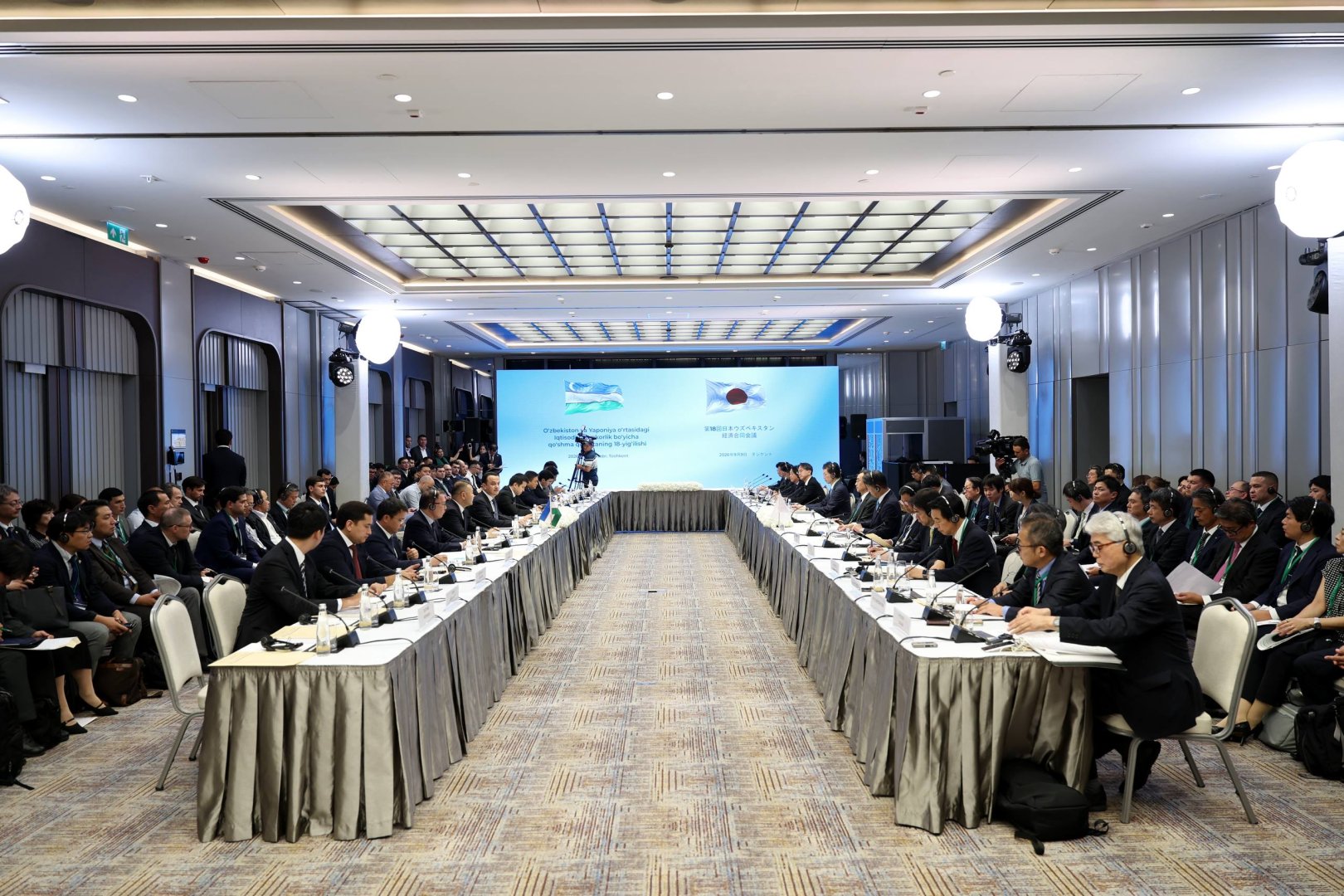
This was reflected in the statement by the Uzbek Ministry of Investment, Industry and Trade, following the 18th meeting of the Uzbekistan-Japan Economic Cooperation Committees held in Tashkent.
According to the Ministry, the meeting the co-chaired by Uzbek Minister Laziz Kudratov and Masayuki Tanimoto, chairman of the Japan-Uzbekistan Committee and senior adviser to Mitsubishi Corp.
"More than 130 Japanese participants, including representatives of major corporations and development organizations, attended the meeting. Japan’s State Minister of Economy, Trade and Industry Kenji Yamada, Japanese Ambassador to Uzbekistan Kenji Hirata, representatives of government agencies, financial institutions, business associations and companies also participated," the Ministry noted.
The strong interest from Japanese businesses builds on agreements reached during the Central Asia-Japan summit and the state visit in December 2025. The resulting portfolio of 75 projects, with a combined value of $12 billion, established a long-term framework for economic cooperation, with the focus now shifting toward implementation.
Uzbekistan’s economic growth is providing a favorable backdrop for the projects. The economy expanded 7.7% in 2025 and grew 8.5% in the first half of 2026.
The sides identified energy, chemical production, machinery, critical minerals, health care and IT as priority areas, reflecting growing demand for modern technologies and infrastructure. Modernizing enterprises, increasing localization, deepening raw-material processing, digitalization and expanding access to foreign markets were also highlighted.
The participants discussed financial and organizational conditions for investors, including expanding non-sovereign financing and establishing a special economic zone. The measures are intended to broaden access to capital, ready-to-use production facilities and necessary infrastructure.
Digitalization was also highlighted as an important area for further growth. More than 20 Japanese companies currently operate as residents of IT Park Uzbekistan, while Uzbekistan’s total exports of IT services have surpassed $1 billion.
The meeting’s practical session included presentations by Uzbek government agencies, Japanese corporations, educational institutions and financial organizations. Discussions focused on industrial cooperation, digital transformation, mineral-resource development, workforce training and business-support mechanisms.
“Particular attention was paid to translating sector-specific proposals into practical projects and strengthening direct cooperation between companies and institutions of the two countries,” the Uzbek Ministry of Investment, Industry and Trade said.
The meeting concluded with a ceremony for signing bilateral documents, followed by direct negotiations and business discussions between companies from Uzbekistan and Japan to coordinate next steps and establish new partnerships.



