


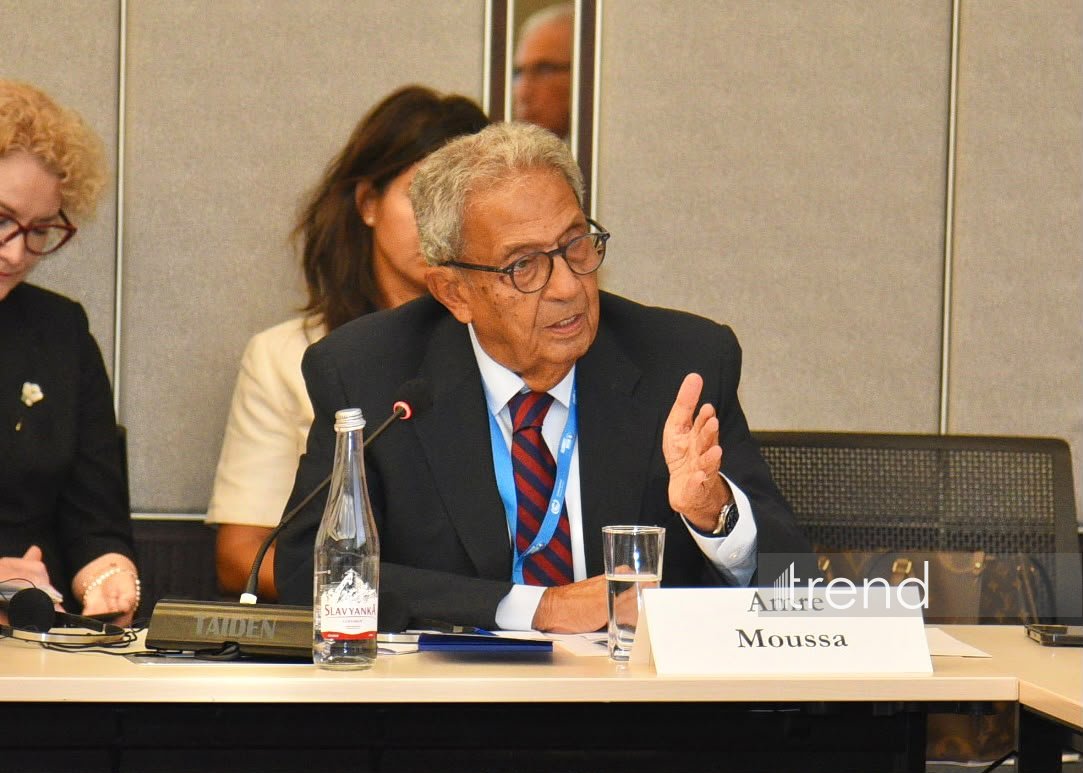

BAKU, Azerbaijan, September 9. Climate change should be recognized as a threat to international peace, stability and security and receive greater attention within efforts to reform the international system, former Secretary General of the Arab League and former Foreign Minister of Egypt Amr Moussa said, Trend's correspondent reports from the event.
He made the remark during the 2026 Baku Climate Action Week (BCAW 2026).
“UN Secretary General has highlighted two points in particular. First, climate change has become a threat to international peace and security. Second, along with pandemics, these new threats should be given their due place in the process of renewing the multilateral system,” Moussa said.
According to him, the risks posed by climate change should be taken into account during the renewal and restructuring of the international multilateral system. “We need to consider how we can support the ideas put forward by the UN Secretary General in our discussions on climate change. This issue should be included in the agenda related to the renewal of the international system,” he said.
Moussa proposed discussing possible changes to the procedures and agenda of the UN Security Council, as well as the work of the UN General Assembly, to consider climate change as a threat to international peace and security. “We should discuss what changes could be made to the procedures and agenda of the Security Council, as well as the activities of the General Assembly, regarding the recognition of climate change as a threat to international peace, stability and security,” he noted.
He said that different positions exist on many conflicts and other issues on the international agenda, while climate change could become an area where a more unified approach can be developed. “All issues related to conflicts on the international agenda have supporters and opponents. Climate change, however, could be one of the issues where an effective common position can be formed,” Moussa added.
The former Arab League chief stressed the importance of bringing the issue of recognizing climate change as a threat to peace, stability and security to a broader international discussion. “I hope that the reports of these meetings will at least highlight the issue of considering climate change as a threat to peace, stability and security. This matter should be discussed by committees and other relevant bodies as part of the process of renewing the international system,” Moussa said.
The third day of the Baku Climate Action Week 2026 (BCAW 2026) is underway.
The program of the third day will focus on issues such as the transition from climate commitments to concrete action, climate financing, youth participation in climate processes, artificial intelligence and climate technologies, energy efficiency, methane emissions reduction, water resources management, and cultural heritage protection.
Representatives of governments and international organizations, experts, financial institutions, the private sector, and civil society from various countries are attending the events.
Now in its third year, Baku Climate Action Week is being held in parallel with the UN Framework Convention on Climate Change (UNFCCC) Climate Week for the first time this year. The Fourth Climate Week and Baku Climate Action Week will feature a series of sessions, panel discussions and other events on climate change, climate finance, sustainable development and accelerating climate action.
BCAW 2026 will continue until September 11.



