


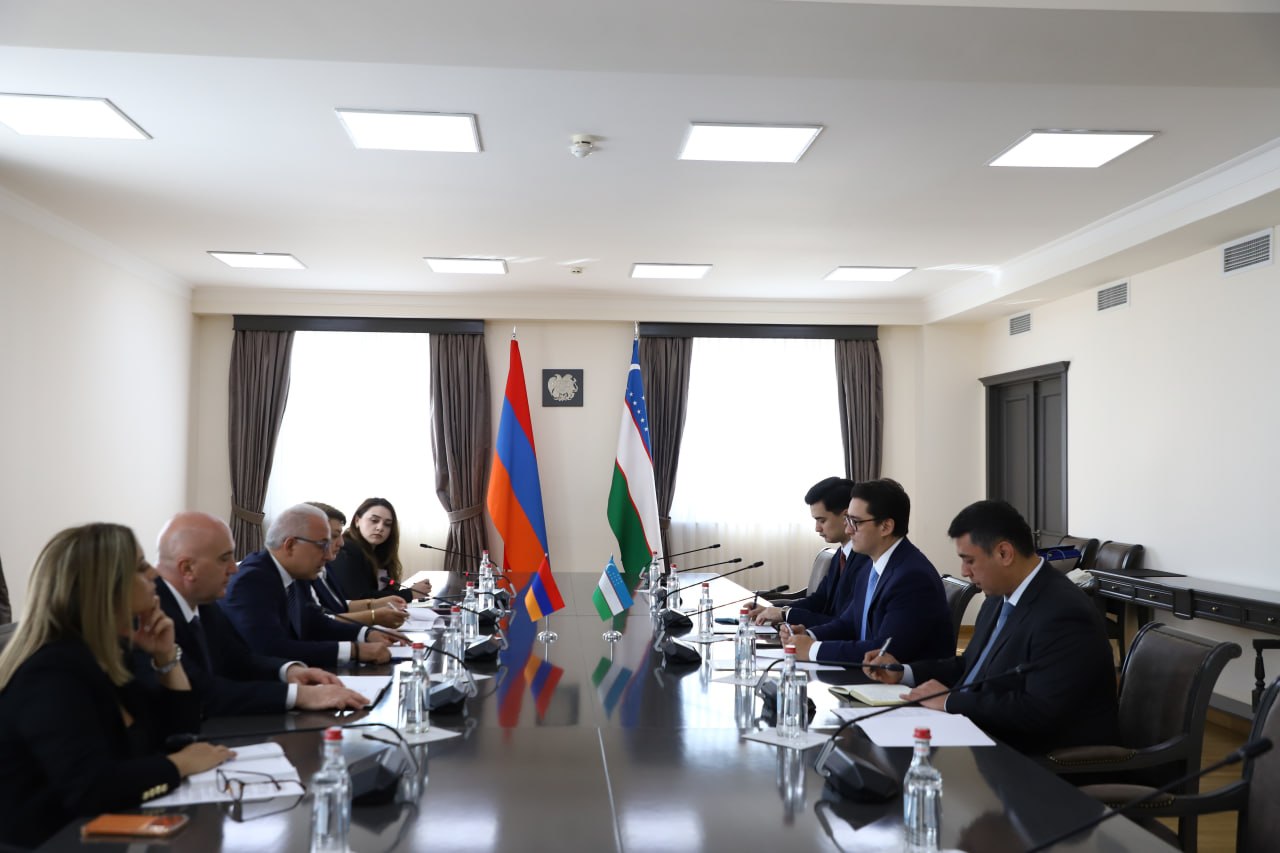

BAKU, Azerbaijan, September 8. Uzbekistan and Armenia discussed expanding bilateral cooperation in industry, transportation, agriculture and digital technologies during a new round of political consultations between their foreign ministries.
This was reflected in the statement by the Uzbek MFA, following consultations between Uzbek Deputy Foreign Minister Bobur Usmanov and Armenian Deputy Foreign Minister Mnatsakan Safaryan held in Yerevan on September 7.
The sides reviewed the current state of bilateral relations and prospects for developing cooperation across political, trade and economic, cultural and humanitarian areas. They also discussed progress in implementing priorities established during contacts between the countries’ leaders and senior officials.
The sides reaffirmed their commitment to expanding the legal framework governing bilateral cooperation and strengthening coordination at international organizations and other multilateral platforms.
Particular attention was given to sectors where the two countries see potential for greater practical cooperation, including industrial cooperation, transportation and logistics, agriculture, digital technologies, tourism and education.
“The sides confirmed their shared commitment to further developing bilateral cooperation and strengthening coordination on a broad range of issues on the bilateral agenda,” the Uzbek Foreign Ministry said.
The discussion of transportation and logistics comes amid efforts by Uzbekistan and Armenia to expand connectivity and identify new opportunities for economic cooperation. Industrial cooperation and agriculture were also highlighted as areas with potential for closer engagement between businesses and relevant institutions.
Digital technologies, tourism and education were included in the discussions, reflecting the broadening scope of the bilateral agenda beyond political dialogue and traditional economic sectors.
The two countries also agreed to continue close coordination between their foreign ministries to strengthen practical cooperation across the bilateral agenda.
The latest round underscored the two sides’ intention to maintain active diplomatic engagement while translating high-level agreements into practical cooperation across economic and humanitarian sectors.



