


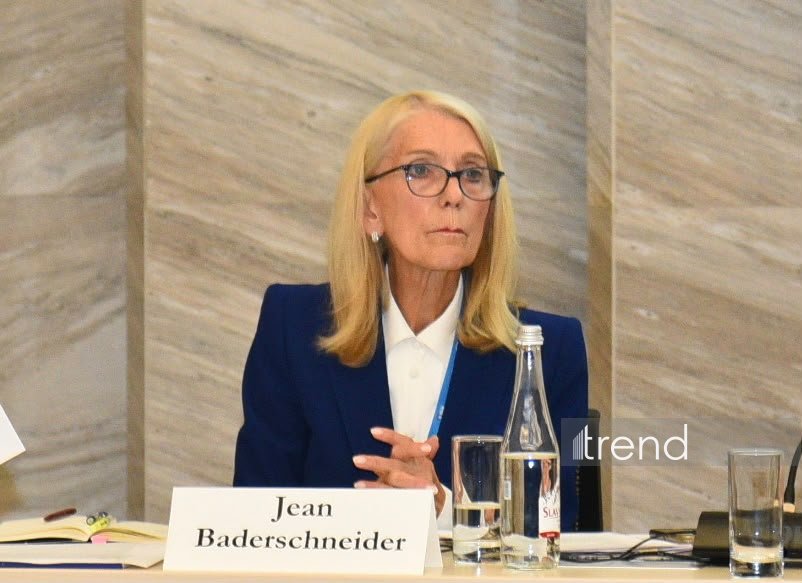

BAKU, Azerbaijan, September 9. Climate projects need to become more attractive to investors, while climate commitments must be transformed into concrete investment projects, Jean Baderschneider, former vice president of ExxonMobil said, Trend’s correspondent reports from the event.
She made the remarks during Baku Climate Action Week 2026 (BCAW 2026).
Significant progress has been made in climate policy over the past decade, she said. “Before the Paris Agreement, the world was on track for a 4-degree Celsius temperature increase. The actions taken since then have significantly changed the trajectory of emissions growth. Subsequent COP conferences have kept climate change at the center of the international agenda and created a mechanism for progressively increasing ambition. The targets agreed under the Paris Agreement are becoming increasingly difficult to achieve. Global greenhouse gas emissions continue to rise rather than decline, while the remaining carbon budget is being depleted at an alarming rate,” she said.
According to Baderschneider, one of the key challenges facing the COP process is moving from setting targets to practical implementation. “The central task is to make the implementation of climate commitments easier, faster and more attractive for investment,” she said.
She emphasized that from the private sector’s perspective, the key issue is moving from climate targets to making final investment decisions on specific projects. “The availability of capital is not the main problem in implementing climate projects. Significant amounts of capital are available. However, this capital will flow into green energy and climate projects only if they are attractive investments. This requires certainty over returns, policy stability, clear permitting procedures, a reliable buyer for the product or energy, appropriate risk allocation and confidence that governments will consistently adhere to the course they have chosen,” she said.
She also stressed the need to strengthen public-private partnerships. “Nationally determined contributions (NDCs) should become not only national statements of ambition but also the basis for developing investment-ready project portfolios. Governments, international financial institutions, investors, project developers and industry representatives should jointly identify the barriers preventing projects from reaching final investment decisions and find ways to remove them. We need practical climate policy based on financing and implementation architecture. Less abstract ambition — more implementation mechanisms,” Baderschneider said.
She also said there were plans to establish a dedicated platform at COP31 for working with specific climate projects. “We hope to create a deal-making platform at COP31, select several NDCs and several projects under those contributions, bring together the necessary stakeholders and move three to five projects through to final investment decisions,” she added.



