


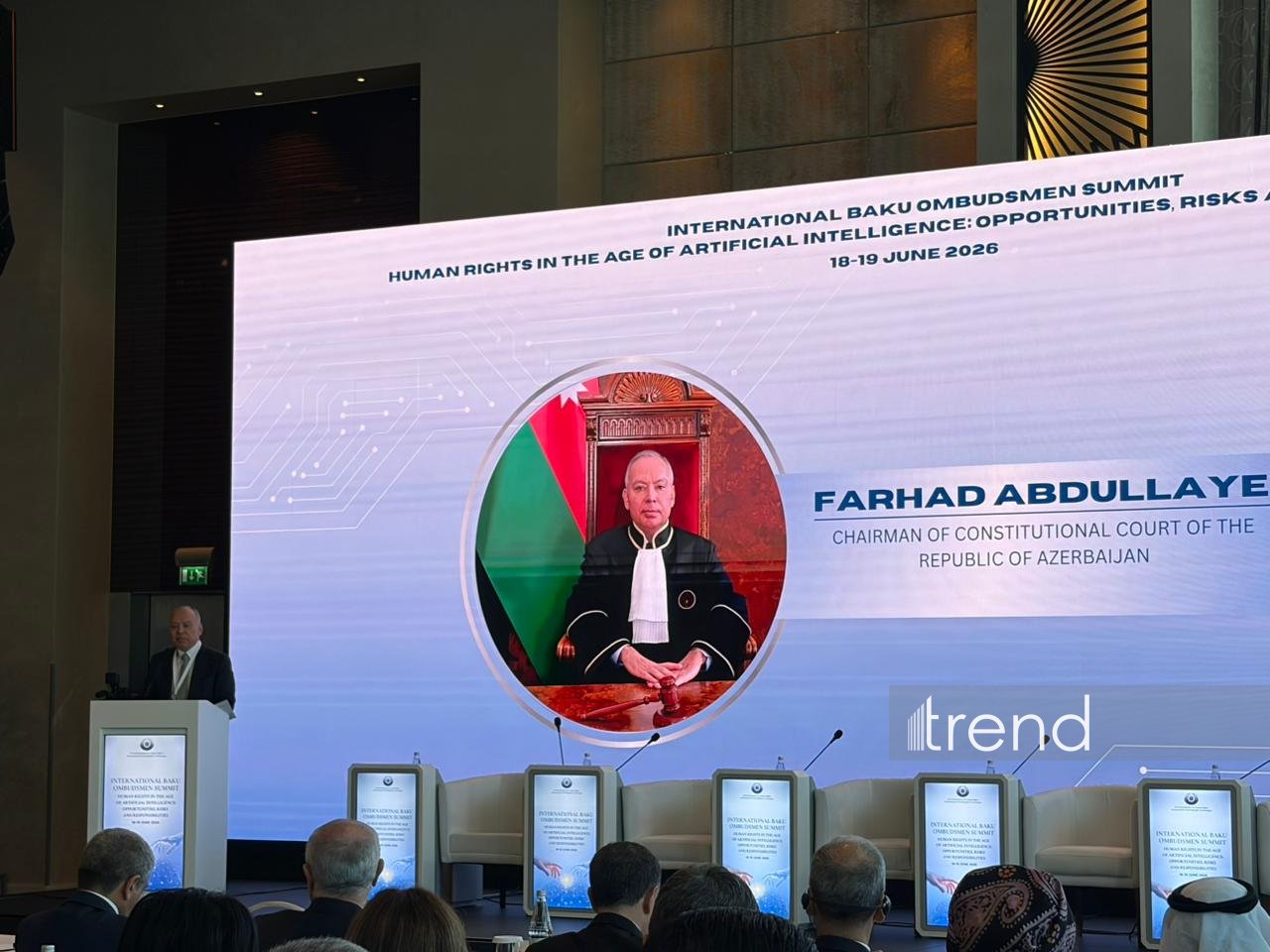

BAKU, Azerbaijan, June 18. Artificial intelligence technologies offer broad opportunities to improve the functioning of judicial systems, but they cannot fully replace the human factor, Chairman of the Constitutional Court Farhad Abdullayev said, Trend's correspondent reports from the event.
Speaking at the International Baku Summit of Ombudsmen on “Human Rights in the Age of Artificial Intelligence: Opportunities, Risks and Responsibilities,” Abdullayev told that AI can serve as a useful tool for systematizing judicial practice, analyzing legal databases and improving access to court services.
However, he stressed that the essence of justice extends beyond technical procedures.
“It is based on legal reasoning, conscience, inner conviction and a proper assessment of the substance of human rights. Therefore, artificial intelligence cannot fully replace judicial discretion and the human factor,” he said.
Abdullayev noted that the growing use of artificial intelligence also raises new legal challenges, including issues related to personal data protection, algorithmic discrimination, digital surveillance and safeguarding fundamental rights.
He said one of the key tasks for modern legal systems is to maintain a balance between technological progress and the protection of fundamental rights.
The Constitutional Court chairman also highlighted the importance of international cooperation in regulating artificial intelligence, saying the global nature of digital technologies requires unified legal approaches and common standards.
He pointed to Azerbaijan’s Artificial Intelligence Strategy for 2025–2028 as a comprehensive framework guiding the country’s development in this field.
The strategy outlines priorities including building an AI ecosystem, promoting innovation, strengthening human capital, developing modern infrastructure, enhancing information security and improving ethical and legal regulation.
Abdullayev said the strategy is not only a roadmap for technological advancement but also reflects a governance philosophy based on human rights protection, transparency, accountability and human oversight.
He added that the document provides a strong legal and institutional foundation for the human-centered and responsible development of artificial intelligence in Azerbaijan.
According to him, the key principle in applying AI technologies is ensuring the primacy of human rights, with all systems required to operate in line with legality, legitimate purpose, proportionality and legal certainty.



