


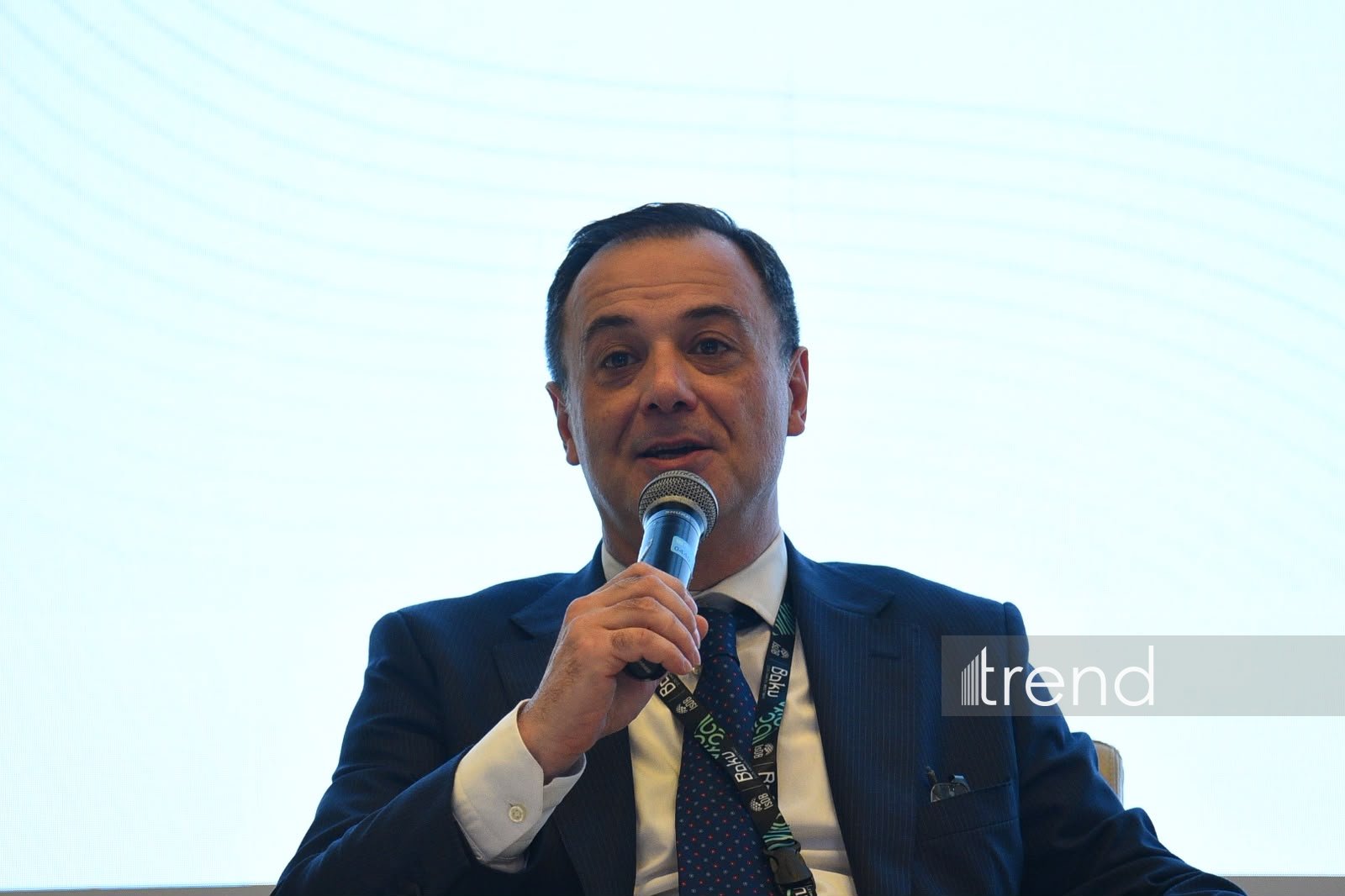

BAKU, Azerbaijan, June 17. The world’s most climate-vulnerable countries are receiving only a fraction of the financing required for climate resilience, according to Elshad Isgandarov, Ambassador-at-Large of the Ministry of Foreign Affairs of Azerbaijan, Trend's correspondent reports from the event.
He said that least developed countries receive only about 10% of the climate resilience funding they actually need — equivalent to roughly 100 times less than required.
He made the remarks during a high-level dialogue titled "High-Level Dialogue: "Capacity Development More Than Aid" – AIDA-IDB Partnership on International Technical Assistance for Resilience and Sustainable Development" held on the sidelines of the 51st Annual Meeting of the Islamic Development Bank (IsDB) Group in Baku.
Isgandarov said organizing international events and high-level dialogues has become significantly easier in recent years, citing faster coordination and more structured engagement among partners.
He recalled his earlier experience within the Organization of Islamic Cooperation, saying that organizing similar panels a decade ago required far more time and effort.
He noted that climate resilience is becoming an increasingly important component of international technical assistance and development cooperation.
“The experience and knowledge Azerbaijan has gained in climate diplomacy, as well as the Baku Climate and Peace Action Hub launched under COP29, are important legacies in this direction,” he said.
Isgandarov also warned of what he described as a “vicious cycle” affecting vulnerable countries, where conflict, weak climate action, and limited institutional capacity reinforce one another, further reducing access to international financial support despite higher exposure to climate risks.
He cited data showing that 18 of the 25 most climate-vulnerable countries are affected by conflict or fragility. These countries receive around $2.1 per capita in aid, compared with $18 per capita in other least developed countries.
He added that least developed countries as a whole receive only about 10% of the financing required for climate resilience.
Isgandarov also highlighted the complexity of international climate finance systems, saying that bureaucratic procedures and multiple intermediaries make access difficult for vulnerable states.
He said Azerbaijan’s approach during COP29 focused on building a cooperation platform bringing together donor countries, multilateral development banks, academia, and climate and peace organizations to improve coordination and develop scalable pilot projects capable of attracting investment.



