


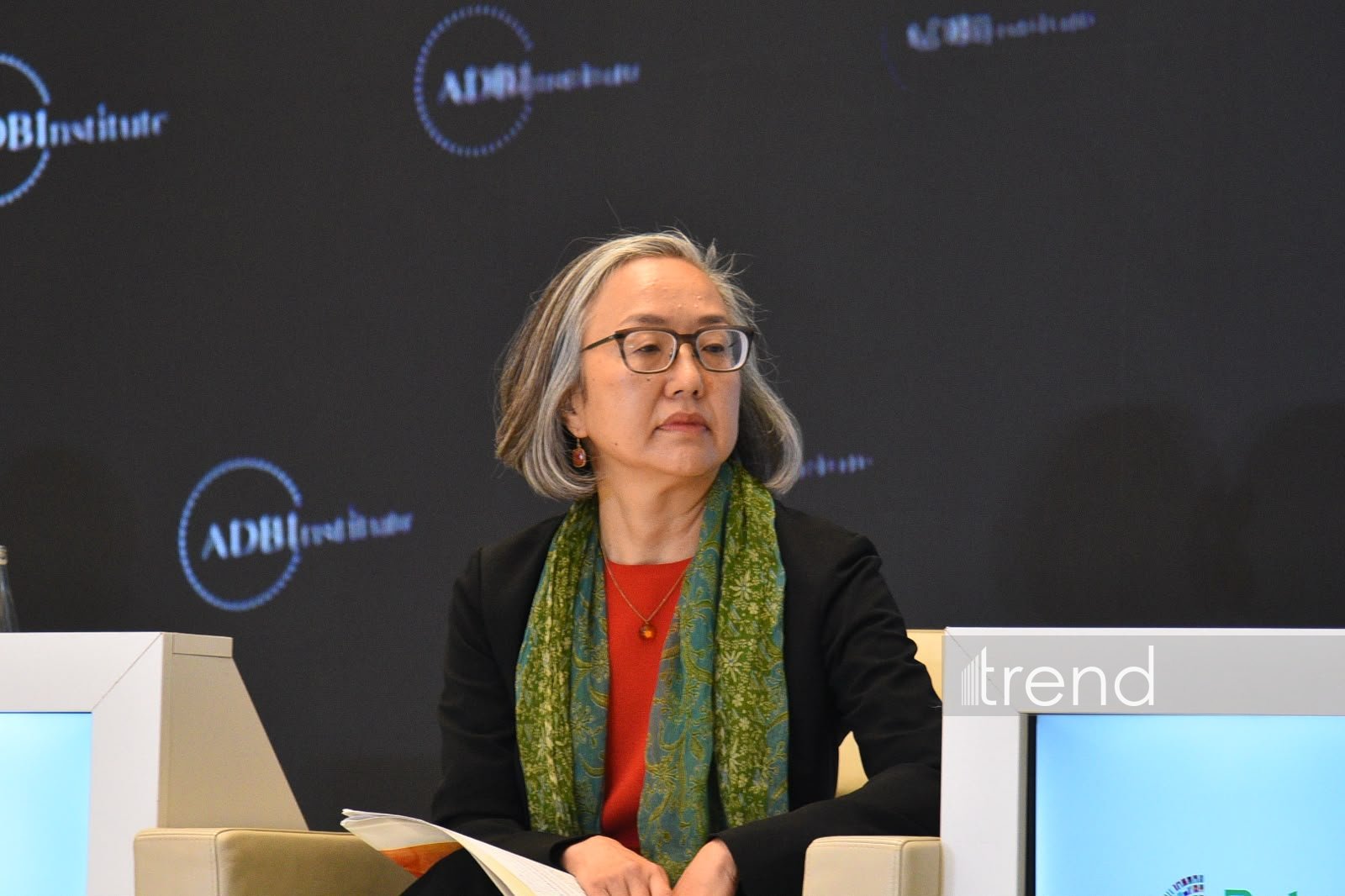

BAKU, Azerbaijan, June 17. A shift to a more coordinated and interconnected approach is needed to effectively address contemporary development challenges, replacing traditional sectoral solution, Director of Division for Prosperity at the United Nations Institute for Training and Research (UNITAR), Mihoko Kumamoto, said at the 14th Private Sector Forum of the Islamic Development Bank (IsDB) Group, Trend's correspondent reports from the event.
According to her, along with traditional development challenges, countries are facing new challenges, including technological change, rising inequality and climate risks.
Kumamoto announced global challenges are becoming increasingly complex and uncertain.
“We face increasing, more uncertain and complex challenges,” she explained.
She noted that in the context of the Sustainable Development Goals, there is a lag in most indicators. “We are on schedule for only 35% of 169 indicators,” said Kumamoto.
Overcoming these challenges requires moving away from a sectoral approach and toward more integrated solutions, she said.
Kumamoto emphasized the importance of the UN 2.0 initiative and the five key elements of this approach. She stated that the first element is a data-driven approach.
“Everything we do must be based on data and evidence,” she said.
She also noted that strategic foresight is key in an environment of increasing uncertainty, highlighting the importance of anticipating future risks.
Kumamoto also said that digitalization should be applied at all stages - from planning to monitoring and evaluation, including the implementation of programs and projects. She also said that behavioral science plays an important role in understanding the factors influencing people's decision-making and in shaping appropriate approaches to policy and development.
She named innovation as the next key element, emphasizing its critical importance.
“Traditional approaches are no longer sufficient. We need innovative solutions,” Kumamoto concluded.



