


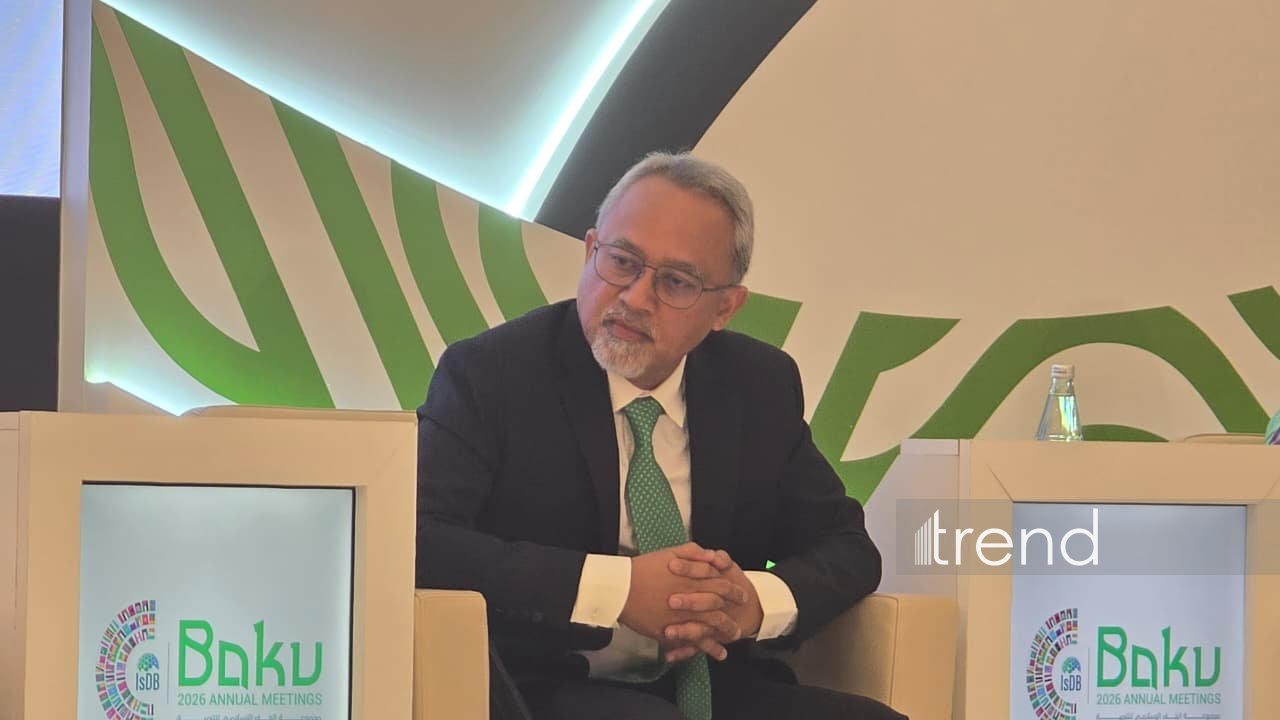

BAKU, Azerbaijan, June 16. The halal industry is currently a $3.5 trillion market, and this figure is expected to reach $5 trillion by 2030, which represents massive economic opportunities, Raja Badrulnizam, Chief Executive Officer of the Malaysia External Trade Development Corporation (MATRADE), said, Trend's correspondent reports from the event.
He made the remark during an event titled "Champions of the Halal Industry Driving Innovation, Trust, and Global Growth," held as part of the Annual Meeting of the Islamic Development Bank (IsDB) Group in Baku.
He noted that in the context of global development, every country and business entity should initiate operations by keeping the global market in mind from day one.
According to him, small and medium-sized enterprises (SMEs) must be properly prepared, regulatory frameworks must be strengthened, and public-private partnerships should be expanded.
Raja Badrulnizam emphasized that while halal certification plays a vital role, this sector is not limited to certification alone.
"The key focus here is on product standards, labeling, testing, and compliance with market requirements," he stated.
The MATRADE head noted that through its 47 international offices, the organization informs SMEs about market requirements, entry conditions, and marketing opportunities.
According to him, cooperation with the Islamic Development Bank (IsDB) under the "Reverse Linkage" program also plays an important role in this direction.
He added that manufacturers should not merely limit themselves to product development but must also thoroughly study the requirements of their target markets.
Raja Badrulnizam emphasized that consumer interest in ethical and responsible consumption has grown significantly today, and the halal industry can play a crucial role in this area.
"Halal standards must also incorporate HACCP and other international requirements, as well as align with the principles of 'toyyiban'—meaning pure and high-quality products," he said.
Concluding his speech, he noted that quality and consistency are the main success factors in exports.
"Quality, consistency, transparency, trust, and the correct certification standards are the fundamental conditions for success in the export business," the MATRADE CEO added.



