


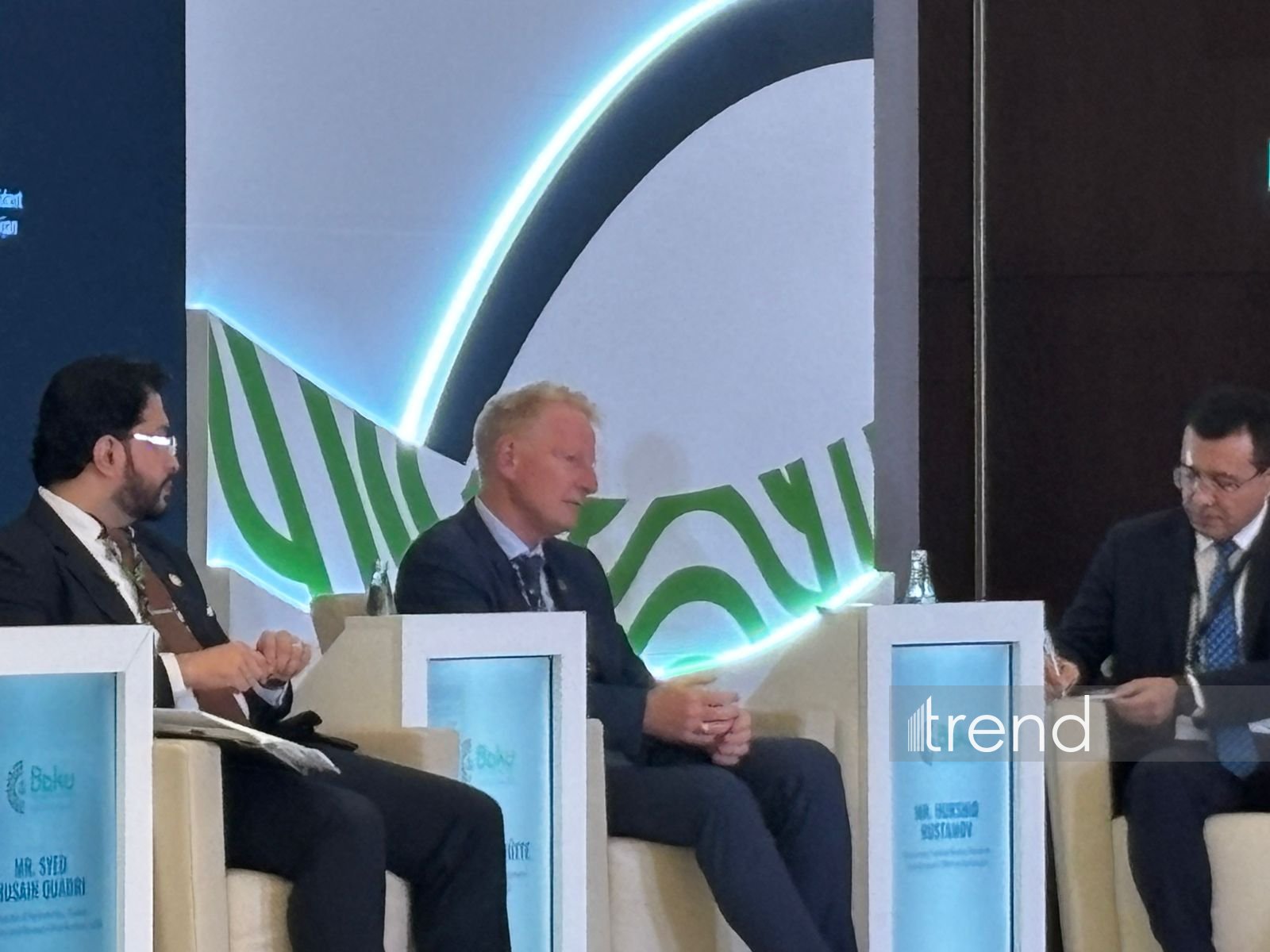

BAKU, Azerbaijan, June 16. Uneven economic and social development across countries is widening amid global crises, with a significant number of economies experiencing slower growth, according to Haie Schütte, Deputy Director of the Development Cooperation Directorate at the Organisation for Economic Cooperation and Development (OECD), Trend's correspondent reports from the event.
He emphasized that in recent years have seen notable divergence in development trends, with some countries continuing to grow while others face economic decline.
According to remarks made at the 14th Islamic Development Bank Group Private Sector Forum in Baku, Schütte said around half of OECD member countries are currently experiencing growth, while the remainder are seeing deterioration in economic performance.
He said conflicts and ongoing crises are key factors shaping these diverging outcomes.
According to Schütte, countries in sub-Saharan Africa remain among the most vulnerable in terms of economic dynamics, while health-related challenges continue to play a significant role in development outcomes.
He added that strengthening monitoring systems and improving data analysis are essential to better understand economic and social trends.
According to Schütte, the OECD has been applying standardized approaches to development assessment and monitoring for about a decade.
He said improving data quality, analytical tools, and policy evaluation frameworks remains a priority.



