


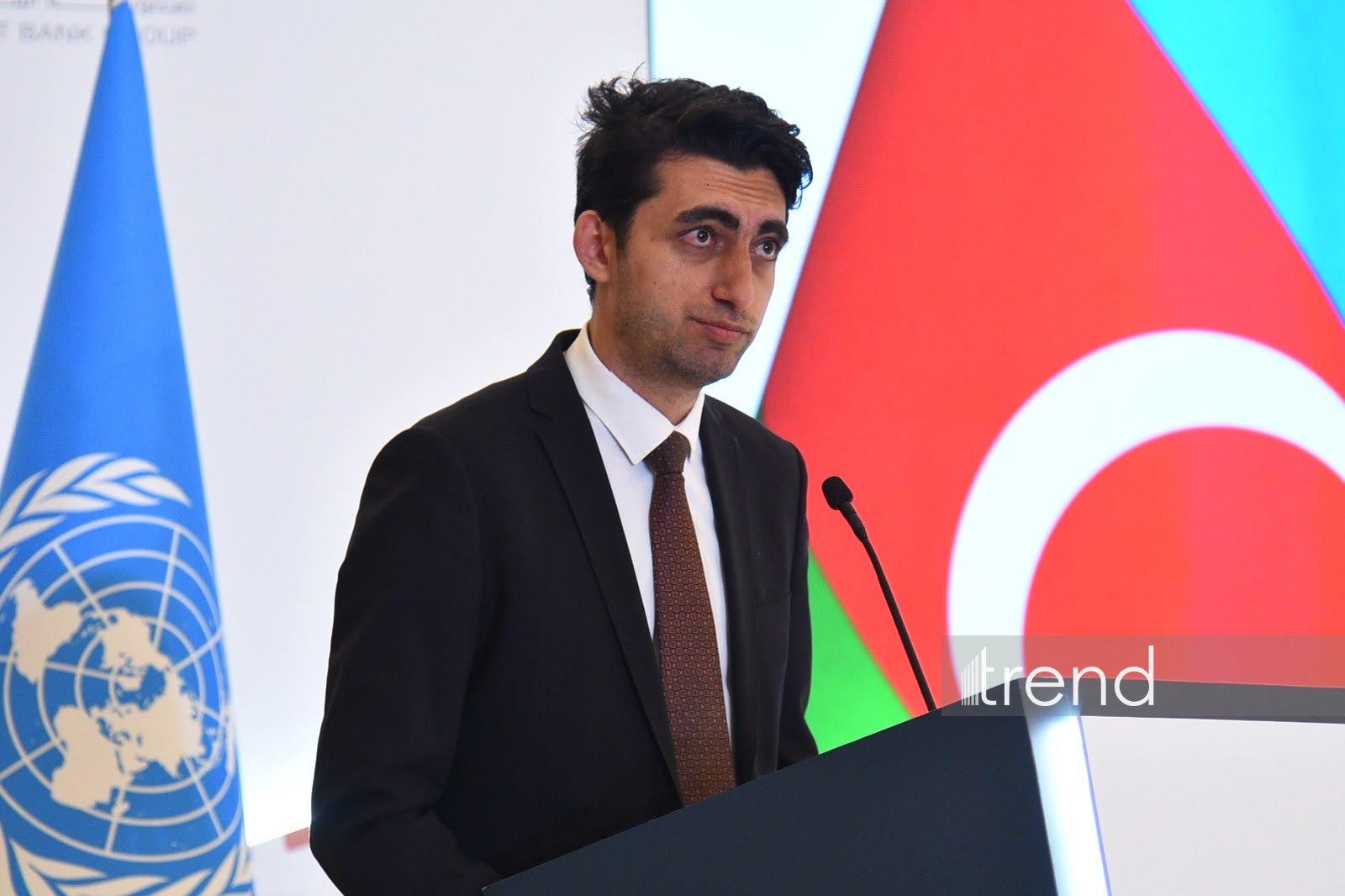

BAKU, Azerbaijan, June 16. The Central Bank of Azerbaijan (CBA) is shaping a sustainable and inclusive financial ecosystem focused on the development of green and sustainable finance, as well as the integration of international standards and partnerships, Shahin Mahmudzade, Executive Director of the CBA, said, Trend's correspondent reports from the event.
He made the remark during the 8th SDG Dialogue titled "Innovative Financing for Sustainable Development, Beyond Aid and Traditional ODA," held as part of the Annual Meeting of the Islamic Development Bank (IsDB) Group in Baku.
"The Central Bank of Azerbaijan, as the country's financial megaregulator, is committed to creating a favorable ecosystem for sustainable, inclusive, and green finance," he said.
He emphasized that the financial sector plays a pivotal role in achieving the Sustainable Development Goals (SDGs) and demands more coordinated action.
"Today, we have a unique opportunity to examine how finance can act as a catalyst for sustainable and inclusive development. The urgency of existing challenges requires coordinated action across all sectors, and finance plays a key role in shaping a sustainable future," Mahmudzade noted.
He added that the Central Bank of Azerbaijan is implementing a systemic approach to the development of sustainable finance.
"Our journey toward a sustainable financial system began with the launch of the Sustainable Finance Roadmap in 2023. This document outlines the Central Bank's priorities for developing green finance and engaging with market participants, ensuring that financial institutions are prepared for the demands of a greener economy," he said.
The Executive Director also listed the main directions of this policy, including building the capacity of financial institutions, closing regulatory gaps, integrating ESG (Environmental, Social, and Governance) factors into risk management frameworks, and increasing transparency.
"We have identified four main pillars. First is enhancing the capacity of financial institutions, which includes not only human resources but also digital infrastructure. Second is addressing regulatory gaps. Third is integrating ESG factors into the overall risk management system. Fourth is ensuring market discipline while enhancing transparency," Mahmudzade noted.
According to him, developing international coordination in the field of sustainable finance is another crucial focus area.
"Unlike traditional financial risks, ESG factors are transboundary and systemic in nature, making them more difficult to contain within national borders," he emphasized.



