


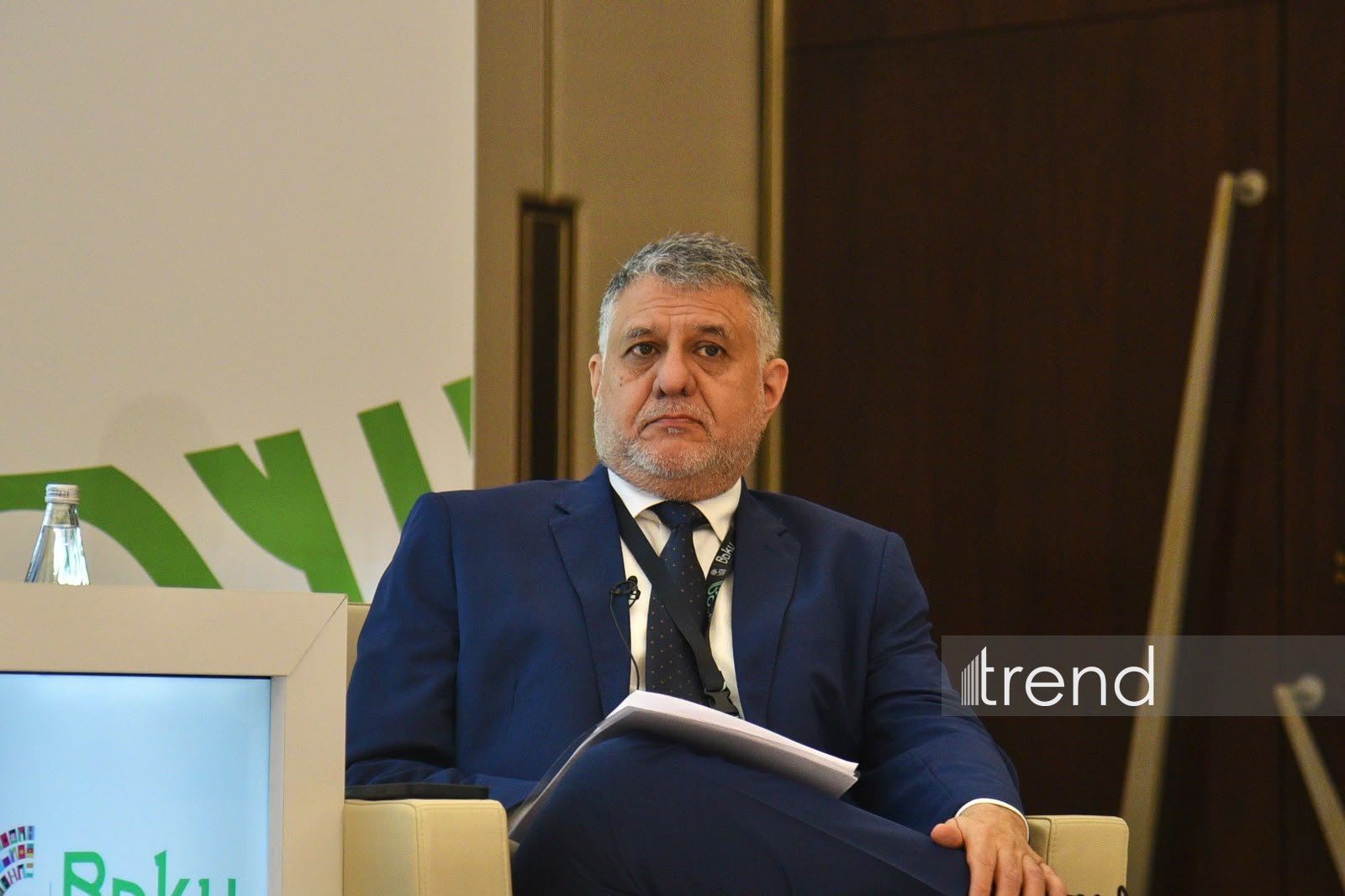
BAKU, Azerbaijan, June 16. A gap remains between the development of Islamic finance and the halal economy, requiring closer coordination and support for small and medium-sized business enterprises (SMEs), Chief Operating Officer at International Islamic Trade Finance Corporation (ITFC), Nazeem Noordali, said at the 14th Islamic Development Bank (IsDB) Group Private Sector Forum held in Baku, Trend's correspondent reports from the event.
Noordali announced that the global halal economy is estimated to be worth $2.3-2.5 trillion, while the Islamic financial sector's assets range from $5.5 to $6 trillion and, according to him, could grow to $7.5 trillion in the next two to three years.
He noted that, despite this scale, a gap remains between the financial sector and the real economy of the halal industry.
"We see a certain gap between financial strength and the real economy, and we need to find ways to better align financing with the development of the halal economy," the official explained.
He noted that the halal economy includes, in particular, sectors such as food, pharmaceuticals, tourism, and manufacturing.
Noordali pointed out that SMEs need not only access to financing but also technical support and capacity building.
He also announced that SMEs are the backbone of the economy, regardless of industry, including the halal sector.
The official further said that one of the key challenges facing SMEs is the lack of collateral, which limits their access to financing.
"The financing gap for SMEs is estimated at approximately $2.5 trillion.
To develop the halal economy, closer cooperation between government agencies, financial institutions, and businesses is necessary to narrow the existing gap between Islamic finance and the real economy," he added.



