


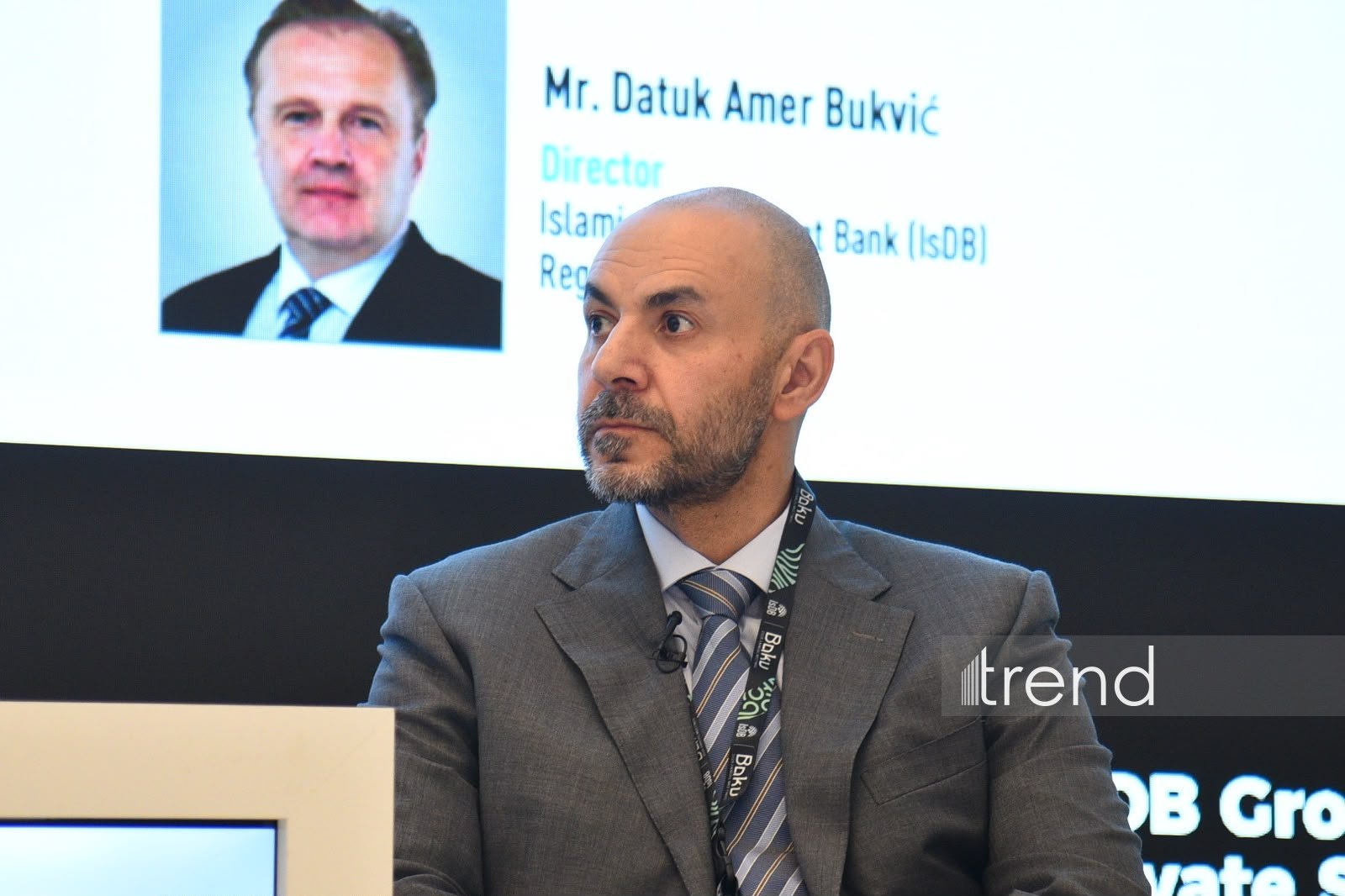

BAKU, Azerbaijan, June 16. The future of the halal industry will be determined by a number of factors, including the transition to more comprehensive standards, growing demand, technological advancements, and government support, Chief Investment Officer at the Halal Products Development Company (Saudi Arabia), Ameen Alsaadi, said at the 14th Islamic Development Group (IsDB) Private Sector Forum held in Baku, Trend's correspondent reports from the event.
According to him, one of the key factors is the halal industry's transition from a model based solely on regulatory compliance to a broader approach that integrates halal and ESG (environmental, social, and governance) principles.
Alsaadi noted that this approach encompasses various areas of an organization's activities, including corporate governance, marketing, and branding, along with traditional aspects of halal certification.
He also noted the continued growth in demand for halal products.
According to the official, this is driven by the growing Muslim population worldwide, which is leading to a corresponding increase in halal consumption.
"While previously food production and Islamic finance were considered the main sectors, clothing production, tourism, and other areas are now also experiencing growth.
Halal certification is now perceived by consumers as a basic requirement, and the quality of halal products is valued on par with that of leading global manufacturers," he explained.
According to him, modern technologies enable obtaining components such as gelatin and collagen from alternative sources that meet halal product requirements.
He added that further integration of countries and participants in the halal sector requires support from both investment and regulatory perspectives.



