


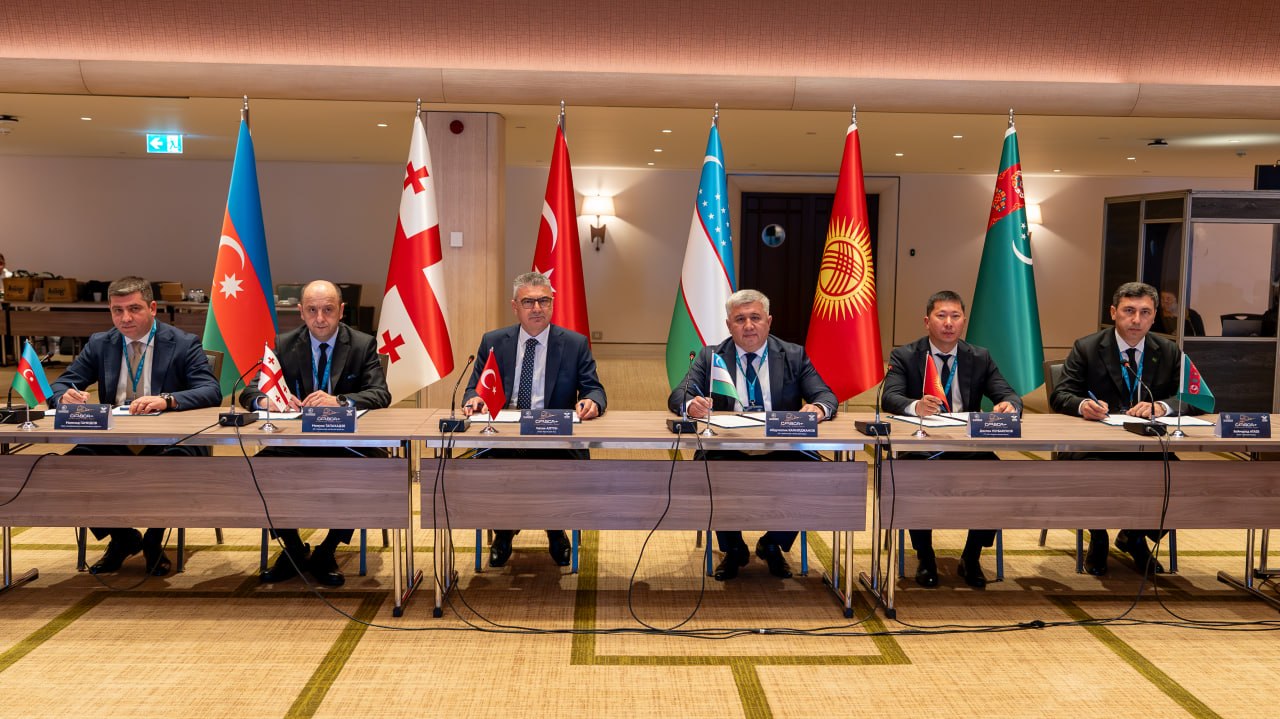

BAKU, Azerbaijan, June 15. Uzbekistan and representatives of other five countries participating in the international CASCA+ transport corridor have signed an agreement aimed at increasing cargo volumes and further developing the route.
This was reflected in the statement by the Uzbekistan Railways (Uzbekiston Temir Yullari).
Uzbekistan was represented by Akmal Kamildjanov, Deputy Chairman of the Management Board of Uzbekistan Railways, along with other officials from the participating railway administrations.
According to the company, participants reviewed the current performance of the CASCA+ corridor and discussed its future development prospects. The meeting included an assessment of work carried out in 2025 and the first quarter of 2026, as well as the results achieved during that period.
The sides also considered measures to improve transportation efficiency, reduce transit times, enhance service quality, and develop a more competitive tariff policy for freight transportation along the corridor.
In addition, participants discussed existing operational challenges and constraints affecting the corridor and explored practical solutions to address them.
The meeting concluded with the signing of a six-party protocol aimed at further strengthening the CASCA+ corridor, increasing freight traffic, and expanding mutually beneficial cooperation among the participating countries.
The sixth-party meeting was held on June 8–9 and brought together railway officials from Uzbekistan, Türkiye, Georgia, Azerbaijan, Turkmenistan, and Kyrgyzstan.
The agreement reflects growing efforts by regional transport operators to improve connectivity and boost trade flows across Eurasia through more efficient and competitive transit routes.
CASCA+ is a joint initiative of the state railway administrations of Azerbaijan, Georgia, Kyrgyzstan, Turkmenistan, Türkiye, and Uzbekistan. The route currently spans three regions: Central Asia (Kyrgyzstan, Uzbekistan, and Turkmenistan), the South Caucasus (Azerbaijan and Georgia), and Anatolia (Türkiye). The “+” in the corridor’s name reflects its openness to new participants interested in joining the route. The corridor's long-term objective is to strengthen transport connectivity between Southeast Asia—particularly China—and Europe, creating an efficient multimodal trade and transit link across Eurasia.



