


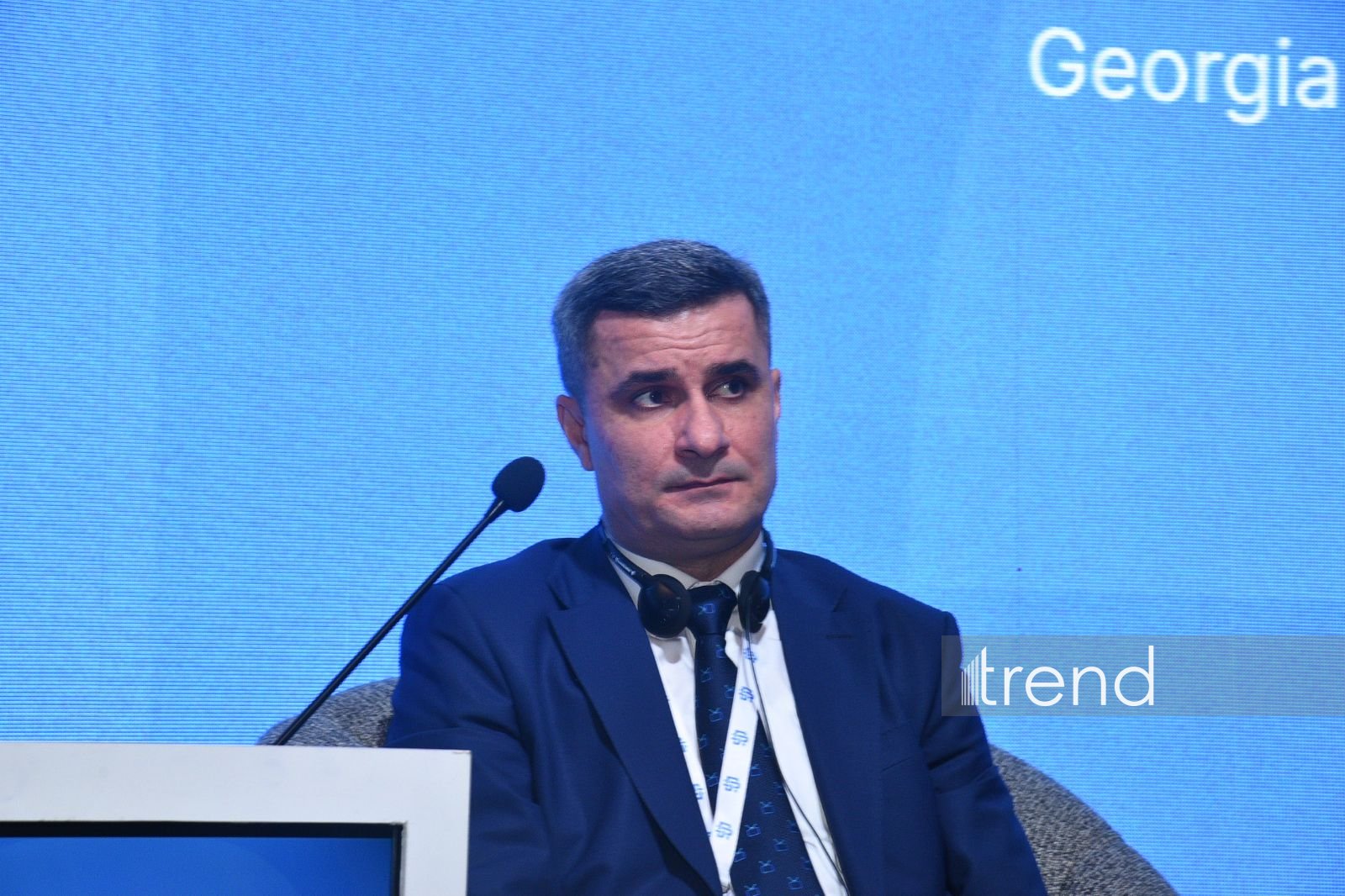

BAKU, Azerbaijan, December 5. The importance and risks associated with information security continue to grow in the age of generative artificial intelligence, the Executive Director of ARB 24 TV channel, Radik Ismayilov, said in his speech at the panel session dedicated to the topic "Enhancing the Media Ecosystem to Safeguard Information Security" within the framework of the Azerbaijan-Georgia Media Forum, Trend reports.
"The focus of the Azerbaijan-Georgia Media Forum on the theme of information security is both timely and significant, as this challenge has become a shared concern for both countries. Both Azerbaijan and Georgia are exposed to manipulations and disinformation originating from various institutions and directions, often leading to destructive consequences.
We are experiencing one of the most significant technological revolutions in human history thanks to generative artificial intelligence. Whether we should consider ourselves fortunate or cautious in this era is unclear, but what is certain is that leading a news channel during such times, especially in crises, is extremely difficult, as verifying whether the information we receive is real or fake has become increasingly challenging," Ismayilov said.
He noted that this situation puts media professionals in the thick of the action, demanding they keep the audience's trust and stand firm on journalistic integrity. As a result, the importance and risks associated with information security continue to grow in the age of generative artificial intelligence.
Ismayilov added that access to information has become easier in both countries, yet the ability to distinguish between accurate and fabricated content is steadily diminishing, affecting the lives of individuals, the operations of state institutions and businesses, and even civil society.
"With the decline of traditional media’s influence in both Azerbaijan and Georgia, digital and social platforms have taken center stage. This rapid shift has created an overwhelming flow of information, making it easier for information attacks, fabricated stories, and manipulative narratives to spread swiftly across society. We have probably all closely followed the recent crisis in Georgia, triggered by false information circulated by a major television channel, which is a vivid reminder of how quickly misinformation can escalate and how damaging its consequences can be," he added.
According to Ismayilov, the most alarming aspect is that manipulative content spreads faster than factual reporting, turning disinformation into a powerful tool of public influence.
"We need to focus more on this area. In order to ensure information security, we need to provide society with safe and accurate information. In modern times, cybersecurity and information security are often used as synonyms, but I am in favor of separating them. Cybersecurity implies the protection of the virtual environment, while information security is a broader and more general concept. This is an area that even rises to the level of national security," he said.
Building on this point, the ARB24 official highlighted that information security today requires a multidimensional approach. He explained that its foundations, technological, ideological, and sociological, collectively ensure the protection of national interests both at home and abroad. With the rapid development of communication technologies, he noted, issues such as safeguarding broadcast media, strengthening digital and social media resilience, protecting freedom of information, and ensuring content accuracy have all become central components of information security. These are challenges that, he stressed, directly affect media professionals.
"Transformation and convergence in the media, the strengthening of internet media, and the online provision of people's operational information needs make ensuring information security even more difficult. In the context of the rapid development of generative artificial intelligence, ensuring information security is global, regional, and local in nature. Therefore, we must pay special attention to these issues.
My colleagues will also talk about the threats of artificial intelligence to information security, but I mainly want to talk about how generative artificial intelligence can be used to ensure information security. Because while artificial intelligence creates new risks, it also offers new opportunities. For example, artificial intelligence algorithms can observe anomalies in real time, reduce incident response to seconds, facilitate risk prediction through behavioral analysis, identify potential gaps and suggest protective measures, automate processes, and help prevent human errors.
The era of generative artificial intelligence requires rethinking information security. This is no longer just a technological issue. This process requires a comprehensive approach with strategic, legal, and ethical dimensions. In this regard, the joint activities of Azerbaijani and Georgian journalists, both within the country and at the regional level, are of great importance. We must jointly investigate manipulative news and deepfakes and cooperate in preventing them," he concluded.
Stay up-to-date with more news on Trend News Agency's WhatsApp channel



