


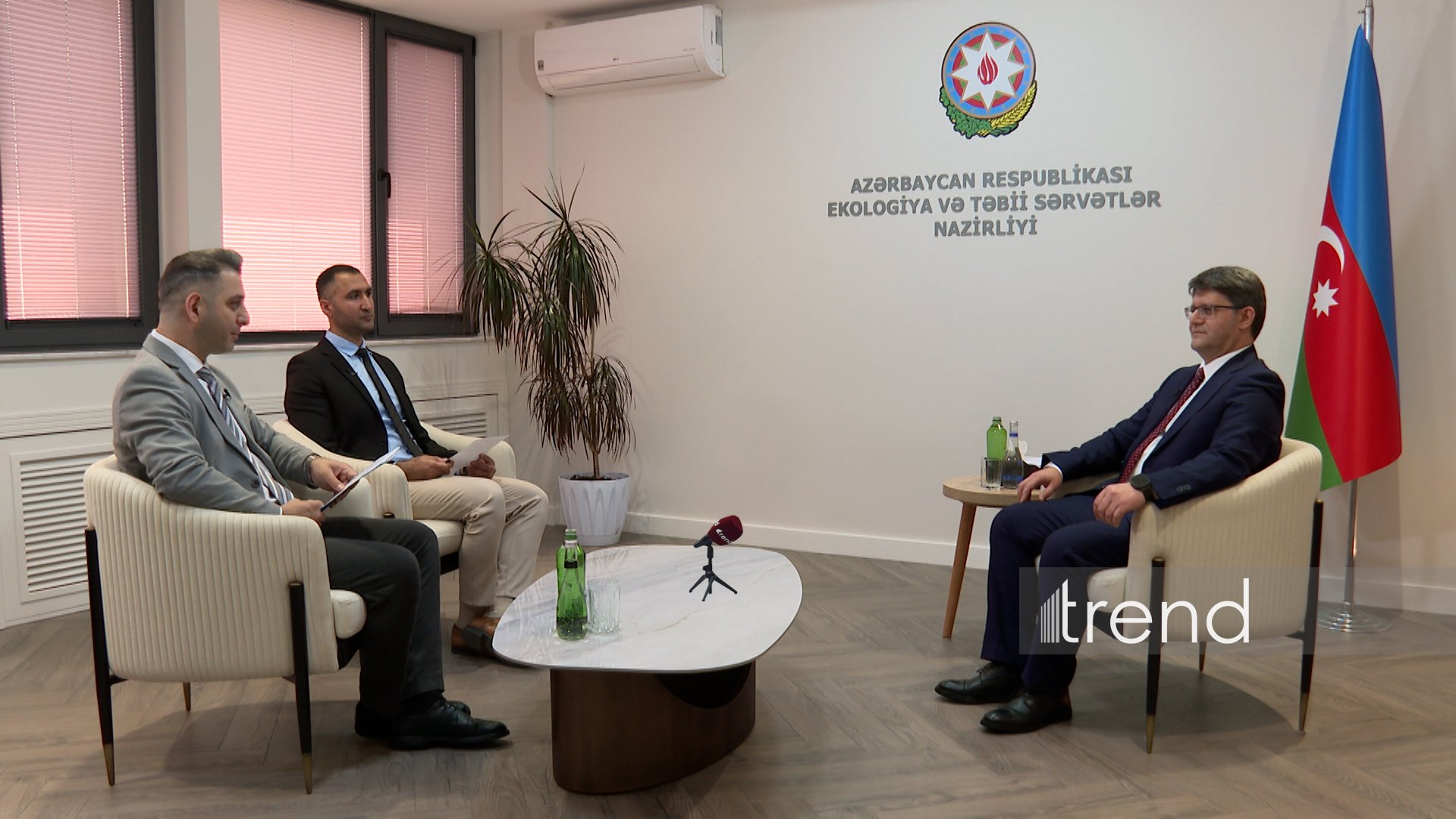
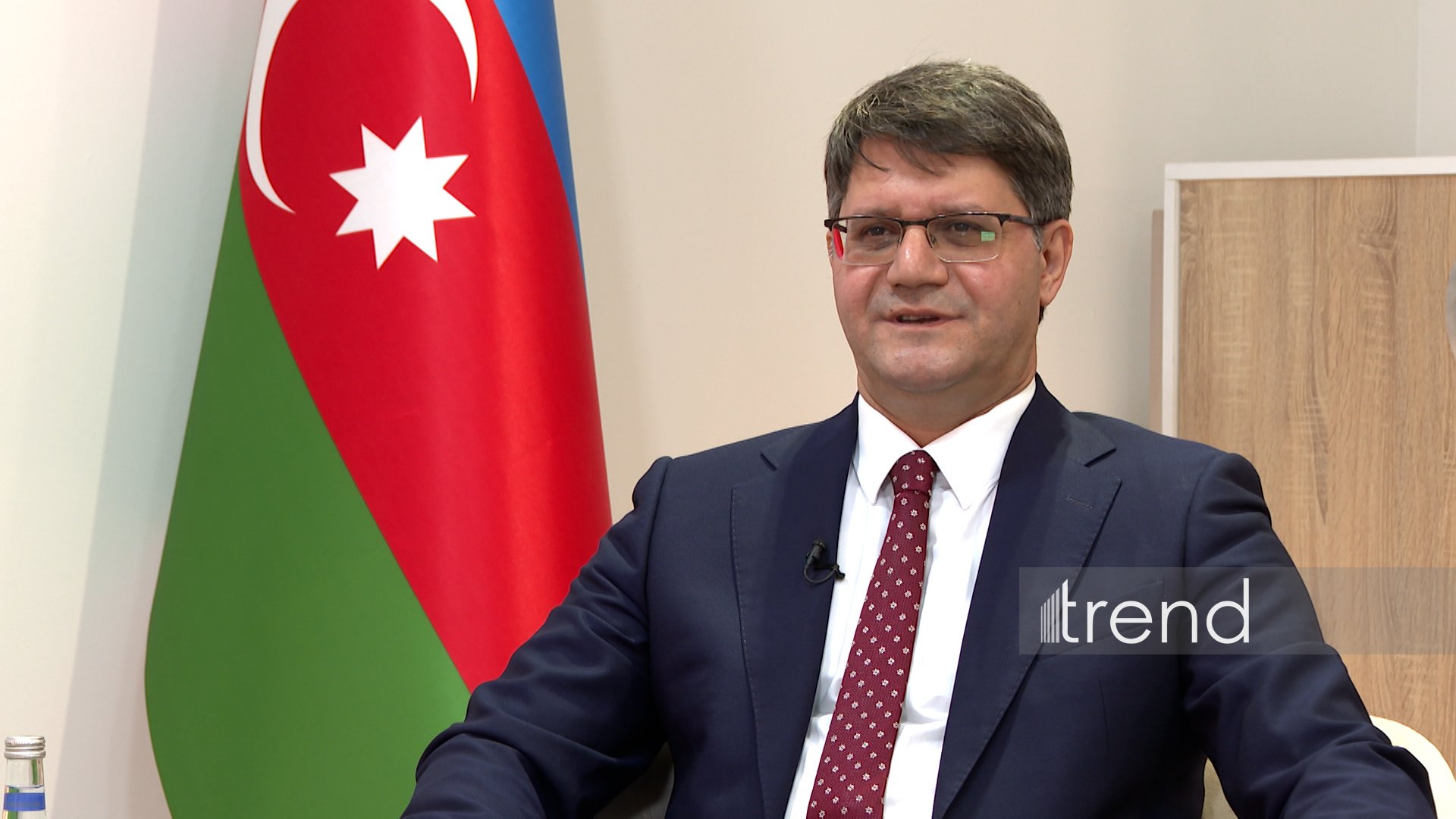
BAKU, Azerbaijan, May 23. Environmental protection issues are of great importance to the population of the whole world today, Minister of Ecology and Natural Resources Rashad Ismayilov said in an interview with Trend International News Agency and ARB24 TV channel.
According to him, the fight against climate change, land degradation, air and water pollution, and water scarcity have become very serious issues.
"These issues are now transboundary in nature. I would say that the effectiveness of steps taken within any state to resolve these issues is low. Therefore, I believe that it is now necessary for the work done to resolve these issues to be considered together at the regional, global, and world community levels, and the results of the measures taken together will be more targeted. A serious and on-the-agenda issue is climate change, we see it, it causes serious concern in our daily lives and among the population. The reasons are clear," he noted.
Solid waste may double by 2050
The minister pointed out that the recent rains in Baku have also raised serious questions among the population. This is an example of climate change.
"Waste management can also be mentioned among these trends. It is becoming a very serious problem. According to the UN, in 2023, the volume of solid waste exceeded 2 billion tons. According to forecasts, this figure may double by 2050," he said.
Ismayilov also emphasized the importance of international events held in Azerbaijan.
"I believe that international events in this area only serve common goals. The Azerbaijani state is in a leading position in this area. The Azerbaijani state comes up with certain initiatives and is accepted by the world community. Our population sees this, our citizens are witnesses to this. I would like to specially mention the COP29 event. New challenges were put forward for the world community, and at the same time, along with education for Azerbaijani citizens, it gave impetus to the growth of a new climate and environmental protection culture. I must say that the responsibility of our people in this area has already increased. The WUF13 event - the World Urban Forum - held in Baku these days has already attracted our citizens. We are monitoring and seeing the number of people registering," he explained.
The minister pointed out that urban planning has not gone far from environmental problems.
"The most important component of urban planning, at least for our ministry, is the environment, the environment in which our people live, air quality, various, so to speak, accessibility issues - all of these are the subjects of comprehensive study at that event today.
Each of these international events individually plays a very important role in the formation of a new mindset of our citizens," he noted.
Two national parks to be established in liberated territories in near future
Ismayilov pointed out that the ministry's goal is to increase the number and size of national parks.
"Nature in Azerbaijan is distinguished by its diversity. There is a Biological Diversity Protection Service operating under the ministry in this area. Specially protected areas in Azerbaijan are under the management of that institution. There are 12 national parks in Azerbaijan. We have many reserves and sanctuaries. These are areas with different regimes, and the management of these areas is a very important issue. Today, increasing the area of our national parks serves to familiarize our people with nature. In particular, our foreign guests are also very interested in the richness of our nature. We are constantly in contact with the relevant ministries of various countries, we hold bilateral meetings. They know the names of the pearls of our nature, such as Goygol, and they know where they are located. During meetings with ambassadors in Azerbaijan, comparing the species of the animal world that we have with those in their countries is already becoming a place of interest for them and attracting tourists from those countries. The ministry's goal is to increase the number and size of these areas. In 2025, two new national parks will be opened in Azerbaijan. was created. As you probably know, one of them is the Ilisu National Park. This national park was created on the basis of the Ilisu reserve, its area increased. At the same time, by the decree of the esteemed President Ilham Aliyev, a new national park was also created in Azerbaijan, called Akhar-Bahar.
It has a very attractive name, and in fact, its nature is very rich. Probably, our population sees the video information released by the ministry. This national park was created completely anew - in areas where there were no restrictions, no reserves. This is an indicator that we are already exploring the richness of new territories and trying to increase their protection regime. Today, work is underway to expand the territory of the Absheron National Park. In fact, it is a very important issue, we are thinking of covering more areas near the watershed, in the part of the Caspian Sea," Ismayilov added.
The minister noted that two new national parks will be created in Azerbaijan in the near future.
"At the same time, we are also active in this direction in the territories liberated from occupation. Those territories have been exposed to external influences for a long time, our forests have been destroyed, and biodiversity has been seriously damaged. Today, we also have a moral obligation to apply a separate regime there, organize their protection.
The creation of national parks is a complex issue. Especially considering that large-scale construction work is underway in the liberated territories. As you know, economic activity is almost prohibited in the territory of national parks. Today, we have established cooperation with other bodies, mutual discussions are underway. We have divided them into economic zones: the Karabakh economic zone, the East Zangezur economic zone. I believe that in the near future we will witness the creation of two new national parks. One part will be created in the Karabakh economic zone, and the other part will be created in the East Zangezur zone, which will cover an area of 10,000 hectares. These are very large areas, and when selecting the areas, we mainly tried to cover areas with a greater wealth of nature and a variety of fauna. At the same time, the existing restrictions in the legislation on national parks are also taken into account. We are trying to ensure that when our population moves to these areas in the future, pasture lands remain for them, and that we do not touch the areas for cultivation as much as possible. Work in this area is ongoing. I believe that in the near future we'll witness the creation of our first national park in those areas," he explained.
Speaking about hunting activities, the minister noted that climate change also has a serious impact on this area.
"Today, there are 13 existing hunting farms in Azerbaijan. These farms operate under the jurisdiction of the Ministry of Ecology and Natural Resources. It is a sensitive issue. The Ministry of Ecology and Natural Resources, I would say, is a conservative ministry. Our goal is to avoid touching nature as much as possible, to keep it away from anthropogenic impact. However, interest in the traditional hunting sector in Azerbaijan is very high. I would say that even when we impose some restrictions, our citizens have questions: "The season has already started, why is the season opening late?", "Why are the limits being strictly applied?" In the current situation, it is clear that climate change also has a serious impact on this area. We are trying to initially base our work in this area on censuses. What does this mean? Before the season, our specialists from the Biological Diversity Protection Service conduct a census of species and collect information about the current population.
The goal is to try to prevent the decline of populations. Accordingly, a special council operating within the ministry - in which there are specialists from the Academy of Sciences, specialists from relevant institutes are involved, and specialists from non-governmental organizations are also working in this area. The issue is being discussed. Based on that respect, we approach the issue cautiously, within certain limits, we try to divide the season into parts by species. Depending on the results of that season, that part, we can continue or stop hunting for a certain species in the same season. It is clear that this sometimes causes dissatisfaction among our citizens. But as I said earlier, our people, our citizens have become more nature-loving today. From the calls from the public and the applications received by the ministry, we see that even if there are points of dissatisfaction, it is mostly presented as a question of why this happened, why the limits were low. For the future, we think that we will fully digitalize this area because we believe that the most serious issue here is accounting issues," he noted.
According to him, there are no restrictions on the issuance of hunting tickets.
"We must constantly monitor our populations. In this regard, we have already started issuing hunting permits in a test mode through the Digital Ecology Information System - we call it REIS - established by President Ilham Aliyev at the beginning of 2025.
Hunting tickets are usually issued by ASAN service. Applications are reviewed in accordance with the requirements and they are presented to our citizens in a timely manner. There are many applications. This area is always of interest to our citizens," he said.
The minister noted that the Ministry of Ecology and Natural Resources intends to digitalize daily and amateur hunting activities in the future.
"In the next stages, we generally want to digitize daily hunting activities, amateur hunting activities. When our hunters go hunting, we will both track their movement trajectory and organize control. This is actually for the protection of our hunters themselves. At the same time, we are thinking of using this electronic system to serve as a record-keeping system, that is, to register the prey obtained during hunting. This is a matter of the future, a clear issue. It's possible that some will perceive this as a restriction, as a tighter framework. But we think that, overall, our population will welcome these issues. Because the main goal is the protection of our nature, the protection of the environment," he added.
Ismayilov said that there is a land fund called the "forest fund" in Azerbaijan, and these areas exceed 1 million 200,000 hectares.
"It covers approximately 14% of Azerbaijan. However, when we say forest, we do not mean only these areas. There are also municipal forests, there are forests on other reserve fund lands, the greenness of which is reported by us. In general, it is clear that not all of the forest fund is covered with forest. Today, we can say that more than 1 million hectares of our territory is covered with forest.
In general, this is a low indicator. For example, if we compare the Scandinavian countries with the Baltic states, over 40-45% of their territory is covered with forest. Recently, we were discussing with our partners from Slovakia. It is a Central European country, more than 40% of its territory is covered with forest. At the same time, our forests also belong to the first category of forests. Therefore, the use of these forests in industry is not considered advisable.
If we look back at our forest history, back to the 1990s, when the USSR collapsed, we can see that the country experienced certain difficulties with energy supply and gas supply. Unfortunately, these problems that existed at that time had a very serious and negative impact on our forests. Today, relevant work is being carried out together with the State Property Service to accurately determine the volume of forest areas, and this activity is almost nearing completion. Currently, the final completion work is being carried out to approve the re-mapping of forest fund territories. The final stage of all these activities will create the basis for the implementation of extensive protection measures in forest areas. Currently, the existing forest cover is being taken into account, and as mentioned earlier, reforestation measures have been initiated in vacant areas without tree cover," he explained.
Reforestation work carried out on 40,000 hectares of land in Azerbaijan
Ismayilov noted that reforestation activities were carried out on a total of 40,000 hectares in Azerbaijan from 2020 to 2026.
"It's clear that one of the most important issues on the agenda is the restoration of forest areas in the liberated territories. In this context, it is planned to restore 110 hectares of forest land in the Lachin district, and the implementation of the project is expected to start towards the end of this year.
In general, the cultivation of seedlings is one of the most important tasks ahead in the field of forestry. Forest restoration is carried out both by growing and planting young seedlings and by direct seed sowing. The level of completion is higher in forest areas restored by the seedling planting method," the minister added.
2 million tree seedlings to be grown in Jabrayil district
According to him, the "Seedling Center" operating in the Jabrayil district aims to grow two million seedlings per year.
"Starting from the end of 2024, the Forest Development Service has begun installing large greenhouses. So far, five large greenhouse complexes have been installed. Currently, nearly one million seedlings are grown in these greenhouses annually. These greenhouse systems bring great advantages to forestry. Since seedlings grow faster than normal in artificial and warm conditions, nature gets a whole season ahead. Since seedlings mature faster, they can be used more quickly in forest restoration and new afforestation activities.
In addition, we have a major project in another liberated territory - Jabrayil. With the support of the Turkish state, the "Smart Seedling Center" covering an area of 97 hectares has been established. The foundation of this center was personally laid by President Ilham Aliyev and President of Türkiye Recep Tayyip Erdoğan. It's planned that the center will start operating at full capacity by the end of this year. The center will both grow seedlings using modern methods and will function as a regional training center. It's aimed to grow two million seedlings per year, which will make an invaluable contribution to the restoration of forests in the liberated areas. At the same time, there are other alternative projects that are at the initial stage," he added.
Azerbaijan launches first pilot project on industrial forestry
The minister emphasized that the first pilot project for the establishment of industrial forests is being launched in Azerbaijan.
"Currently, there are no industrial forests in Azerbaijan. However, there have been certain requests from both society and local entrepreneurs in this direction. Looking at world experience, industrial forest planting is a widely practiced practice, and industrial forests are planted, especially in China, as well as in Germany and Spain. Very extensive planting has also begun in Uzbekistan. Recently, during our meeting with our Uzbek partners, an initiative was put forward to plant Paulownia and fast-growing poplar tree species. We have studied this issue. We believe that if we can carry out afforestation of these types of trees through our entrepreneurs for the purpose of industrial forest, this will be a step forward. We will be able to restore our forests more quickly. At the same time, our population will also be able to benefit from this. The main point here is Paulownia trees, which are not typical for Azerbaijan, so we are sensitive to this issue. A pilot project is being launched on an area of 100 hectares, and depending on the results, we will move on to the next steps. At the same time, we are also partnering with the Ministry of Economy regarding the effectiveness of this work. Foreign experts are also being involved in this work. In parallel, work is being carried out on the efficiency and contribution of this work to the Azerbaijani economy. This type of tree planting is also being actively carried out in European countries," he noted.
Speaking about the issue of firewood use and fuel, the minister noted that during the energy shortage in the 1990s, the population widely used forests as a source of firewood. However, as the level of gasification in settlements increases, this demand is gradually decreasing.
"We have remote villages and healthcare facilities, military units in remote regions, which require firewood today. In 2023, the Cabinet of Ministers approved the volumes, according to which sanitary felling is carried out in forests by the Forest Development Service. The upper limit was set at about 84,000 cubic meters, but for example, last year, the volume of firewood we removed was 67,000 cubic meters. We are trying to minimally affect our nature and forests. At the same time, we use trees that have already lived their lives, let's say, rotten, dried trees, during these sanitary fellings. Work is also underway to organize serious control in this area.
Today, I call this 'forest poaching'. There are also illegal logging and scraps. The fight against this is also one of the service's areas of activity. These days, we have tried to take advantage of alternative, objective control directions. For example, I can say that we have already applied this in the field of biodiversity protection. Citizens can familiarize themselves with it on our website, the official website of the ministry. How did we establish the approach? In previous periods, there was also surveillance with surveillance cameras in various places. We went one step further. We have already applied this in the Shamkir reserve. Surveillance cameras were installed and those video images are currently being published online through the ministry's website.
We advocate for not only oversight by a single ministry and its subordinate bodies, but also for broader public scrutiny, so that changes can be observed and assessed objectively. We prevented an illegal charcoal production in that area and other types of activities related to wood production. After installing surveillance cameras and applying this approach, we became the reason for the revival of that lake. Today, in the season, when we look, we see how many birds, new bird species, even come to that lake. We are inspired by this, we consider it a positive experience, and taking advantage of this, we are already increasing the number of cameras to carry out video surveillance in our forest areas, especially in the areas of entry and exit to the forest, to prevent illegal activities," the minister added.
Drones and artificial intelligence to be used in fight against "forest poaching"
The minister said that by the end of this year, cameras will be installed in certain areas, mainly in risk zones, and the footage will be broadcast online.
"We believe that this will deter some of our citizens from that illegal activity," he explained.
Ismayilov noted that drones will be purchased at the initial stage to strengthen control in risky areas.
"Today, we have come to the conclusion that we will also use modern technologies. This is also the purchase of drones. The contract has already been signed, we'll purchase our first drones and apply them in this area. We are thinking about organizing this work on artificial intelligence-based platforms. Relevant contracts have already been signed, and work has begun on this. What will happen logically? We are thinking about the systems of other institutions on the existing e-government portal, to form their history by writing additional modules. These days, when we want to carry out some control measures, we go to open Google sources. We try to monitor any changes ourselves.
After taking the first images in the newly implemented system, comparisons with the images taken in the next stages will be carried out by the electronic system, and in case of any changes (illegal logging, etc.), the relevant institutions will be immediately informed. This will allow for more operational interventions. The groundwork will be laid. Of course, we are still at the initial stage of these issues, but I believe that in the near future we will be able to organize these works in certain areas. First, we have chosen the Ismayilli forests, forests that are distinguished by their richness. We want to organize this there. Perhaps, after achieving successful results, we'll be able to organize these works in other areas as well," he said.
The minister noted that today there are 650 recreational facilities operating in our forest fund. Approximately 40% of them have violations, and some facilities have not been documented on time, but all of these facilities exist.
"These days, we have already stopped granting new recreational facilities. What did we base it on? We looked at the experience of other states. I can give an example, if I am not mistaken, in Latvia, 45% of which is covered with forest, and the number of recreational facilities does not exceed 300. In this regard, we considered that we shouldn't rush to open any additional new recreational facilities. We are working on the issue of existing ones.
We conducted our inspections. Today, notifications are issued to recreational facilities that already have violations, and within two months, we issue requirements to eliminate those violations, indicating those violations. The other part, a lot, which doesn't have documents at all. Which has been built with serious environmental problems, etc. We are already taking steps to eliminate some of these, lawsuits have also been filed in the courts. I understand that this is a sensitive point. In this regard, we are also considering legislative initiatives today to bring the 650 recreational facilities we have listed into a legitimate format. In what way can this be possible maybe, work is being done on it.
At the same time, in terms of increasing their number, we think that this is already a sufficient number today, which is managed by the Ministry of Ecology and Natural Resources.
We are thinking about cooperation with the Tourism Agency, discussions have been held. Perhaps, in the future, some attraction points in a cluster format in a number of areas will be selected and given to the management of the Tourism Agency, and the agency will already conduct organizational work in those areas from the point of view of tourism. At the same time, it will be more convenient for us to manage these areas from an ecological point of view, in terms of compliance with environmental requirements. We see this as the future, but work is currently continuing on the existing ones," he said.
Ismayilov pointed out that regular awareness-raising activities are being carried out regarding tree pruning and the removal of dangerous, dead trees. Various videos are being made and disseminated to the general public. However, the applications received show that the level of awareness of our society in this area is still low.
"Regarding pruning, one should definitely contact the greening management departments operating under the jurisdiction of local executive authorities. At the same time, if it is on municipal land, one should contact the municipalities. In general, there are no ownerless trees in Azerbaijan. This is a land issue and each landowner must manage the trees on their land. These are municipalities, local executive authorities, and in relation to state lands - forest fund lands, specially protected areas, national parks, reserves - the Ministry of Ecology and Natural Resources. In relation to lands in private ownership, our citizens should do this. The position regarding the removal of trees is such that the owner must apply to the Ministry of Ecology and Natural Resources, and in this case, an inspection of those trees is already carried out on site. Permits for the removal or relocation of greenery can be issued based on the expert opinion issued by the State Ecological Expertise Agency of the Ministry of Ecology and Natural Resources. However, this should only be done based on the expert opinion.
No expert opinion is required for pruning. Pruning is carried out regularly by the institutions I mentioned. They themselves attract relevant specialists and carry out pruning in accordance with the position and attitude of those specialists. It is simply required that the applications of our citizens be directed correctly. At the same time, these applications mainly come from residential areas and the territory of our cities," he explained.
More than 87,000 trees electronically registered in Azerbaijan
The minister said that since 2025, work has begun on digital accounting of trees in our cities. Trees are mainly coded in the center of Baku and special signs are installed on them. Through the QR code, citizens can obtain complete detailed information about a tree simply by phone. Citizens who have any position or suggestion regarding a tree can even write an application.
"This is being considered by the relevant departments of the Ministry of Ecology and Natural Resources, those applications are responded to, and appropriate measures are taken if necessary. Such practices exist in many countries, such as keeping records of trees. We have improved this issue a little. We have organized registration on the general map on the 'agac.az' electronic page. These days, by either reading that QR code on the phone or entering the code on the tree on the computer on that site, we see the location of that tree on that map. These days, I would say that more than 87,000 trees have already been registered. This was started in the Sabail district as a pilot project. As soon as the project started, applications came from other cities. We applied this in Sumgayit, Ganja, and Mingachevir, and we have started these works.
At the same time, there was an application from Shamakhi recently. We have also started this work in the southern region. We can see it on the map. We can go to that website right now. When you enter the site and open the tree information, you enter information such as: what type of tree it is, how high it is, what is its diameter, and the condition of the tree - good, insufficient, etc. In the future, our specialists will probably inspect these trees every 3 years to clarify the current situation. Today, when applications are received regarding relocation and removal, we are already applying it.
Generally, when such applications are received, we demand that our institutions register those trees and, in general, before removal, the condition of the tree be registered through the system, have photos, and its location be visible. After that, for example, the tree should be cut down, removed, is it already rotten, in an emergency, etc., and finally, a decision should be made. After removing it, we often require, depending on its location, that a new tree be planted in its place - a tree appropriate to the season, appropriate to its location, and that tag, plaque, is already placed on that tree and entered into the electronic system. We can now also track the history of the tree's location, whether there was an emergency tree here. It was removed, an existing sapling was planted in its place, and a picture of that sapling was also placed. After these works were done, we see a significant decrease in complaints.
Today, of course, it is impossible to put signs on all the trees in our cities, but we are moving in this direction. I believe that by organizing the accounting of trees and greenery in this way, we will be able to achieve transparency in this area, we will be able to monitor the trees in general, and when the time comes, we will be able to promptly organize their replacement. This will ensure that our overall green fund in cities is kept in balance, that is, in terms of number, only after we achieve this, it will be possible to increase it, and it will not be possible to decrease it. Because our trees are registered, and when they are removed, any tree planted in their place will be registered. Our new tree planting campaigns are regularly communicated to the general public. These campaigns are carried out both in Baku and in other regions. In particular, I would like to note that we call 2024 the COP year, we call it conditional, that year large-scale tree planting campaigns were held in all regions. We were also approached by regions regarding the provision of seedlings. "We have provided for each one as much as possible and are also organizing the monitoring of those planted saplings, together with local executive authorities. These saplings were mainly planted in city centers, along main roads. Today, we can observe the growth of these trees," he noted.
Recent rainfall in Baku clear example of climate change
Ismayilov said that the main reason for the increase in above-normal rainfall events in our country and around the world in recent years is climate change.
"Our daily life is already changing as much as we can feel. Certain steps are being taken by the international community in this regard. In 2025, Azerbaijan also adopted national contributions and approved them by the Cabinet of Ministers. Mainly, as preventive steps, increasing greenery is being promoted, and issues such as reducing greenhouse gas emissions, such as the application of restrictions by the state, have come to the agenda.
The Azerbaijani state has set a target of reducing emissions by 40% compared to 1990 by 2035. We are moving in this direction, we think that when such targets are set for themselves by all states, this will at least make those states responsible and result in some progress. The increase in precipitation, as we have said before, the last time it rained 5 times more than the monthly norm in 9 hours in May. Of course, in such a case, there are a number of complications. Today, work is being done in this direction, in general, the state program of Baku and Absheron on water management has also been adopted. However, such events aren't unique to Azerbaijan. We see in Europe, where drainage systems have been in place for years, large cities are being flooded. This is a reality, we need to prepare adaptation plans in this direction and take steps in this direction," the minister explained.
Climate change not only reason for the decrease in the Caspian Sea's water level
Ismayilov touched upon the decrease in the water level of the Caspian Sea and said that this is not only due to climate change, but also other factors.
"Looking at history, we have repeatedly observed the decrease and increase in the water level of the Caspian Sea. The position of international experts regarding the current decrease in the Caspian Sea is that this is not only due to climate change. The Ministry of Ecology and Natural Resources has begun cooperation with the Caspian littoral states on various platforms. Work is underway on various action plans. This action plan is mainly thought out through adaptation mechanisms. These discussions are being held within the framework of the Tehran Convention, and bilateral working groups have already been established. For example, I can say that the first meeting of the bilateral working group with Kazakhstan was held in April, and our discussions in this area have already begun. As a result, it can be said that the steps taken to resolve these issues should not be by any one state. Some measures should be jointly thought out and implemented consistently by all Caspian littoral states," he said.
The minister noted that during recent geological surveys, new deposits were discovered in the territories liberated from occupation.
"Geological surveys are conducted regularly. The last geological surveys were conducted in the liberated territories, jointly with Azercosmos, using hyperspectral surveys. Of the discovered deposits, I would say the Chullu deposit located in the Aghdam region. An approximate initial assessment is that it may be suitable for the production of 50,000-70,000 tons of copper. At the same time, studies are also being conducted on our water resources. A deposit was recently discovered in Shusha. Probably, work will begin there on industrial use. We have good deposits in Minkand in this area, they are being used. In general, the field of geology is a very important field, and these days our geologists are working not only on the study of natural resources, but also in landslide zones.
As you can see, as you can see, landslides have occurred in many areas during these rains. Preventive measures are being taken against them. These days, the existing landslide zones in Azerbaijan have been approved by the Cabinet of Ministers. At the same time, our geologists are already working on the layout of those newly identified landslide areas so that these areas can also be included in those maps. What do these maps give us? The regime is now different in those areas, construction is prohibited, greening measures are being implemented, preventive strengthening work is being carried out so that there are no complications," Ismayilov said.
He noted that the use of mineral raw materials on a global scale is increasing day by day. This applies to both ore deposits and non-ore deposits.
"You know, right now the use of mineral raw materials on a global scale is increasing day by day. This applies to both ore deposits and non-ore deposits. We have been starting reforms in this area for a year and a half, more than a year now. First of all, a fight was waged against illegal subsoil users. In 2025, the activities of 53 illegal enterprises and quarry operators were suspended. This was not achieved by the Ministry of Ecology and Natural Resources alone. A working group was created with various agencies. Employees of the Ministry of Emergency Situations joined these processes, local executive authorities provided serious support, and law enforcement agencies also participated. The equipment of illegally operating quarries was removed from these areas, and thus illegal exploitation of these deposits was prevented.
At the same time, in parallel, amendments were made to the Law on Subsoil. Transitional rules for the regulation of this area were approved at the initiative of Mr. President. The transitional rules include a number of issues. The main thing is that today, exploiters with any shortcomings are given a period of one year. We call it an amnesty period. In fact, a transitional period has been determined, and during this transitional period, all support will be provided to these exploiters by state bodies so that these shortcomings are eliminated. I think that with such an approach we'll be able to achieve the rehabilitation of this area. At the same time, another problem - when subsoil was used, reclamation work was not carried out in many areas. That is, subsoil was used, the extracted mineral raw materials were extracted, but whether it was a river bed or other areas, restoration work, restoration of the earth's surface was not carried out here. There are already instructions given at the legislative level in this regard, within a year, when recultivation rules will be developed, I would not say strict, but fairly limited requirements will be applied.
In fact, looking at these steps from the outside, it is possible to assess this as an obstacle created for those exploiters, but when we fully examine the issue, we see that in general this area should be kept under strict control. We have primarily involved the Ministry of Emergency Situations in this work. Every year, the Ministry of Emergency Situations makes forecasts regarding demand. At the same time, support is also provided by the Ministry of Economy. The Ministry of Economy determines the volume of mineral raw material reserves required for the creation of a certain production for our economy. We are already thinking of organizing the management of this area in the next stages in a volume focused on demand and the desires of the economy - the creation of new production.
I believe that this year will be a bit of a complicated period for us. We will try to support entrepreneurs operating in this area so that they can fully bring their production into line with the requirements of the legislation, and fully restore production. However, we will know the result at the end of a year. I would like to inform you that in accordance with the requirements of the transition rules, a list of operators who have been subject to rehabilitation will be published on the website of the Ministry of Ecology and Natural Resources in the coming days. The calculation point will now take place. I think that not a little work has been done in this previous period. We have prevented production that could result in complications. We are preventing the destruction of river beds with this. At the same time, we are also preventing the negative impact on agrotechnical facilities in those areas. We are in favor of regulated production, which will be organized with the participation of all institutions, and in the future these complications will be prevented," the minister said.
The minister said that cartography and geodesy are very important areas today. A year ago, we switched to the new WGS 84 system. This system has already been accepted in world practice and will ensure that the maps compiled in our country comply with universal requirements.
"At the same time, we are already considering the establishment of a geoid system, a three-dimensional system in Azerbaijan for the future. We have started work in this area. This will already create the basis for accurate measurements. We will be able to obtain more accurate maps in terms of scale. "At the same time, there is also a demand today for thematic maps, the developer of which is the institution responsible for this field, which is subordinate to the Ministry of Ecology and Natural Resources. It is a very interesting and on-the-go field. It is constantly used in our daily lives," he said.
Ismayilov emphasized that the neutralization and utilization of solid waste is one of the issues on the agenda today. According to him, as the population increases, the volume of waste also increases, and a number of activities have been carried out in this area in Azerbaijan.
"For example, there is a sorting plant located in Balakhani. We sort 200 thousand tons of solid household waste at that plant. At the same time, a plant for incinerating solid household waste with a capacity of 500,000 tons is also operating. These are great indicators. I believe that there is a serious need for improvement in this area as well. We have already reached a point where a modern waste management system should be created in Azerbaijan. Recently, by the decree of President Ilham Aliyev, the State Agency for Waste Management was established under the Ministry of Ecology and Natural Resources. We believe that we should implement new modern challenges in this area through that agency. In connection with the provision of waste-transporting vehicles, the Ministry of Ecology and Natural Resources purchased special equipment in previous years. 48 nos. of special equipment were purchased before the CIS Games. We had problems in the regions, the provision was implemented. In the subsequent period, we purchased another 70 nos. of special equipment.
We have handed over this area to the organizations that carry out management and transportation of waste in the regions. Currently, 100 units of special equipment have already been ordered. Procurement procedures have also been initiated in this area. We think that this year we will be able to hand over 100 additional units of this equipment to the organizations operating in the regions. I would say that this is a very serious volume, and when calculated in general, many of the problems experienced in the transportation of waste in our regions will be prevented. We think that special containers for waste collection will be purchased this year as well. However, our main hopes are related to the new agency for improving this area. We will probably already start working on certain strategies so that we can ensure the systematic development of this area," the minister said.
Ismayilov noted that Azerbaijan has joined more than 20 conventions in the field of environmental protection these days.
"More than 60 bilateral agreements, memorandums, and protocols have been signed with 37 states. This number is growing day by day. This is an indicator of the steps taken to ensure the participation of the Azerbaijani government at the international level. Today, Azerbaijan is considered one of the leading countries in the field of environmental protection. We are already hearing this on foreign television, and this is very pleasing for us. The COP29 event was held in Azerbaijan at a high level. Currently, the COP31 event will be held in Türkiye, preparations for it are underway. I am sure that Azerbaijan will be one of the most active and proactive countries at this event," he added.
Ismayilov said that the Ministry of Ecology and Natural Resources' digital ecology electronic regulation was approved in early 2025, and many of its modules are already operational. According to him, this will cover both the field of eco-monitoring and the implementation of a cadastre of greenery.
"At the same time, hydrometeorological stations are already being replaced with automatic stations. 73 percent of automatic stations have already been installed. We think that by 2030, we will switch to fully automatic stations, replacing all stations. Situation centers are being installed in the areas. A situation center has been installed in the hydrometeorological service. We talked about the control of mineral raw materials resources. This year, we are thinking of creating a situation center in that area as well, and implementing control by electronic means. In the field of biodiversity, electronic tickets are already being applied at the entrances to national parks. We have started and are thinking of covering all our national parks by the end of the year and implementing only electronic tickets. In the forest development service, we have already started organizing digital control this year. We think that we should also digitalize firewood procurement in the next stages so that we can achieve transparency and openness for the public there as well. In general, the Ministry of Ecology and Natural Resources acts from the position of objective, digital control. We think that this objective digitalization will improve management. If we can build on it, we can achieve higher achievements. Ultimately, implementing each of these through the Digital Ecological Information System will give us both uniformity and, at the same time, create the basis for more flexible and operational management," he said.
Environmental protection stands duty of every citizen
The minister noted that the Ministry of Ecology and Natural Resources is engaged in environmental protection, but no institution in the world can ensure this 100%. Therefore, public participation must be ensured.
"Just as environmental protection is the duty of our ministry, every citizen also has this duty. What is the issue? What will we leave for future generations? I think this is the duty of every citizen," he emphasized.
Ismayilov said that May 23 is a professional holiday for employees working in the system of the Ministry of Ecology and Natural Resources. The ministry was established in 2001, and this year marks 25 years of its activity.
"I think that our population also appreciates the work done by our ministry over the past period, and I'm sure that we will be able to successfully continue this work in the future," he concluded.



