


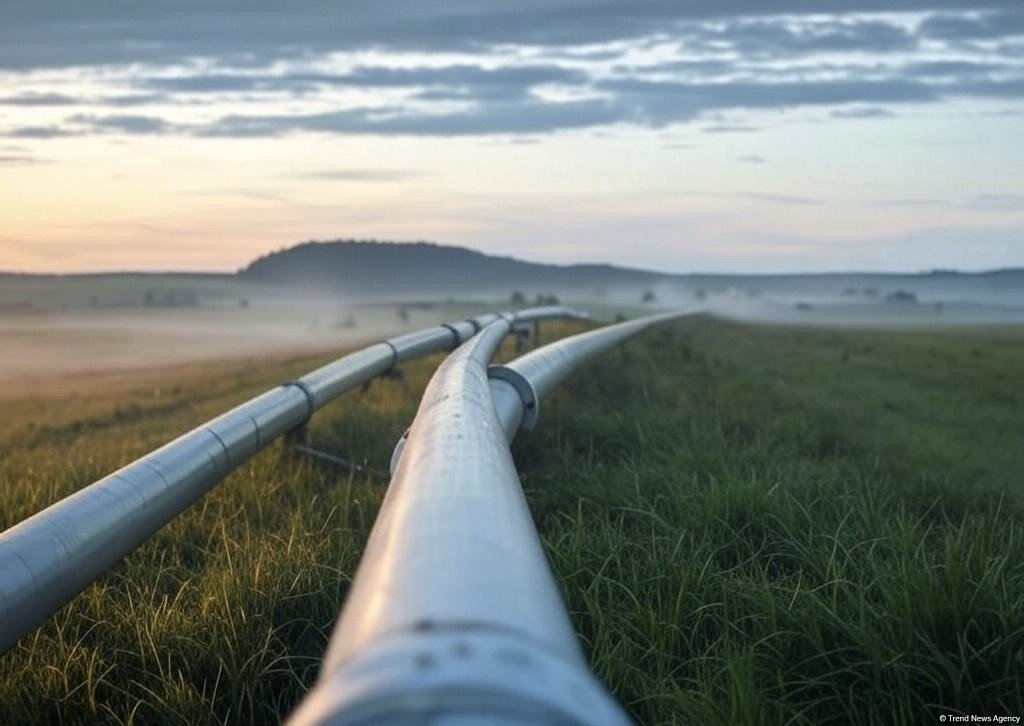

BAKU, Azerbaijan, December 15. The transportation of Azerbaijani natural gas to Syria via Türkiye officially commenced in August this year, marking a historic milestone with the launch of a new pipeline near the Turkish city of Kilis. This development signifies the beginning of direct exports of Azerbaijani gas to Syria.
The gas is sourced from major fields in Azerbaijan, such as Shah Deniz, and transported through pipelines to Türkiye. From there, the gas is transmitted via the newly established infrastructure in Kilis, ultimately reaching Syria. Initially, the gas will supply power plants in key cities like Aleppo and Homs. This initiative is part of the broader Azerbaijan-Türkiye-Syria energy cooperation framework, aimed at fostering greater economic and energy integration within the region. As a result, the project is expected to contribute an electricity generation capacity of 1,200 to 1,300 megawatts.
Statistical data released last week revealed that Azerbaijan exported 153.15 million cubic meters of natural gas, valued at $52.5 million, to Syria. This gas, delivered in its gaseous form, marks the initial phase of a larger project aimed at exporting 1.2 billion cubic meters of natural gas annually to Syria. According to official projections, this volume is expected to increase as the project progresses, with a target of reaching two billion cubic meters annually. These figures reflect the gas transported directly to Syria via transit, underscoring the project's importance in revitalizing Syria's energy infrastructure.
The ongoing Syrian conflict, which has been devastating the country since 2011, has severely damaged its energy infrastructure. The commencement of this pipeline marks a significant step in the reconstruction of that infrastructure. From a strategic standpoint, the project aligns with Azerbaijan's broader energy policy objectives, facilitating both economic diversification and bolstering its energy leadership in the region. As the supply of gas increases, it will not only contribute to Syria's energy recovery but also support its broader economic revitalization efforts.
This initiative broadens the scope of Azerbaijan's gas exports, creating a vital resource for Syria's energy restoration while reinforcing regional cooperation and energy security. While still in its early stages, the project is expected to scale up, paving the way for larger volumes and deeper strategic cooperation in the coming years. It also enhances Azerbaijan's geopolitical role, contributing to both regional stability and the peace process in Syria.
These indicators are a real result of the expansion of the geography of Azerbaijan's gas exports. The addition of the Middle East direction to the export policy traditionally aimed at Europe and regional countries indicates the beginning of a new stage in Azerbaijan's energy strategy. Although the volume of exports to Syria has a relatively small share against the background of total gas exports, its strategic and political weight is much greater than economic indicators. This is not a purely commercial project, but also an energy diplomacy project.
In general, the presented indicators prove that natural gas exports from Azerbaijan to Syria are not just a statistical phenomenon, but in a broader sense an important element of energy diplomacy, regional influence, and economic and political balancing.
Azerbaijan exported a total of 20.6 billion cubic meters of natural gas (in gaseous form) abroad, worth $7.4 billion, from January through October 2025.
Compared to the same period of last year, this figure rose by $569.3 million or 8.3% in value, but decreased by 690 million cubic meters or 3.2% in volume.
During the mentioned period, natural gas accounted for 34.28% of the country’s total exports.
At the same time, in the first 10 months of this year, Azerbaijan imported 252.15 million cubic meters of natural gas worth $39.151 million, which is $40.2 million or two times less in value terms than a year ago, and 243.6 million cubic meters or 49.1% less in volume terms.



