


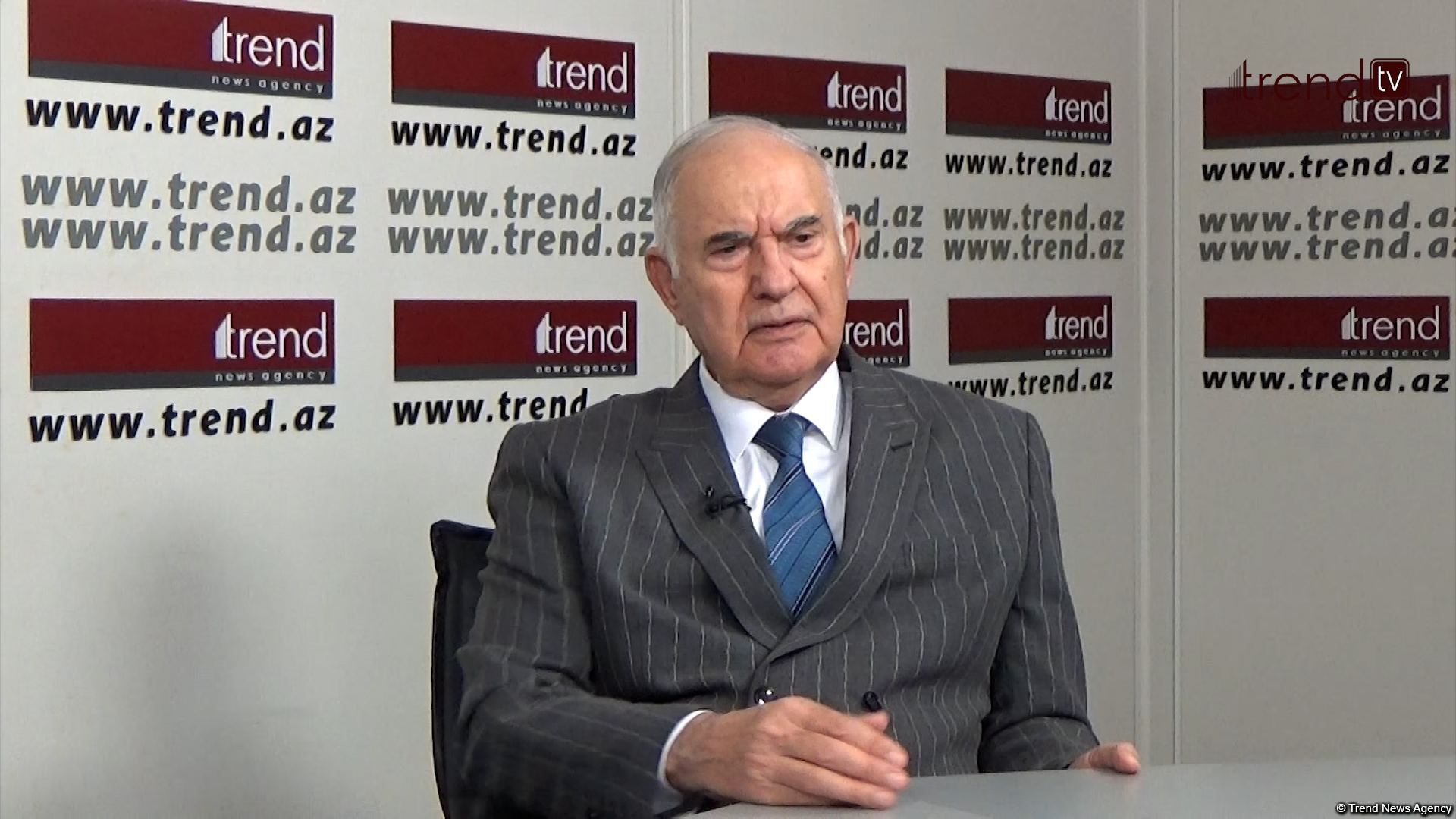
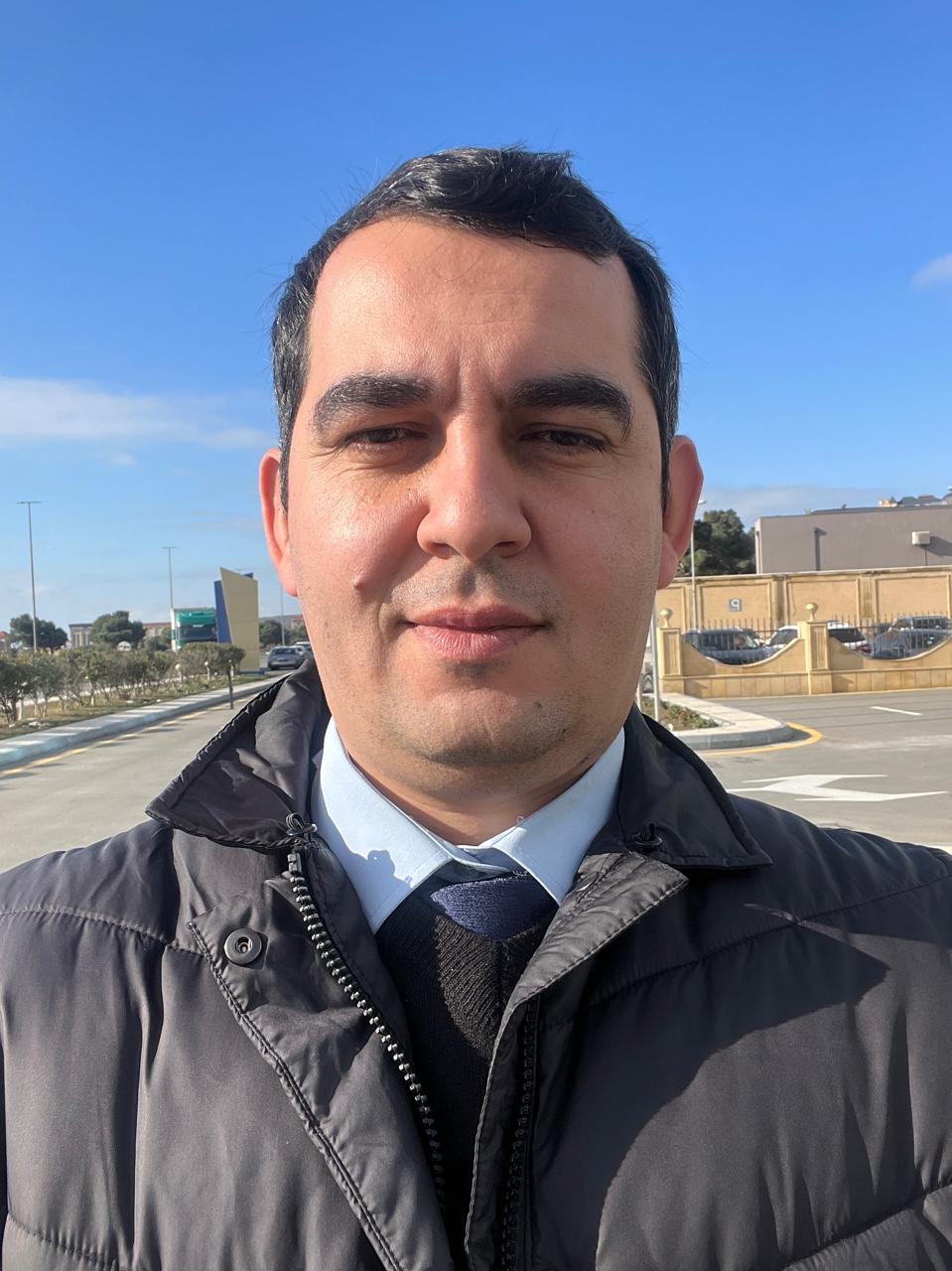
BAKU, Azerbaijan, September 16. The views expressed by President of Azerbaijan Ilham Aliyev during his meeting with participants of international conferences highlight the importance Azerbaijan attaches to cooperation and dialogue within the Islamic world, the Turkic world, and the Caucasus region, political analyst Azer Garayev told Trend.
He noted that the core themes of the address included religious solidarity, peace and cooperation, the past and present of Karabakh, the assurance of Azerbaijan's territorial integrity and sovereignty, and future security policy.
"It's no coincidence that President Ilham Aliyev devoted special attention in his speech to the Organization of Islamic Cooperation Summit scheduled to be held in Baku next year. Through such an event, Azerbaijan demonstrates its aim to create a platform for strengthening dialogue among Muslim nations. Emphasizing the necessity of resolving existing disagreements and conflicts among Muslim countries, President Ilham Aliyev highlights the Islamic world's need for closer cooperation. It is noteworthy that Azerbaijan presents itself not as an actor siding with any specific party, but rather as a platform that brings diverse nations together," the analyst said.
Garayev pointed out that another important aspect of the speech is the value placed on the role of religious leaders.
"The messages religious leaders convey to societies are not limited to a purely religious framework. Their calls for peace, tranquility, cooperation, and mutual understanding can generate a broader social impact. In this regard, the participation of religious leaders from various countries in Baku is presented as a significant event from both religious and diplomatic perspectives. Highlighting Azerbaijan's position between the Turkic world and the Caucasus is also a key part of the speech. President Ilham Aliyev states that Azerbaijan is both a member of the Organization of Turkic States and a Caucasus nation. Situated at the intersection of these two spheres, Azerbaijan is portrayed as a country that brings together diverse geographies and peoples. It is also stated that the religious and international events held in Baku serve to strengthen these ties," Garayev explained.
The analyst noted that President Ilham Aliyev also spoke in his address about Azerbaijan's contributions to Islamic solidarity. The 4th Islamic Solidarity Games, held in Baku in 2017, are cited as a concrete example of this. It's noteworthy that this sporting event is viewed not merely as a competition, but as an international platform highlighting the ideals of unity and solidarity among Muslim nations. A significant portion of the address is dedicated to the Karabakh issue. President Ilham Aliyev announces that religious leaders will visit Aghdam, Khankendi, Khojaly, and Shusha, emphasizing that they will witness firsthand both the aftermath of the occupation and the ongoing restoration efforts. This draws a contrast between Karabakh’s past and present: on one hand, destruction and forced displacement; on the other, reconstruction and the return of people to their native lands. Special emphasis is also placed on the issue of Khojaly. President Ilham Aliyev recalls the Khojaly tragedy and the destruction of religious and cultural monuments, noting the significant place these hold in the collective memory of Azerbaijani society. Furthermore, the remarks regarding the destruction of mosques serve to frame the issue not only within the context of the Azerbaijan-Armenia conflict but also in terms of the treatment of the Islamic world's religious and cultural heritage.
On the other hand, the address presents not only the past but also a comprehensive vision of Karabakh's future. The implementation of the Great Return program, the repatriation of former internally displaced persons, and the restoration of life in these settlements are highlighted as key objectives Azerbaijan has set for the post-conflict period. President Ilham Aliyev’s statement that people are already living in 48 cities and villages, with over 90,000 individuals settled in these areas, serves to demonstrate the scale of this policy.
According to Garayev, the section of the address concerning security emphasizes the importance of safeguarding the results Azerbaijan has achieved.
"President Ilham Aliyev identifies military strength, political will, national unity, and the factor of patriotism as the fundamental components of state security. This approach indicates that Azerbaijan’s future security policy is linked not only to diplomatic mechanisms but also to the strengthening of its defense capabilities. At the same time, President Ilham Aliyev notes that the peace process with Armenia is ongoing, while also emphasizing that past events will not be forgotten. There are two parallel messages here: on the one hand, the continuation of the political process for the sake of peace and long-term stability, and on the other, Azerbaijan’s remembrance of its history and the consequences of the conflict," the analyst mentioned.
Garayev emphasized that the remarks made regarding Azerbaijan's treatment of civilians during the war also hold a significant place in the speech.
"President Ilham Aliyev notes that Azerbaijan conducted military operations against military formations and confined the concept of retribution to the battlefield. This sentiment reflects Azerbaijan's political stance regarding its conduct during the war and can be viewed as a key element of the address aimed at an international audience. Overall, the speech is built upon two distinct yet complementary messages. The first portrays Azerbaijan as a nation advocating for solidarity, peace, and cooperation within the Islamic world. The second highlights that, following the Karabakh conflict, Azerbaijan has restored its territorial integrity and is currently focusing on reconstruction and resettlement efforts in the liberated territories. In this context, the visit of religious leaders to Karabakh is not merely a matter of protocol; their on-site tour serves as a significant platform for Azerbaijan to both demonstrate the destruction in Karabakh to representatives of the Islamic world and showcase ongoing reconstruction efforts. Presenting the religious gatherings in Baku and the visit to Karabakh within the same framework demonstrates how Azerbaijan integrates its messages of peace, solidarity, national memory, and reconstruction into a unified political-diplomatic narrative," the analyst concluded.



