


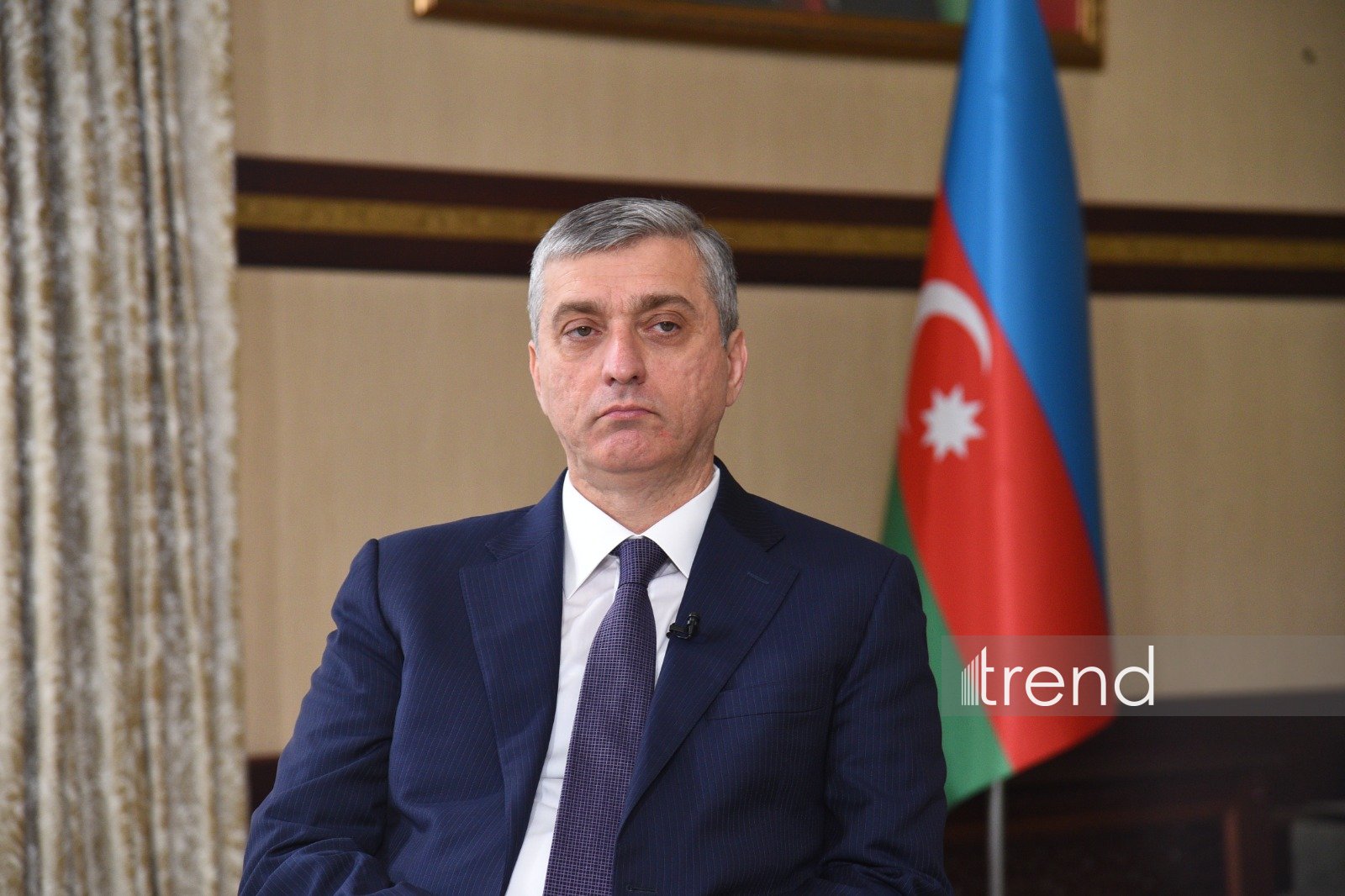

BAKU, Azerbaijan, November 16. The draft law on the 2027 state budget in Azerbaijan envisages setting the state guarantee limit at 6 billion manat ($3.5 billion) for that year, Chairman of the Chamber of Accounts, Vugar Gulmammadov, said during the discussion of the draft law "On the state budget of the Republic of Azerbaijan for 2027" in its first reading at a plenary session of the parliament today, Trend’s correspondent reports.
He noted that the Chamber of Accounts considers it necessary to update the medium- and long-term strategy for public debt management and to align it with the fiscal targets for 2027–2030. The chamber also drew attention to discrepancies regarding the existing targets for the volume of state guarantees. According to him, the 2022–2025 public debt management strategy has expired, and a strategic framework for the new period needs to be prepared.
Gulmammadov remarked that the previous strategy noted that the issuance of state guarantees of up to 2 billion manat ($1.2 billion) could be considered for 2025–2030.
Furthermore, the previous strategy set a target to reduce the volume of total state-guaranteed financial obligations to 16.8 billion manat ($9.9 billion) by the end of 2030.
"Taking the above into account, we believe there is a need to update the strategic framework for public debt over the medium and long term. This should be developed in coordination with the relevant fiscal institutions, as part of a national strategy covering the 2027–2030 period and in alignment with budgetary expenditure planning," he emphasized.
The chairman of the Chamber of Accounts also noted the importance of adapting budget legislation to meet modern economic challenges.
According to him, budgetary relations are currently regulated by various legal acts, and in practice, certain contradictions arise between these documents.
"We see the solution to these contradictions in consolidating the entire budget process into a single legal document, i.e., by drafting a Budget Code," Gulmammadov said. He added that Articles 12, 16, 18, and 20 of the law "On the budget system", which regulate the list of financial documents to be submitted, also need to be aligned with the requirements of modern digital governance.
The chairman of the chamber welcomed the definition of new directions for the 2027 budget policy.
According to him, the new expenditure policy envisages supporting sustainable and high economic growth, ensuring a clean environment and green growth, and enhancing the quality and efficiency of public services through artificial intelligence and digitalization.
Gulmammadov said that artificial intelligence and digitalization should be viewed not merely as an adaptation to technological innovations, but as a strategic direction that supports economic growth.
He also emphasized the importance of maintaining the link between the original revenue sources and expenditure areas, following the abolition of targeted environmental funds within the state budget, as well as ensuring the continued financing of environmental initiatives.
According to the chairman of the chamber, it would be appropriate to consolidate payments related to environmental protection and restoration into a unified collection mechanism, an "environmental tax", administered by the State Tax Service. He proposed to integrate the technical expertise of the Ministry of Ecology and Natural Resources with the administrative capacity of the State Tax Service in this process.
Gulmammadov also noted that the share of current expenditures within the state budget had risen from 60.4% to 62.3%.
"Given that a sustained increase in the share of current expenditures within the budget could pose a risk to long-term fiscal sustainability, we propose establishing a limit on the growth rate of current expenditures within the fiscal rule," he explained.
Another recommendation from the Chamber of Accounts is to provide more detailed information regarding the financing and implementation of state programs within budget documentation. The chairman of the chamber said that, based on the rules for the formulation, implementation, monitoring, and evaluation of state programs approved in 2021, nearly 30 state programs and other strategic documents have been adopted to date.
According to him, all expenditures for targeted programs intended to be financed from the state budget should be presented as separate line items within the budget; furthermore, any programs not currently reflected in the budget documentation should also be incorporated into the relevant records.
At the same time, he proposed to include non-financial performance indicators for the programs in the budget documents, as result-based budgeting reforms are expanded in the future.
In his speech, Gulmammadov also addressed the priorities of fiscal policy, suggesting a re-evaluation of the practice of designating the financial provision for "protected" expenditure items as a distinct category of expenditure policy. According to him, fiscal policy should focus more on macroeconomic objectives and the stimulation of the economy, rather than on administrative obligations.
In conclusion, the chairman of the Chamber of Accounts stated that the draft state budget for 2027 has been prepared in accordance with legislative requirements and will serve to provide financial support for the country's strategic goals.



