


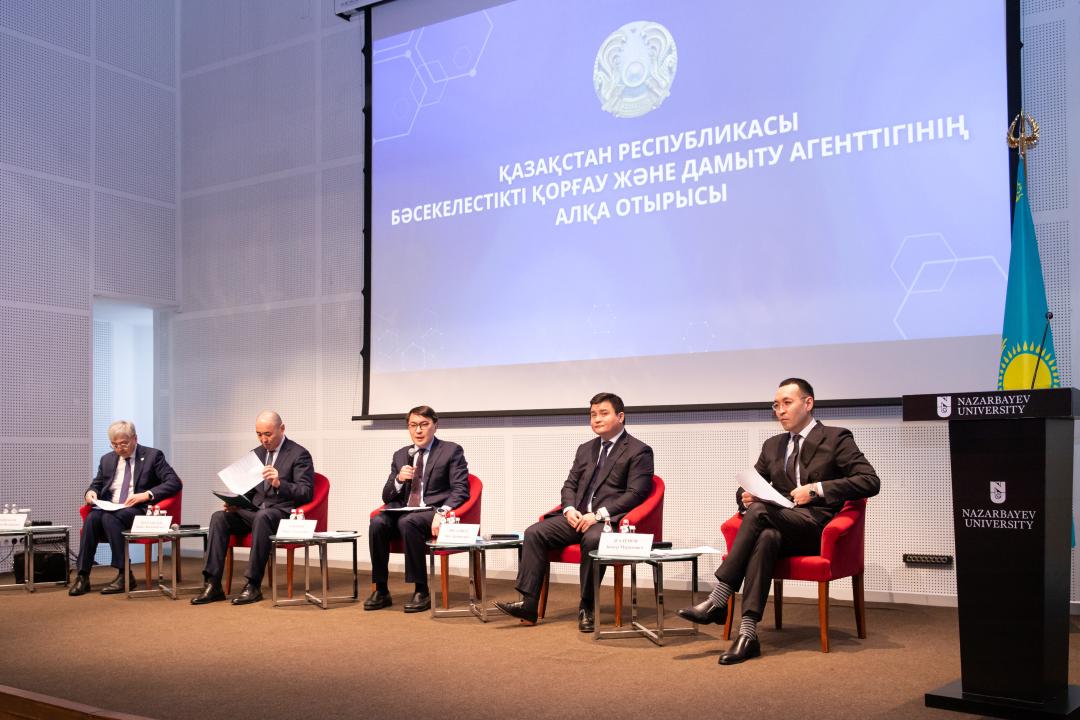

ASTANA, Kazakhstan, March 5. Kazakhstan’s Agency for the Protection and Development of Competition continues its work to accelerate privatization and the de-nationalization of the economy, Trend reports.
This work is carried out within the framework of the Decree of
the President of Kazakhstan, Kassym-Jomart Tokayev, "On Measures
for the Liberalization of the Economy," which aims to create
conditions for free competition.
“The reforms outlined in the Decree are aimed at reducing state
interference in the economy and lowering administrative barriers.
These reforms are critically important for stimulating the business
environment and strengthening economic competition. The Decree
includes several key provisions that directly affect the activities
of the Agency. These include the creation of conditions for free
competition: the elimination of regulatory barriers and ensuring
equal access to the market for all entrepreneurs,” said Marat
Omarov, Chairman of the Agency for the Protection and Development
of Competition of the Republic of Kazakhstan, during a meeting of
the agency.
The Agency is responsible for analyzing commodity markets and entities in the quasi-state sector, as well as compiling a preliminary list of state assets for privatization. The Agency also acts as the working body of the National Privatization Office, organizing meetings and coordinating the preparation of all necessary documents.
The completion of this work will involve monitoring the progress of privatization until the end of 2028. As part of the monitoring, it is planned to adopt roadmaps for pre-privatization preparation and to provide reports from authorized state bodies on compliance with the requirements and conditions of the National Privatization Office.
A list of 461 assets is currently compiled based on the results of the meetings of the Agency for Protection and Development of Competition. It will be submitted to the Commission for Economic Modernization for consideration. It is expected that the finalized list of enterprises will be considered by the Supreme Council for Reforms, after which it will be included in the Comprehensive Privatization Plan.



